 Save to Pinterest
 My tiny apartment kitchen smelled like an Italian bakery at midnight, and I wasn't even sorry about the neighbors probably wondering what I was up to. I'd started this dough around dinner time, mixing it with a wooden spoon while watching a movie, and now it was bubbling away on the counter like some kind of living thing. The patience required for an overnight rise used to drive me crazy, but now there's something almost meditative about letting time do the work.
Last winter, my sister came over during a snowstorm and we stood around the oven watching this bread bake through the glass door like it was the most fascinating television we'd ever seen. When it finally came out, golden and singing with that crackling sound, we tore into it while it was still too hot, burning our fingers but not caring one bit. She texted me the next morning asking for the recipe, and now she makes it every Sunday for her family.
Ingredients
- All-purpose flour: Creates the perfect structure for that airy crumb we're after
- Salt: Don't skimp here, it's what balances all that rich cheese
- Granulated sugar: Just enough to feed the yeast without making the bread sweet
- Active dry yeast: Make sure your water is warm like bathwater, not hot enough to kill it
- Warm water: About 110°F is the sweet spot for happy yeast
- Olive oil: Adds tenderness and helps the cheese distribute evenly
- Freshly grated Parmesan cheese: Pre-grated has anti-caking agents that mess with the texture
- Garlic: Minced fine so it disperses throughout every bite
- Fresh rosemary or parsley: Optional but brings this whole earthy dimension that makes it feel special
Tired of Takeout? 🥡
Get 10 meals you can make faster than delivery arrives. Seriously.
One email. No spam. Unsubscribe anytime.
Instructions
- Start with the dry foundation:
- In a large mixing bowl, whisk together your flour, salt, and sugar until they're perfectly combined
- Wake up the yeast:
- Dissolve the yeast in warm water and let it hang out for about 5 minutes until you see a foamy layer on top
- Bring it together:
- Pour the yeast mixture and olive oil into the dry ingredients, stirring with a wooden spoon until you get this shaggy, sticky dough
- Add the good stuff:
- Fold in the Parmesan, minced garlic, and herbs until they're evenly distributed throughout the dough
- Let time work its magic:
- Cover with a clean towel and set it in a warm spot for 12 to 18 hours until it's doubled and full of bubbles
- Shape it gently:
- Turn the dough onto a floured surface and shape it into a round loaf, being careful not to deflate all those beautiful air pockets you've created
- Prep for the oven:
- Place the loaf on parchment paper and let it rest for 30 minutes while you preheat your oven to 450°F with the Dutch oven inside
- Give it room to grow:
- Score the top with a sharp knife in a pattern that makes you happy
- Create the steam:
- Carefully transfer the dough with the parchment into your hot Dutch oven, cover, and bake for 30 minutes
- Get that golden crust:
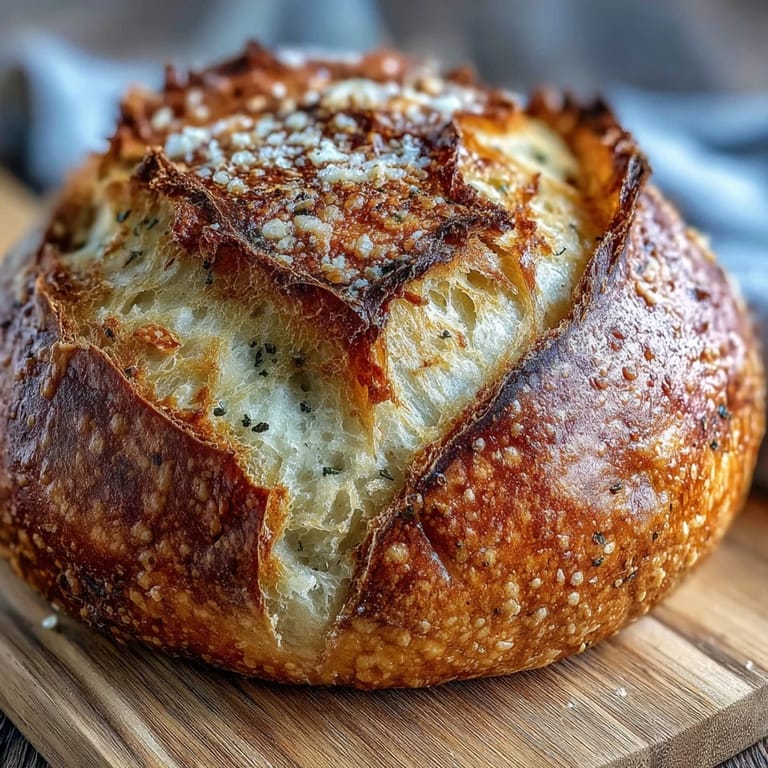
- Remove the lid and bake for another 15 minutes until the loaf is deeply golden and sounds hollow when tapped
- The hardest part:
- Cool on a wire rack for at least 30 minutes before slicing into it
 Save to Pinterest
 My friend Sarah swears this bread saved her dinner party when she forgot to make a side dish. She pulled it out of the oven at the last minute, and her guests were more impressed with this simple loaf than anything else she served that night.
Getting That Perfect Crust
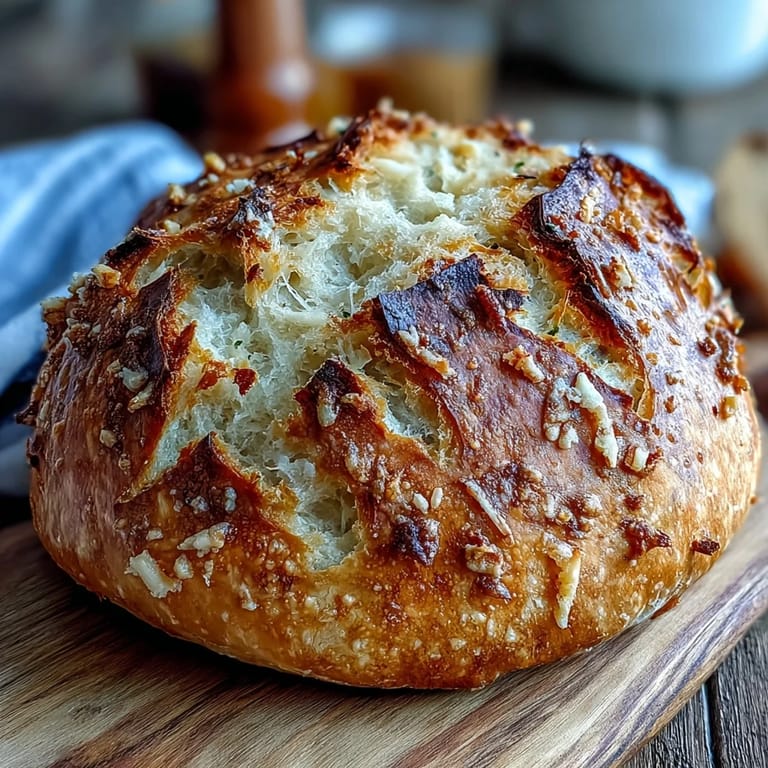
The steam created by covering the bread for the first 30 minutes is what gives artisan bread its signature crispy exterior. I learned this the hard way after months of making bread with dull, soft crusts and wondering what I was doing wrong.
Cheese Variations Worth Trying
While Parmesan is classic, I've had incredible results with aged Asiago for extra sharpness or Gruyère when I want something nuttier and more melty. Just stick to hard cheeses and keep the amount the same for consistent results.
Making It Your Own
This dough is incredibly forgiving and receptive to experimentation. Once you've made it a few times, trust your instincts and make it reflect whatever flavors you're craving.
- Caramelized onions and thyme make for an incredible savory variation
- Add crushed red pepper flakes if you like a little heat running through
- Swap rosemary for fresh sage in the fall for something earthier and more warming
 Save to Pinterest
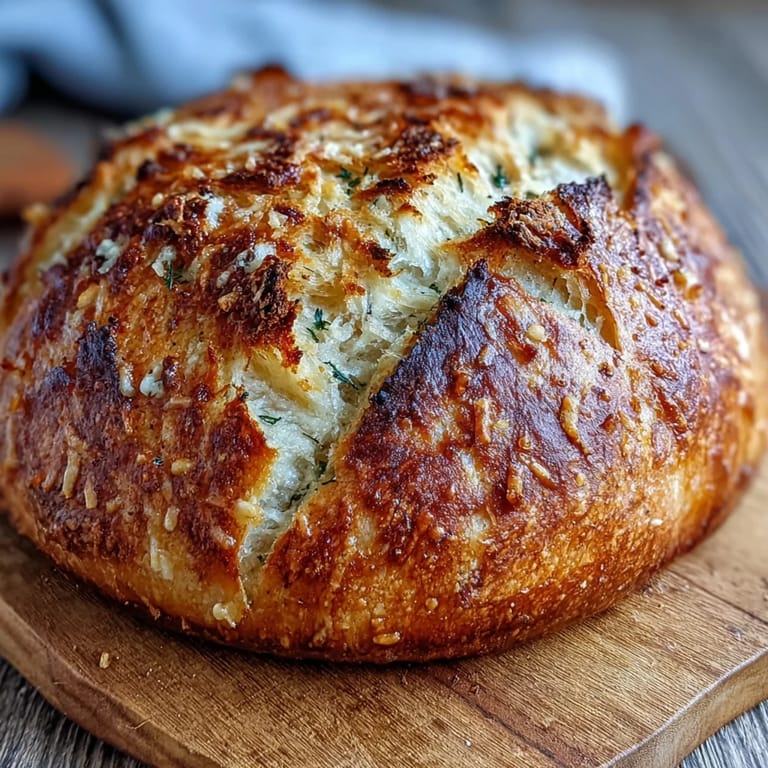
 There's something profoundly satisfying about pulling this bread out of the oven, the kitchen filling with that impossible combination of garlic, cheese, and freshly baked comfort. It's the kind of simple pleasure that makes a house feel like a home.
Recipe Questions & Answers
- → Why does the dough need to rise for 12–18 hours?
The extended fermentation develops complex flavors, breaks down gluten for easier digestion, and creates those signature air pockets that give artisan bread its tender texture. This slow rise is what transforms simple ingredients into bakery-quality results.
- → Can I use instant yeast instead of active dry yeast?
Yes, instant yeast works directly without dissolving in water first. Reduce the amount by 25% and mix it with the dry ingredients. The rise time and texture remain consistent with the original method.
- → What if I don't have a Dutch oven?
A heavy oven-safe pot with a tight-fitting lid creates similar steam conditions. Alternatively, place a metal baking pan on the bottom rack and add ice cubes when the loaf goes in—the resulting steam helps develop a crispy crust.
- → Can I add other cheeses or ingredients?
Absolutely. Asiago, Gruyère, sharp cheddar, or aged Gouda all pair beautifully with garlic. Fresh herbs like thyme, oregano, or sun-dried tomatoes add wonderful variation. Keep add-ins to roughly 1 cup total to maintain proper dough structure.
- → Why is the dough so sticky and should I add more flour?
The sticky texture is intentional—it creates a softer, airier crumb. Resist adding extra flour during mixing or shaping. Lightly flour your hands and work surface instead. Too much flour creates a dense, heavy loaf rather than the tender artisan texture you want.
- → Can I speed up the rising process?
While you can use a warm (85°F) spot to reduce rising time to 6–8 hours, the slower overnight rise yields superior flavor development. The extended fermentation creates subtle sweetness and complex notes that shorter rises can't achieve.