 Save to Pinterest
 My aunt brought a slice of guava cheesecake to a family dinner years ago, and I watched my grandmother take one bite, then another, her eyes closing like she'd traveled somewhere warm and distant. The tropical sweetness hitting against that creamy, tangy base felt like a conversation between two worlds I didn't know could speak to each other. When she asked for the recipe, I knew I had to learn it myself—not just to replicate that moment, but to understand why something so simple could feel so complete.
I made this for my partner's birthday during that awkward spring when lockdowns were lifting, and we invited people over for the first time in months. Someone said it tasted like a vacation, and honestly, standing there in my kitchen watching everyone go quiet over dessert felt like the most normal, beautiful thing that had happened in a long time.
Ingredients
- Maria cookies (200 g): These light, slightly sweet biscuits create a tender, buttery crust that won't overpower the filling—digestive biscuits work beautifully too if that's what you have on hand.
- Unsalted butter, melted (80 g): Melted butter binds the crumbs and toasts them just enough; don't skip the melting step or you'll end up with dry patches.
- Granulated sugar for crust (2 tbsp): A small amount of sugar adds a subtle sweetness to balance the creaminess of the filling.
- Cream cheese, softened (600 g): Room temperature is non-negotiable here—cold cream cheese will give you lumps that no amount of beating can fix, so pull it out of the fridge at least an hour before.
- Granulated sugar for filling (200 g): This sweetens the filling without being cloying; the guava will add tartness that needs this sweetness to shine.
- Sour cream (200 ml): This is your secret weapon for that luxurious tang; it prevents the cheesecake from being one-note sweet and adds moisture that keeps it from drying out in the oven.
- Large eggs (3): Room temperature eggs blend more smoothly into the batter; add them one at a time and beat just until combined or you'll trap too much air and get cracks on top.
- Pure vanilla extract (1 tsp): Worth buying the real stuff—it adds a whisper of depth that artificial extract can't touch.
- Lime zest (from 1 lime, optional): A small amount brightens everything without making it taste like lime pie; I leave it out sometimes and miss it, so I recommend including it.
- Guava marmalade or paste (200 g): This is what makes the dish sing—if you find jarred guava paste in the Latin section of your grocery store, it's cheaper and less fussy than marmalade, though both work.
- Water (2 tbsp): Just enough to loosen thick guava paste into something swirly; you might not need all of it, so add it gradually.
Tired of Takeout? 🥡
Get 10 meals you can make faster than delivery arrives. Seriously.
One email. No spam. Unsubscribe anytime.
Instructions
- Prep your pan and heat your oven:
- Set the oven to 160°C and line your springform pan with parchment paper, pressing it into the corners and up the sides a bit so the crust doesn't stick. Grease the sides lightly with butter or oil—this small step saves frustration later.
- Make the crust:
- Pulse the Maria cookies in a food processor until they're fine crumbs (you can also seal them in a bag and crush with a rolling pin if you want to take out some stress). Toss the crumbs with melted butter and sugar until everything looks like damp sand, then press firmly into the pan base and bake for 10 minutes until it's golden and smells toasty.
- Cool the crust:
- Let it sit for just a few minutes while you prepare the filling—you don't want it ice cold, just set enough to hold everything up.
- Beat the cream cheese and sugar:
- In a large bowl, mix softened cream cheese and sugar until smooth and fluffy, about 2 minutes of beating; scrape down the sides occasionally so no lumps hide in the corners. Add sour cream and mix until you have one cohesive, creamy mass.
- Add the eggs carefully:
- Add eggs one at a time, beating just until combined after each—overmixing here traps air that turns into cracks, so don't go wild. Stir in vanilla and lime zest if you're using it.
- Pour and prepare for the swirl:
- Pour the filling over the cooled crust and smooth the top with a spatula so it's level.
- Heat and loosen the guava:
- In a small saucepan, gently warm the guava marmalade or paste over low heat, stirring and adding water a tablespoon at a time until it's pourable but still thick enough to hold its shape when dropped.
- Create the swirl:
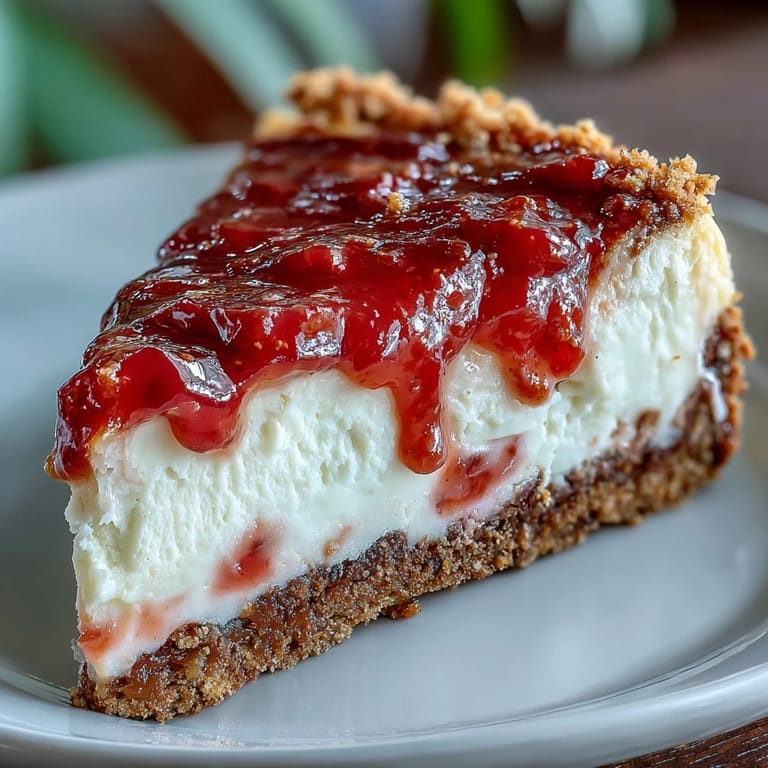
- Drop generous spoonfuls of guava over the filling in a rough pattern—don't be precious about it. Take a knife or skewer and drag it gently through the guava, making swirls and waves, pulling from one direction then reversing for that beautiful marbled look.
- Bake with patience:
- Bake for 50 to 55 minutes until the edges look set but the center still jiggles slightly when you give the pan a gentle shake—this is the sweet spot between cooked and creamy. The residual heat will keep cooking it as it cools.
- Cool slowly in the oven:
- Turn off the oven, crack the door open about an inch, and let the cheesecake sit in the cooling oven for a full hour—this gentle temperature drop prevents the sudden cracking that ruins so many cheesecakes. It sounds like a long time, but it's worth every minute.
- Chill completely:
- Transfer to the fridge for at least 3 hours, though overnight is better—cold cheesecake slices cleanly and tastes creamier than room temperature.
 Save to Pinterest
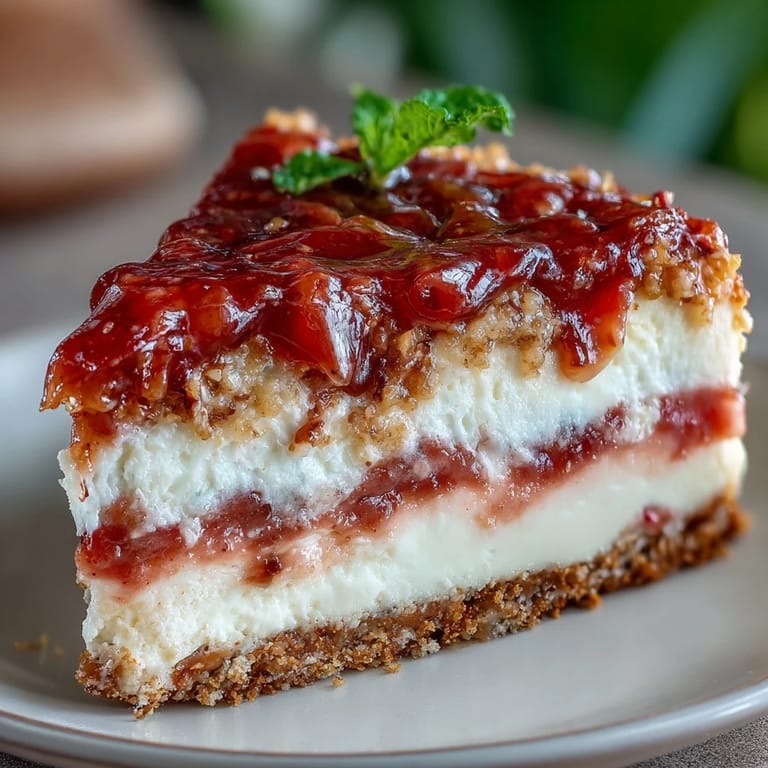
 My friend took a photo of her slice before eating it—something she never does—and texted it to her mother with the caption 'I made this.' That small moment of pride over a beautiful homemade dessert mattered more than the taste, though the taste was excellent.
The Magic of Guava in Baking
Guava is one of those ingredients that feels exotic until you taste it, and then it becomes obvious why it belongs everywhere. The flavor is tart and floral at once, never quite fitting into a category, which is exactly why it shakes up the familiar creaminess of cheesecake. I used to buy fancy guava paste only for special occasions, but now I keep it in the pantry for moments when I want to add something unexpected to desserts or even savory dishes.
Timing and Temperature Matters
Baking temperature isn't just a number—it's a conversation between you and the oven about how gently something should cook. A lower oven like 160°C means the edges don't race ahead of the center, so you get an even, creamy texture throughout. I learned this the hard way by baking at 180°C once and ending up with a cheesecake that was set on the edges but strangely grainy, and I've never made that mistake twice.
Slicing and Serving Like a Pro
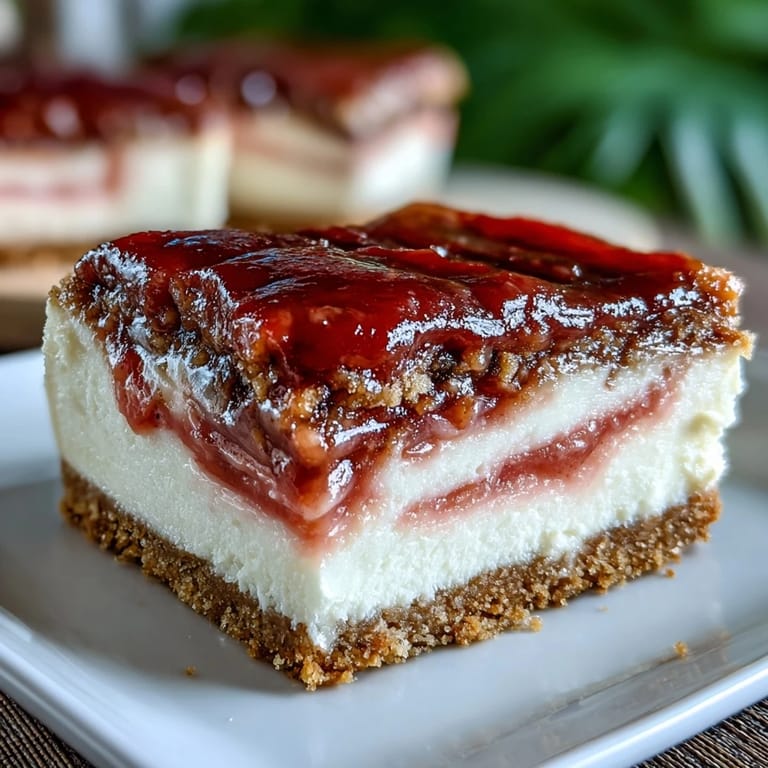
The difference between a beautiful slice and a mangled mess comes down to one simple ritual: dip your knife in hot water and wipe it clean between each cut. This melts any cream cheese that's clinging to the blade and gives you clean, pretty slices every time. It's one of those small kitchen tricks that feels like cheating because it works so well.
- A thin, sharp knife works better than a thick serrated one for cheesecake—you want to cut, not saw.
- Let each slice come to room temperature for five minutes before serving so the flavors open up and it's not so dense you can't taste the nuance.
- Leftover cheesecake keeps beautifully in the fridge for up to four days, and it honestly tastes even better the next day as flavors settle.
 Save to Pinterest
 This cheesecake is the kind of dessert that tastes fancy but doesn't require you to be one, and it brings people together in that quiet way good food does. Make it when you want to feel proud, or when someone you love needs reminding that they're worth something beautiful and creamy and swirled with tropical sweetness.
Recipe Questions & Answers
- → What type of cookies work best for the crust?
Maria cookies or digestive biscuits crushed finely create a crisp and slightly sweet base that complements the creamy filling perfectly.
- → How can I achieve the guava swirl effect?
Gently heat guava marmalade with a bit of water to loosen it, then drop spoonfuls onto the cheesecake filling before swirling with a skewer for a marbled pattern.
- → Can I substitute any ingredients in the filling?
The filling relies on cream cheese, sour cream, eggs, and sugar for texture and flavor; slight variations can be made, but maintaining balance is key for smoothness.
- → How long should the cheesecake chill before serving?
To develop a firm texture and enhance flavors, refrigerate the cheesecake for at least three hours or overnight.
- → How do I prevent cracks while baking?
Cooling the cheesecake slowly by leaving the oven door ajar after baking and avoiding sudden temperature changes helps prevent cracks on the surface.