 Save to Pinterest
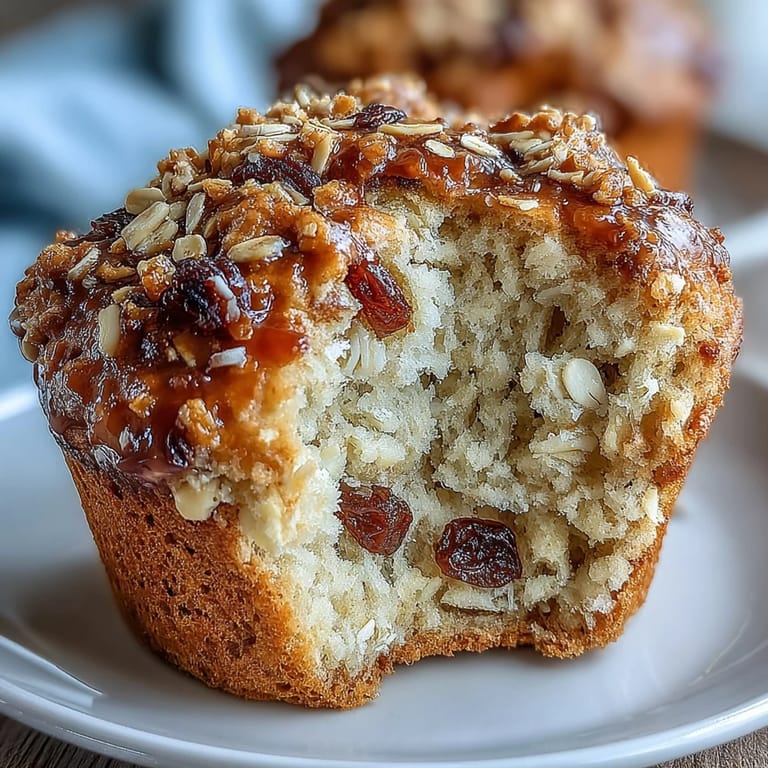
 My neighbor brought over a batch of these one foggy morning, warm from her oven, and I bit into one expecting something heavy and dense. Instead, the crumb was tender, almost cake-like, with pockets of plump raisins and a subtle oat nuttiness that tasted nothing like the brick-hard soda bread my grandmother used to make. I asked for her secrets that afternoon, sitting at her kitchen table with butter melting on my fingers, and she smiled and said she'd finally figured out how to make Irish comfort food that didn't require a hammer to cut through.
I made these for a book club meeting on a rainy Thursday, and they disappeared before anyone even sat down to discuss the novel we'd chosen. One of the members, who claims she never eats carbs, ate two and asked if I'd used buttermilk because she could taste something almost tangy beneath the sweetness. That's when I realized how much difference the buttermilk makes—it brightens everything, cuts through the richness, and gives you that authentic Irish bread flavor without the intimidation.
Ingredients
- All-purpose flour (2 cups): The foundation that should be whisked together dry, not sifted, because we want the mixture to aerate naturally as we combine everything.
- Old-fashioned rolled oats (1 cup, plus extra): These carry the soul of this recipe—use the thick-cut ones, not instant, or you'll lose the texture and that satisfying chew.
- Granulated sugar (1/4 cup): Just enough sweetness to complement the raisins without making these taste like dessert masquerading as breakfast.
- Baking powder (1 1/2 teaspoons): Double-check the date on your tin because stale leavening means flat, dense muffins every time.
- Baking soda (1/2 teaspoon): This reacts with the buttermilk to create lift, so don't skip it even though the amount seems small.
- Salt (1/2 teaspoon): The backbone that makes every other flavor pop, especially crucial in Irish breads where butter and oats can taste one-note without it.
- Raisins (3/4 cup): Plump ones if you can find them, or soak them briefly in warm water to wake them up if they've been sitting in your pantry for months.
- Buttermilk (1 1/4 cups): Non-negotiable for authentic flavor and the chemical reaction that makes these muffins rise properly and stay tender.
- Large egg (1): Acts as binder and adds richness without heaviness when combined with buttermilk.
- Unsalted butter, melted and cooled (1/4 cup): Let it cool completely or it will scramble the egg and ruin your batter texture.
Tired of Takeout? 🥡
Get 10 meals you can make faster than delivery arrives. Seriously.
One email. No spam. Unsubscribe anytime.
Instructions
- Heat your oven and prepare:
- Get the oven to 400°F and line your muffin tin because cold muffin cups mean uneven baking and pale bottoms. Grease generously or use liners—I prefer liners because they peel away cleanly and the muffins stay moister longer.
- Combine all dry ingredients:
- Whisk flour, oats, sugar, baking powder, baking soda, and salt together in a large bowl, making sure the leavening is evenly distributed so every muffin rises the same way. This whisking also helps trap air, which means fluffier texture.
- Fold in the raisins:
- Stir them through gently so they're scattered throughout, not clumped in one corner of the tin. Take a moment here to break up any raisin clusters.
- Prepare your wet mixture:
- In a separate bowl, whisk buttermilk, egg, and cooled melted butter together until completely combined and emulsified. The cooled butter is crucial—if it's warm, the egg will scramble.
- Combine wet and dry:
- Make a well in the center of your dry ingredients and pour the wet mixture in without stirring yet. Now fold gently, using as few strokes as possible—stop when you still see tiny streaks of flour because overmixing creates tough, tunneled muffins that feel gritty.
- Fill the muffin tin:
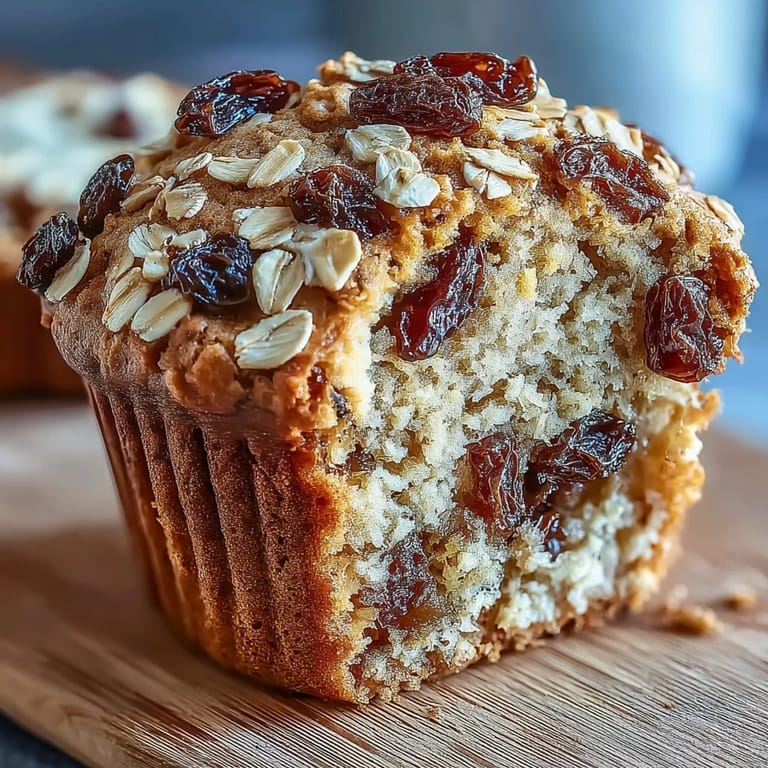
- Use an ice cream scoop or two spoons to divide batter evenly, then sprinkle a few oats on top of each muffin for texture and visual appeal. The even distribution means they bake at the same rate.
- Bake until golden:
- At 18-20 minutes, they should look lightly golden on top, and a toothpick inserted into the center should come out clean with no wet batter clinging to it. Don't overbake or they become dry.
- Cool and serve:
- Leave them in the tin for five minutes so they set slightly, then transfer to a wire rack to cool completely. Serve warm with butter and honey for maximum comfort.
 Save to Pinterest
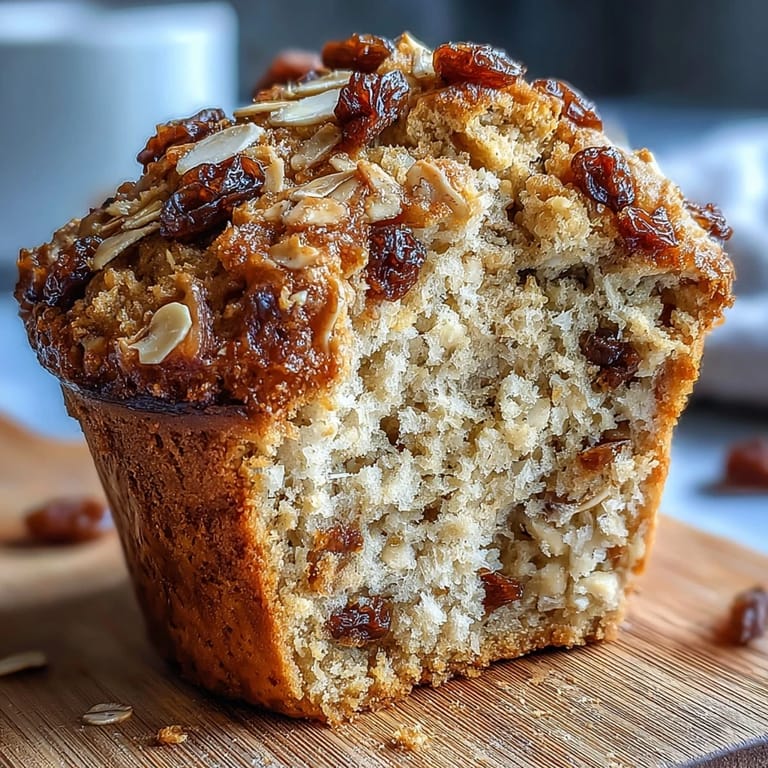
 My sister texted me a photo of these muffins sitting on her kitchen counter one morning, saying she'd made them for her kids' school fundraiser and they'd sold out before the first hour ended. That's when I realized these weren't just a nice breakfast—they'd become the kind of recipe you make when you want to give people something that tastes like you care, something wholesome enough to feel good about serving.
Why Buttermilk Makes the Difference
The buttermilk does something subtle but crucial here—it reacts with the baking soda to create carbon dioxide bubbles that give you rise and lightness, but it also adds a faint tang that makes the sweetness from the raisins feel balanced and sophisticated. When I've tried substituting regular milk with a squeeze of lemon, the muffins baked fine but felt one-dimensional, missing that complexity that makes you want to eat another one. If you absolutely can't find buttermilk, whisk regular milk with a tablespoon of lemon juice or vinegar and let it sit for five minutes, but know you're making a compromise.
Flavor Variations That Actually Work
Orange zest is the secret weapon my neighbor mentioned that day—just one teaspoon stirred into the dry ingredients before you combine everything transforms this from comforting to memorable, adding brightness that plays beautifully against the oats. I've also experimented with swapping half the raisins for chopped dried apricots, which gives you more tang and a color variation that looks beautiful in the muffin. Currants work too if you want something less sweet, or you could add a pinch of cardamom or cinnamon to echo Irish baking traditions without overshadowing the oat flavor.
Storage and Make-Ahead Magic
These muffins stay fresh and tender for four days in an airtight container, which means you can make them on Sunday and have breakfast sorted for the work week if you're the kind of person who needs that. You can also freeze them for up to three months—wrap them individually in plastic wrap, then slide into a freezer bag, and they thaw beautifully at room temperature in about an hour or you can warm them gently in a 300°F oven for five minutes.
- Toast a thawed muffin lightly for breakfast and the edges crisp up while the interior stays tender.
- If you're making these for a crowd, you can mix the dry ingredients the night before and store them in an airtight container, then just combine with the wet mixture in the morning.
- These freeze best when completely cooled and wrapped while still slightly warm so they retain moisture without becoming soggy.
 Save to Pinterest
 These muffins remind me that Irish baking doesn't have to be intimidating or time-consuming to feel authentic and deeply satisfying. Make them once and you'll find yourself reaching for this recipe when you want something that feels both comforting and thoughtful, the kind of thing that makes a quiet morning feel special.
Recipe Questions & Answers
- → What makes these muffins similar to Irish soda bread?
They use baking powder and baking soda for leavening and include oats and buttermilk, mimicking the texture and flavor of traditional Irish soda bread.
- → Can I substitute raisins with other dried fruits?
Yes, currants or chopped dried apricots work well and add different flavor notes while maintaining moistness.
- → How do I know when the muffins are done baking?
They should be golden brown on top and a toothpick inserted in the center should come out clean.
- → Is it necessary to use buttermilk in this recipe?
Buttermilk provides acidity that reacts with baking soda to create a tender crumb, but you can substitute with milk plus vinegar or lemon juice.
- → How can I enhance the flavor of these muffins?
Adding a teaspoon of orange zest to the batter adds a bright citrus note that complements the oats and raisins.