 Save to Pinterest
 My stovetop was a mess of spinach leaves and ricotta when I realized I'd bought chicken breasts twice the size I needed. Instead of panicking, I grabbed a knife and carved pockets deep enough to hold all that creamy filling, and what came out of the oven that night surprised everyone at the table. The chicken stayed juicy, the cheese melted into every bite, and the tomato sauce tied it all together like a warm hug. I've made this dozens of times since, tweaking the herbs and adjusting the heat, but that first chaotic attempt taught me that sometimes the best meals come from working with what you have.
I made this for my sister's birthday dinner last spring, and she still asks for it every time she visits. We sat outside with the windows open, the smell of oregano and tomatoes drifting through the kitchen, and she told me it reminded her of the little trattoria we stumbled into in Rome years ago. I hadn't been aiming for nostalgia, but food has a way of pulling memories to the surface. Now, every time I nestle those stuffed breasts into the bubbling sauce, I think of that evening and the way a simple dish can become a tradition.
Ingredients
- Boneless, skinless chicken breasts: Choose breasts that are similar in size so they cook evenly, and don't be afraid to pound them gently if one is thicker than the others.
- Ricotta cheese: Full-fat ricotta gives the filling a luxurious texture, but part-skim works if you want to lighten things up without losing too much creaminess.
- Fresh baby spinach: Chop it finely so it blends smoothly into the ricotta and doesn't create awkward clumps when you're stuffing the chicken.
- Parmesan cheese: Freshly grated Parmesan adds a sharp, nutty backbone to the filling that pre-grated versions just can't match.
- Garlic: Mince it finely for the filling and the sauce, it distributes the flavor evenly and prevents any harsh, raw bites.
- Lemon zest: Just half a lemon's worth brightens the ricotta and cuts through the richness without making the filling taste citrusy.
- Crushed tomatoes: Use good quality canned tomatoes, they form the base of the sauce and their sweetness balances the acidity beautifully.
- Dried Italian herbs and oregano: These bring warmth and familiarity to both the filling and the sauce, tying the whole dish together.
- Olive oil: A tablespoon for searing and another for the sauce, it adds richness and helps the chicken develop a golden crust.
- Sugar: A small pinch tames the acidity of the tomatoes and rounds out the sauce without making it sweet.
Tired of Takeout? 🥡
Get 10 meals you can make faster than delivery arrives. Seriously.
One email. No spam. Unsubscribe anytime.
Instructions
- Preheat and Prep:
- Set your oven to 375°F (190°C) so it's ready when the chicken is seared. This step keeps the workflow smooth and prevents the chicken from sitting too long after browning.
- Make the Filling:
- Combine ricotta, chopped spinach, Parmesan, garlic, Italian herbs, lemon zest, salt, and pepper in a bowl, stirring until everything is evenly distributed. The mixture should be thick enough to stay put inside the chicken without oozing out.
- Cut the Pockets:
- Use a sharp knife to slice horizontally into the thickest part of each chicken breast, creating a pocket without cutting through the other side. Season both sides generously with salt and pepper so the chicken itself tastes seasoned, not just the filling.
- Stuff the Chicken:
- Spoon the ricotta mixture into each pocket, pressing gently to fill it without overstuffing. Secure with toothpicks if the opening is wide, this keeps the filling inside while the chicken cooks.
- Sear the Chicken:
- Heat olive oil in an oven-safe skillet over medium-high heat and sear each stuffed breast for 2 to 3 minutes per side until golden. Remove the chicken and set it aside, the fond left in the pan will add depth to the sauce.
- Build the Sauce:
- Add another tablespoon of olive oil to the same skillet and cook the onion until soft and translucent, about 3 minutes, then add garlic and cook for another minute. Stir in crushed tomatoes, oregano, sugar, salt, and pepper, letting the sauce simmer for 5 minutes to meld the flavors.
- Bake:
- Nestle the seared chicken breasts into the sauce, spooning some over the tops to keep them moist. Transfer the skillet to the oven and bake uncovered for 20 to 25 minutes, or until the chicken reaches an internal temperature of 165°F (74°C).
- Finish and Serve:
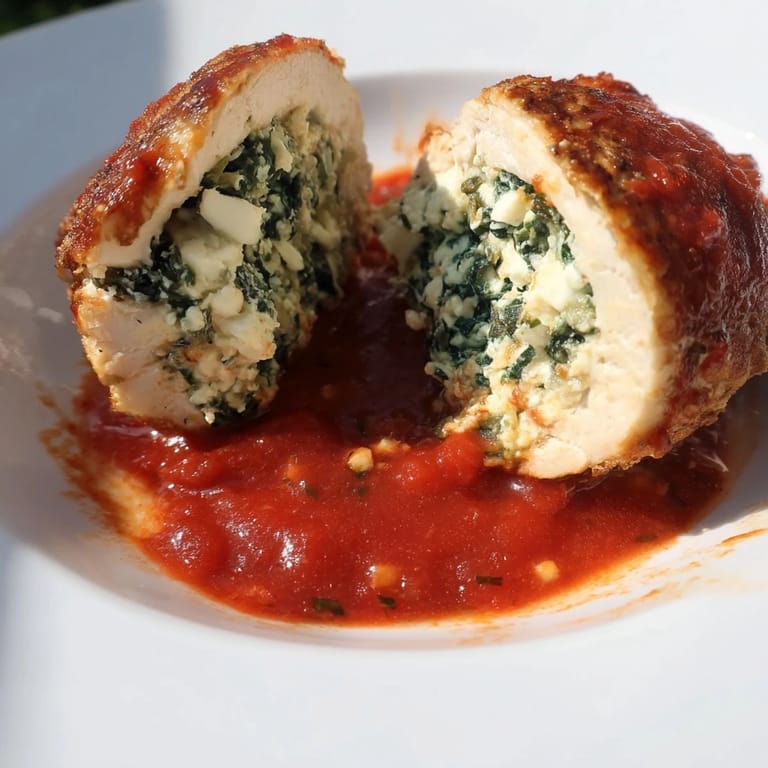
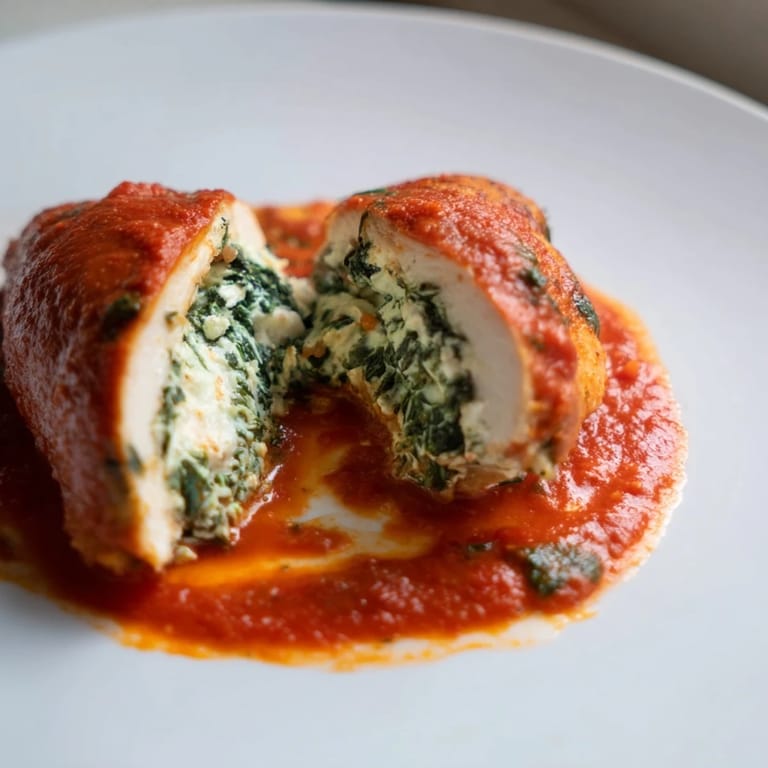
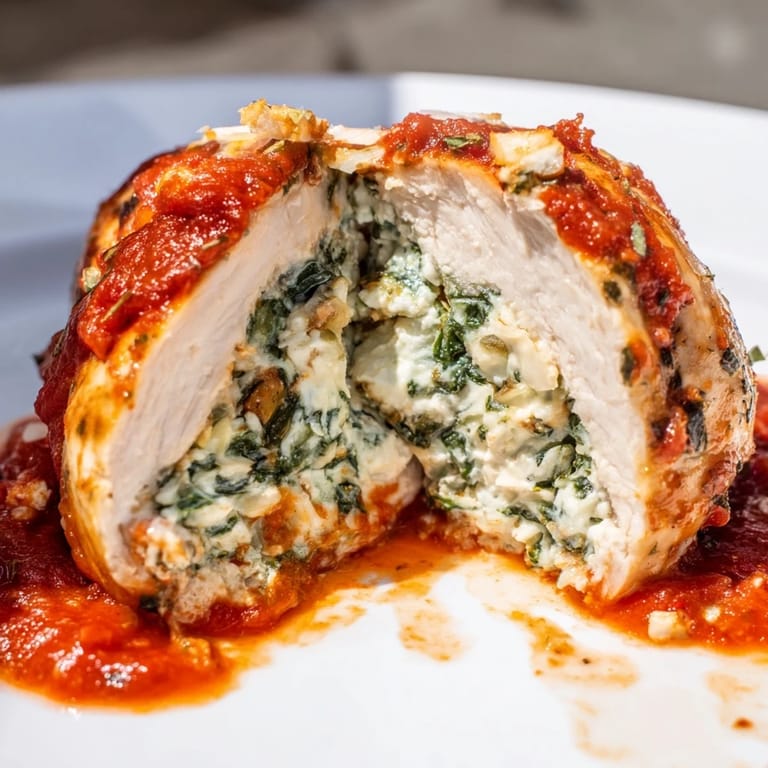
- Remove the toothpicks carefully, sprinkle with extra Parmesan or fresh basil if you like, and serve hot with the sauce spooned generously around each piece. The chicken will be tender, the filling molten, and the sauce rich and tangy.
 Save to Pinterest
 The first time I served this to friends, one of them scraped the skillet clean with a piece of bread and declared it the best thing I'd made all year. I didn't tell her I'd been nervous about the timing or that I'd forgotten to buy fresh basil and used dried herbs instead. She didn't care, and neither did anyone else, because the dish spoke for itself. That night reminded me that cooking isn't about perfection, it's about putting something warm and generous on the table and watching people lean in for seconds.
Making It Your Own
This recipe is forgiving enough to handle substitutions without losing its heart. Swap the spinach for kale if that's what you have, or add a handful of sun-dried tomatoes to the filling for a pop of sweetness. I've even used part-skim ricotta when I wanted something lighter, and it worked beautifully. If you like heat, a pinch of red pepper flakes in the sauce wakes everything up without overwhelming the dish. The key is to trust your instincts and taste as you go, adjusting the seasoning until it feels right to you.
Serving Suggestions
I usually serve this with crusty bread for mopping up the sauce, but it's also incredible over a tangle of cooked pasta or alongside roasted vegetables. A crisp Pinot Grigio complements the acidity of the tomatoes, while a light-bodied red like Chianti brings out the richness of the ricotta. If you're feeding a crowd, double the recipe and use a large baking dish instead of a skillet. The chicken reheats well, too, making it a smart choice for meal prep or next-day lunches when you want something that tastes even better the second time around.
Storage and Reheating
Leftovers keep in an airtight container in the fridge for up to three days, and the flavors deepen as the chicken sits in the sauce. Reheat gently in a covered skillet over low heat or in the oven at 325°F (163°C) to avoid drying out the meat. If the sauce has thickened too much, add a splash of water or broth to loosen it. I don't recommend freezing this dish because the ricotta can become grainy when thawed, but if you're in a pinch, it's better than nothing.
- Store in a shallow container so the chicken cools quickly and evenly.
- Reheat individual portions in the microwave at 50 percent power, checking every minute to prevent rubbery edges.
- Garnish with fresh basil or a drizzle of olive oil after reheating to brighten up the flavors.
 Save to Pinterest
 This dish has become one of those reliable favorites I turn to when I want something comforting but not complicated. Every time I pull that skillet out of the oven, I'm reminded that good food doesn't need to be fussy, it just needs to be made with care.
Recipe Questions & Answers
- → How do I prevent the chicken from drying out?
Pound the chicken breasts to an even thickness before stuffing, and monitor the internal temperature carefully. The chicken is done at 165°F (74°C). Don't overcook beyond this temperature. The tomato sauce also helps keep the chicken moist during baking.
- → Can I prepare this ahead of time?
Yes, you can assemble the stuffed chicken breasts up to 4 hours ahead and refrigerate them. When ready to cook, add 5-10 minutes to the baking time if cooking from cold. You can also prepare the tomato sauce the day before and reheat it.
- → What's the best way to stuff the chicken without it falling apart?
Use a sharp knife to carefully cut a horizontal pocket into the thickest part of each breast, keeping the sides intact. Stuff gently with a spoon, filling just enough so it stays contained. Secure with toothpicks if needed, and remove them before serving.
- → Can I use frozen spinach instead of fresh?
Yes, frozen spinach works well. Thaw it completely and squeeze out all excess moisture before mixing into the ricotta filling. This prevents a watery texture and ensures proper distribution throughout the mixture.
- → What sides pair well with this dish?
Crusty bread is ideal for soaking up the tomato sauce. You can also serve it over cooked pasta, with roasted vegetables like zucchini or bell peppers, or alongside a fresh green salad with lemon vinaigrette.
- → Is this gluten-free?
Yes, this dish is naturally gluten-free as written. However, always check ingredient labels on store-bought items like ricotta and crushed tomatoes to confirm no cross-contamination occurred during processing.