 Save to Pinterest
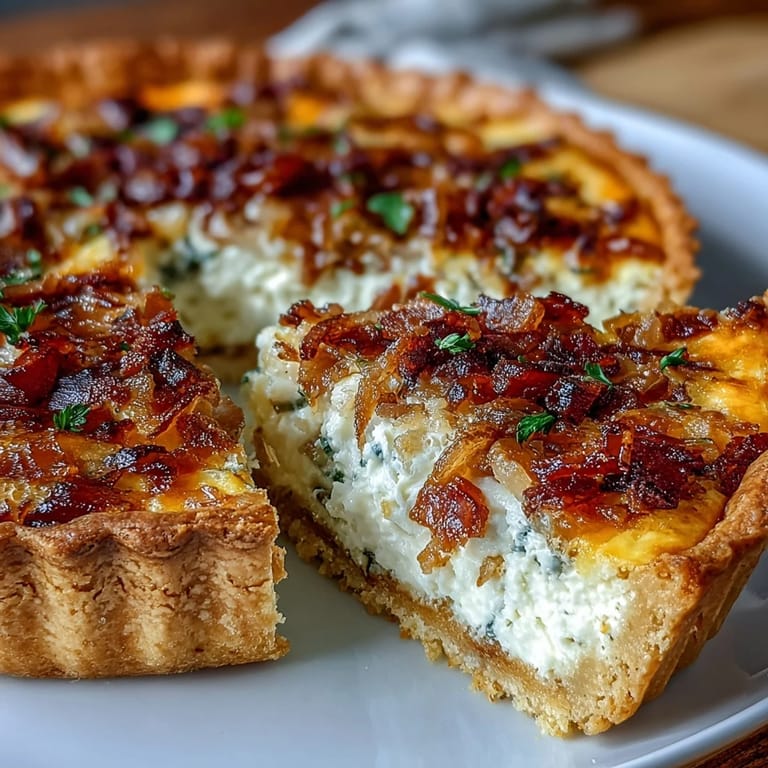
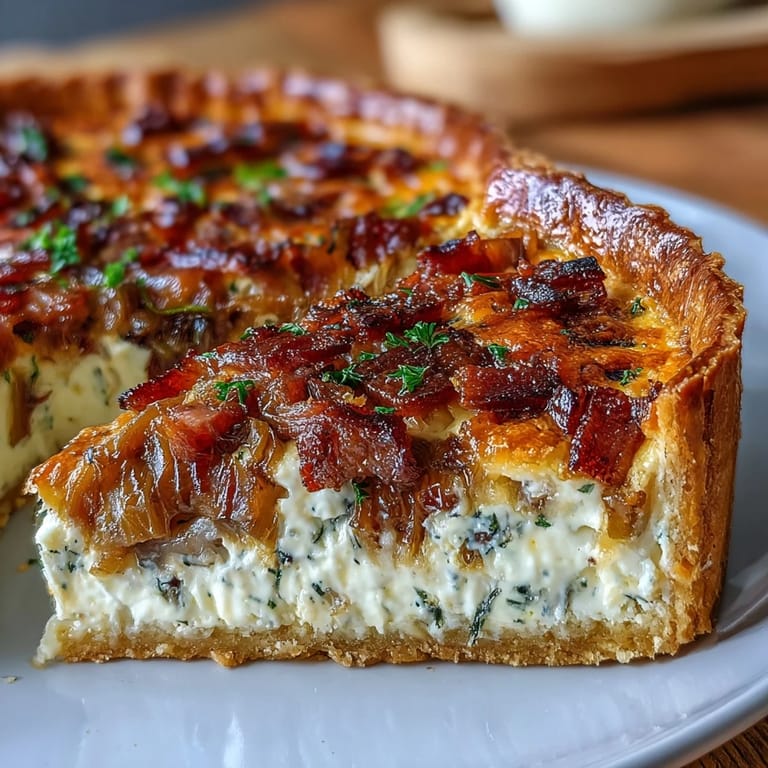
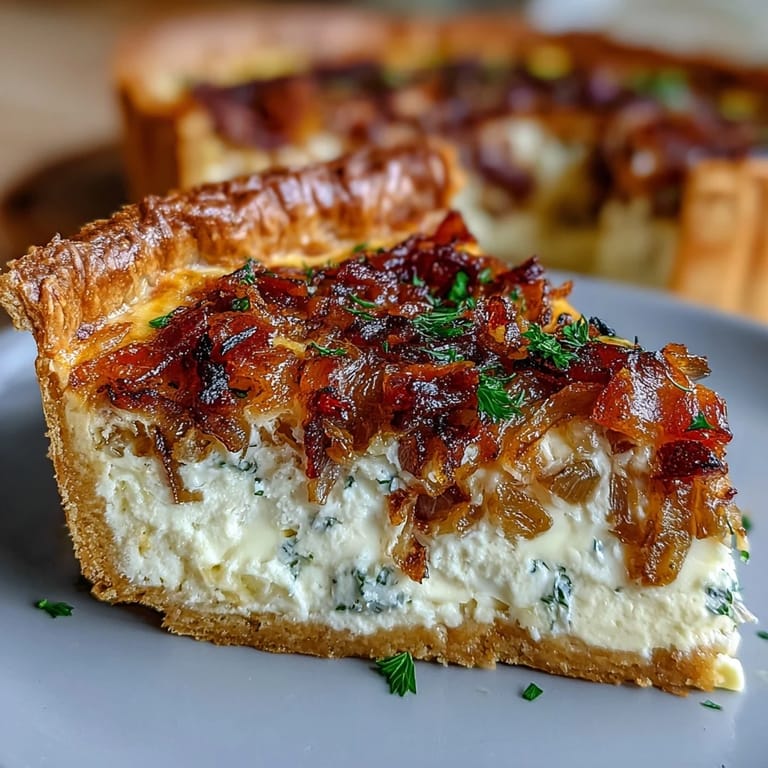
 My neighbor brought over a wedge of this quiche one autumn afternoon, still warm from her oven, and I was completely won over by the way the caramelized onions had turned almost jammy and sweet against the smoky bacon. That single slice became my gateway to understanding that a quiche wasn't fussy French bistro food—it was actually just eggs, cream, and whatever you loved most, baked until golden. Now whenever I make it, I'm transported back to that moment of biting through the flaky pastry crust and realizing comfort food could taste this elegant.
I made this for the first time on a rainy Sunday when my sister was visiting, and I remember her sitting at the kitchen counter watching the onions shrink down to almost nothing over thirty minutes, asking if something had gone wrong—then tasting them and getting absolutely silent in that way people do when food surprises them. That's when I understood that the patience part of cooking isn't boring; it's the moment where real flavor happens.
Ingredients
- Store-bought or homemade shortcrust pastry (about 250 g): A good pastry is your foundation—if you're using store-bought, let it thaw completely before lining the pan so it doesn't tear, and don't skip the chilling step before baking or it'll shrink.
- Smoked bacon (200 g), diced: The smokiness is non-negotiable here; it's what makes every other flavor pop and cuts through the richness of the cream.
- Large yellow onions (3), thinly sliced: Yellow onions have the right balance of sweetness and body for caramelizing—red onions get too soft and white onions don't sweeten enough.
- Unsalted butter (2 tbsp) and olive oil (1 tbsp): The combination keeps the onions from sticking while the butter adds that silky texture; using salted butter will throw off your seasoning.
- Sugar (1 tsp): Just a pinch to jumpstart the caramelization process and deepen those golden tones.
- Salt (1/2 tsp) and black pepper (1/4 tsp): Taste as you go with the onions because the bacon will add saltiness too.
- Dried thyme (1/4 tsp, optional): If you use it, rub it between your fingers as you add it to release the oils and make it less dusty-tasting.
- Large eggs (3): Room temperature eggs blend more smoothly into the cream mixture and create a silkier custard.
- Heavy cream (200 ml) and whole milk (100 ml): The ratio matters—using all cream makes it too rich and can curdle, while the milk keeps it light and helps it set properly.
- Ground nutmeg (1/4 tsp): Nutmeg in a savory custard might sound weird until you taste it; it's the secret that makes people ask what's different about your quiche.
- Gruyère or Swiss cheese (80 g), grated: Gruyère melts beautifully and has a slightly nutty flavor that complements the caramelized onions, but don't grate it too far ahead or it'll clump up.
Tired of Takeout? 🥡
Get 10 meals you can make faster than delivery arrives. Seriously.
One email. No spam. Unsubscribe anytime.
Instructions
- Get your oven ready and prep the pastry:
- Preheat the oven to 180°C (350°F), then roll out your pastry and gently press it into a 23 cm tart pan, letting it sit a bit higher around the edges so it doesn't shrink down during baking. Trim the overhang with a sharp knife, prick the base all over with a fork (this prevents it from puffing up), and slide it into the fridge while you work on the filling—a cold crust is a crispy crust.
- Render the bacon until it's gloriously crispy:
- Cook the diced bacon in a large skillet over medium heat, stirring occasionally, until the edges are dark and the fat has rendered out; you're looking for it to be almost brittle. Scoop it out with a slotted spoon, let it drain on paper towels, and set aside.
- Begin the long, patient caramelization:
- Pour off most of the bacon fat, leaving just about a tablespoon, then add the butter and olive oil to the pan. Toss in your sliced onions along with the sugar, salt, and thyme, then turn the heat down to medium-low and let them cook, stirring every few minutes, for 25 to 30 minutes.
- Watch for that deep golden transformation:
- The onions will go from pale and slippery to gradually turning amber, then a rich caramel color; don't rush this or they'll taste raw and sharp instead of sweet. When they're deeply golden and have shrunk to almost a quarter of their original volume, remove from heat and let them cool slightly so they don't scramble your eggs.
- Whisk together the custard base:
- In a bowl, crack your eggs and whisk them together, then add the cream, milk, nutmeg, and a small pinch each of salt and pepper. Whisk until it's smooth and homogeneous, but don't overdo it or you'll get too much air and the custard will be bubbly instead of silky.
- Layer your fillings into the crust:
- Spread the cooled caramelized onions evenly over the chilled pastry base, scatter the crispy bacon pieces over top, then sprinkle the grated Gruyère across everything so it's distributed throughout.
- Pour the custard with a gentle hand:
- Slowly pour the whisked custard mixture over the filling, tilting the pan gently as you go so it settles evenly and doesn't overflow. If you fill it to just below the rim, you've got the right amount.
- Bake until the center is just set:
- Slide it into the oven for 35 to 40 minutes; you're looking for the edges to be set and lightly golden while the very center still has the gentlest jiggle when you tap the pan. Overbaking dries it out, so keep an eye on it toward the end.
- Cool, slice, and serve:
- Let it rest for at least 10 minutes before slicing so it holds together, then serve it warm or at room temperature with a simple green salad and a chilled glass of white wine.
 Save to Pinterest
 Years later, I made this for a potluck where I wasn't sure if anyone would appreciate it, and watching people come back for seconds—even the guy who claimed he didn't like quiche—taught me that food cooked with attention and care speaks for itself. That's when this dish stopped being just a recipe and became something I make whenever I want to show people I'm thinking of them.
The Magic of Low and Slow Onions
Caramelizing onions isn't complicated, but it does require you to understand what's actually happening in the pan. You're not cooking the onions; you're coaxing out their natural sugars and letting them brown slowly, which transforms them from sharp and peppery into something almost fruity and complex. The moment you try to speed it up by cranking the heat, you lose all that nuance and end up with burnt bits and bitter flavors that ruin the whole dish. I've learned to use this time to prep everything else—it's meditative in a way that feels like part of the cooking itself.
Why the Custard Ratio Matters More Than You'd Think
I once made this with all heavy cream because I thought richer was better, and what I got was a quiche that was grainy and separated, with puddles of fat pooling around the edges. That's when I realized the milk isn't there as filler—it changes the chemistry of the custard, helping the eggs set properly while keeping everything silky instead of heavy. The cream provides richness, but the milk ensures structure, and together they create that perfect tender texture that makes people close their eyes when they take a bite.
Timing and Temperature: The Difference Between Perfect and Overdone
The biggest mistake I see people make is baking the quiche until the center is completely firm, which means it's been overbaking for the last few minutes and will be dry by the time it cools. What you want is for the edges to be set and golden while the very center still has a tiny bit of movement—that gentle jiggle that tells you the carryover cooking will finish it perfectly as it cools. Start checking at 30 minutes, and don't trust your eyes alone; gently tap the pan and feel for that slight wobble in the middle.
- Let the pastry thaw completely if store-bought so it presses into corners without cracking or shrinking.
- Taste the caramelized onions before they go into the quiche and adjust seasoning since the bacon and cheese will add saltiness.
- Serve it warm for the fullest flavor, though it's equally delicious at room temperature the next day.
 Save to Pinterest
 This quiche has become my answer whenever someone asks what to bring to a gathering or what to make when I want to feel like I've done something special in the kitchen. There's something about the combination of flavors and textures that feels both humble and elegant at the same time.
Recipe Questions & Answers
- → How do I perfectly caramelize the onions?
Cook sliced onions slowly over medium-low heat with butter, oil, and a pinch of sugar, stirring occasionally for 25–30 minutes until they turn deeply golden and sweet.
- → Can I substitute the bacon with another ingredient?
Yes, for a different flavor profile or vegetarian option, you can replace bacon with sautéed mushrooms or smoked tofu.
- → What type of cheese works best for this tart?
Gruyère is ideal for its melting quality and flavor, but Emmental or cheddar can be used as alternatives.
- → How do I prevent the crust from getting soggy?
Chill the pastry after lining the tart pan and before adding the filling, and bake until the custard is set and the crust is golden for a crisp texture.
- → Is it better to serve this tart warm or cold?
It tastes great warm or at room temperature, allowing the flavors to develop and the texture to be enjoyed fully.
- → Can I prepare this tart ahead of time?
Yes, you can prepare and bake it in advance, then reheat gently before serving for convenience.