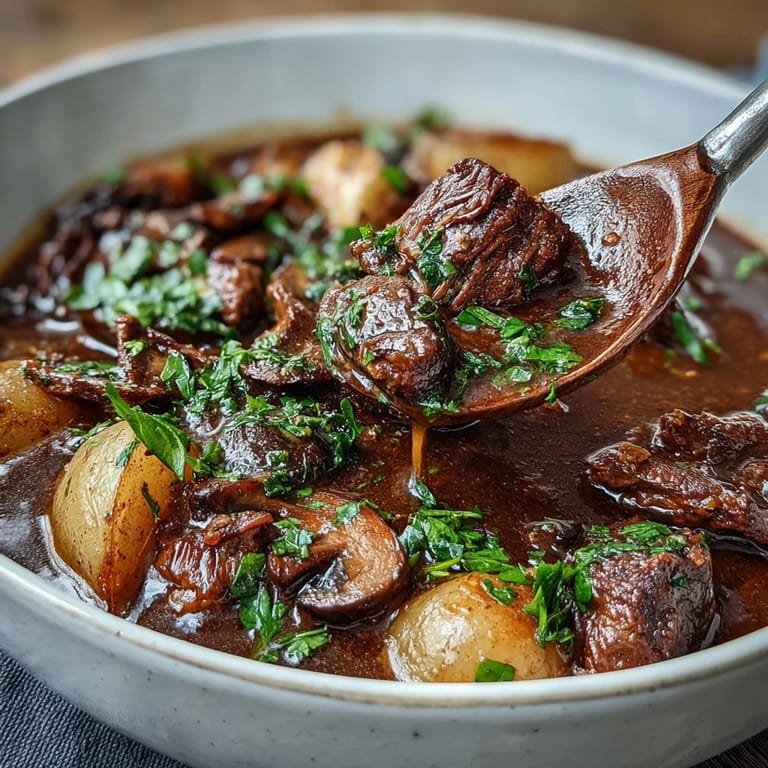
 Save to Pinterest
 There's something about a steaming bowl of Irish stew that makes you forget you're eating plant-based. My friend Sarah handed me a spoonful one autumn evening, and I was struck by how the mushrooms had transformed into something meaty and substantial, how the broth tasted like it had been simmering for generations. She'd ditched the Guinness entirely and built the depth with careful layering instead—root vegetables, herbs, and that clever mushroom trick. I asked for the recipe right then, standing in her kitchen with my coat still on.
I made this for a dinner party where half the table was vegan and half wasn't, and honestly, no one could tell the difference by taste. A guest who usually skips vegan mains asked for seconds, then thirds, and I watched her face light up when I told her there wasn't a drop of animal broth in the pot. That moment sealed it for me—this stew doesn't feel like a substitution; it feels like the real thing.
Ingredients
- Cremini or portobello mushrooms (400 g): These varieties have enough density and flavor to mimic ground meat when chopped fine and sautéed hard—don't use white button mushrooms or you'll lose that meaty texture.
- Soy sauce (2 tbsp): This is your secret weapon for umami depth, the savory note that makes people wonder what you added.
- Smoked paprika (1 tsp): It whispers of smokiness into the mushroom meat without overpowering; regular paprika won't give you that same warmth.
- Carrots, parsnips, potatoes (mixed): The holy trinity of Irish stew vegetables—each brings a different sweetness and texture, so don't skip any of them.
- Fresh thyme and rosemary: Dried will work, but fresh herbs sprinkled in toward the end brighten the whole pot, especially if you've been simmering for a while.
- Vegetable broth (1.2 L): Use a good quality broth you'd actually drink on its own; weak broth will make the whole stew taste dilute.
- Tomato paste (2 tbsp): This adds a subtle sweetness and body that rounds out the earthiness of the vegetables.
- Flour or cornstarch slurry: This thickens the stew into something that clings to the vegetables instead of pooling at the bottom—use cornstarch if you're cooking gluten-free.
Tired of Takeout? 🥡
Get 10 meals you can make faster than delivery arrives. Seriously.
One email. No spam. Unsubscribe anytime.
Instructions
- Sear the mushroom meat:
- Heat oil in a large skillet over medium-high heat and add your finely chopped mushrooms with soy sauce, paprika, and pepper. You'll hear them sizzle immediately, and they'll release a lot of liquid—that's normal. Keep stirring for 8 to 10 minutes until that liquid evaporates and the mushrooms turn dark and caramelized, almost charred at the edges.
- Build the base:
- In your large pot, warm 3 tbsp oil over medium heat and sauté the onion and garlic until they soften and smell sweet, about 5 minutes. This creates the foundation for everything else.
- Toast the vegetables:
- Add your carrots, parsnips, potatoes, celery, and rutabaga if you're using it. Stir them around for about 5 minutes so they start to soften slightly and pick up flavor from the hot pot.
- Layer in the aromatics and paste:
- Stir in your tomato paste, thyme, rosemary, bay leaves, and a generous pinch of salt and pepper. The tomato paste will coat the vegetables and darken slightly—this is where the color and richness start building.
- Simmer the vegetables:
- Pour in your vegetable broth and bring everything to a boil, then lower the heat to a gentle simmer, cover, and leave it alone for 30 minutes. You'll know the vegetables are done when a fork easily pierces the potato and carrot pieces.
- Return the mushroom meat:
- Add back your cooked mushroom meat and stir it through, distributing those savory bits evenly throughout the pot.
- Thicken to the perfect consistency:
- Mix your flour or cornstarch with 2 tbsp water until smooth, then stir it slowly into the simmering stew. Simmer uncovered for another 5 to 10 minutes until it reaches that perfect stew consistency—thick enough to coat a spoon but still loose enough to be brothy.
- Finish and taste:
- Remove the bay leaves and taste carefully. Season with more salt and pepper if it needs it; sometimes the broth reduces and becomes saltier than you'd expect.
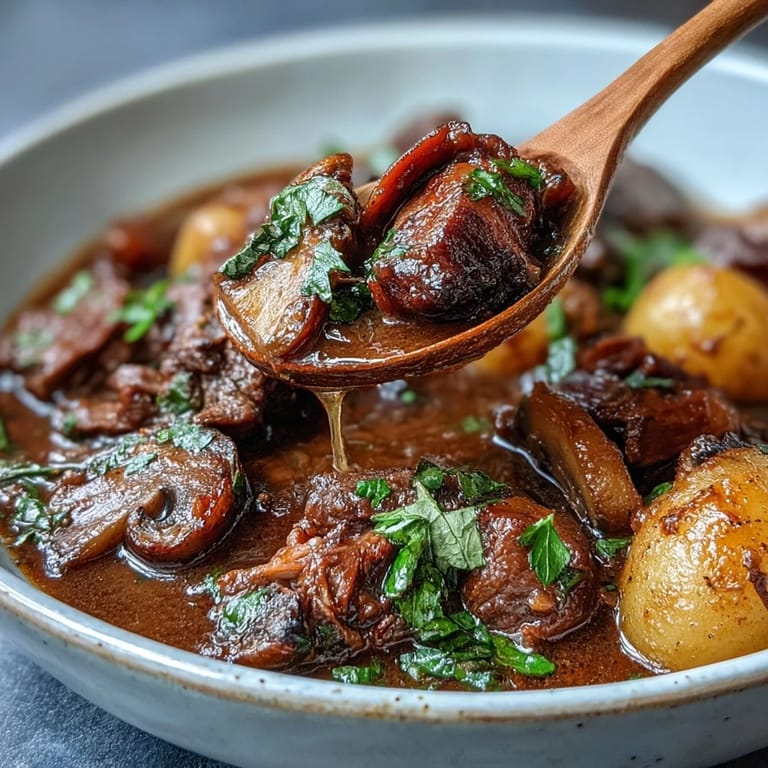 Save to Pinterest
 The first time I served this, my neighbor (who's very particular about her comfort food) sat down with that skeptical look I'd seen before. By the end of the meal, she was quiet in that satisfied way, and she asked if I'd add roasted crusty bread to the table next time. There's something about feeding people well that transcends ingredients.
The Secret Behind the Depth
What makes this stew taste nothing like 'vegan stew' is the multi-layered approach to savory flavor. The soy sauce in the mushrooms, the tomato paste in the broth, the careful browning of the onions—each adds a different kind of umami richness. It's not one bold flavor; it's a quiet conversation between ingredients that have been treated with respect. That's the difference between a recipe that happens to be vegan and one that tastes indulgent.
Variations Worth Trying
Once you've made this once, you start seeing where you can play. A splash of vegan Worcestershire sauce adds a salty depth, or a teaspoon of marmite if you're brave (I am, but my partner isn't). Some people swear by swapping regular potatoes for sweet potatoes, which pushes the stew toward a warmer, deeper flavor profile. You can also add pearl barley in the last 30 minutes of cooking for extra heartiness and texture.
Serving and Storage
Serve this hot in deep bowls with a slice of crusty bread for soaking up the broth—there's no shame in using your bread to get every last bit. The stew keeps beautifully in the fridge for up to 5 days and actually tastes better after a day or two, so batch cooking is your friend here. It freezes well too; I keep portions in the freezer for those nights when I want something warm without any of the work.
- A robust red wine like a vegan Merlot pairs beautifully if you're enjoying this with company.
- If your stew thickens too much overnight in the fridge, just thin it with a splash of broth when you reheat.
- Fresh parsley scattered on top at the very end brings brightness and reminds you that vegetables, not heaviness, are at the heart of this dish.
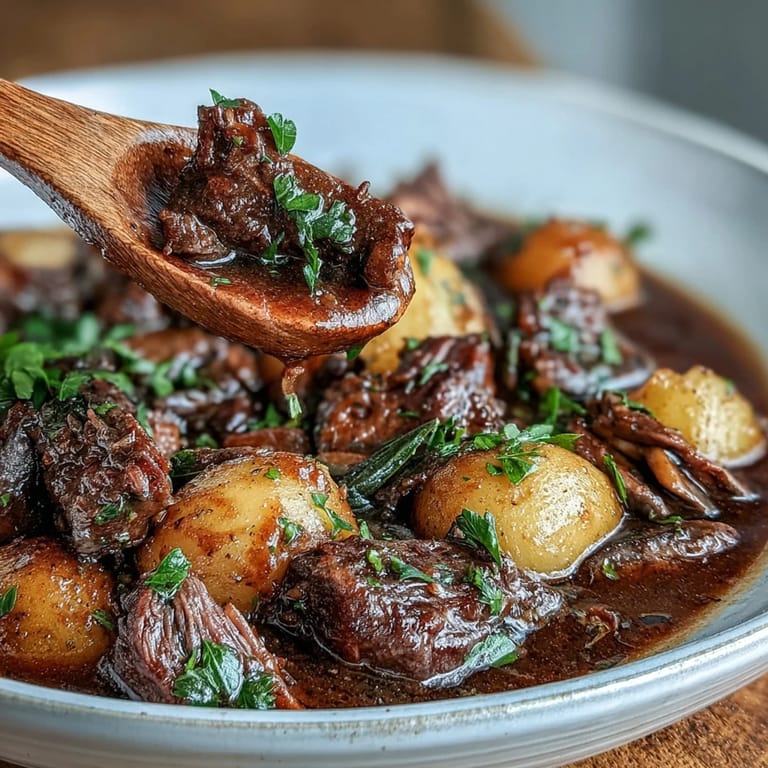 Save to Pinterest
 This stew has become my answer to every question about vegan comfort food. It asks nothing complicated of you, just attention and patience, and it rewards you with something warm that fills you completely.
Recipe Questions & Answers
- → What type of mushrooms work best for the mushroom meat?
Cremini or portobello mushrooms finely chopped provide the best texture and umami flavor for the mushroom meat component.
- → How can I make the stew gluten-free?
Use gluten-free soy sauce and cornstarch instead of regular flour for thickening to keep the stew gluten-free.
- → Can I substitute any vegetables in this stew?
Yes, swapping rutabaga for turnip or sweet potatoes for regular potatoes works well and adds different flavor notes.
- → What seasoning enhances the flavors in this stew?
Fresh or dried thyme, rosemary, bay leaves, and smoked paprika in the mushroom meat boost the stew’s woodsy and smoky flavors.
- → How long should the stew simmer for best results?
Simmering for about 30 minutes allows the root vegetables to become tender while the flavors meld beautifully.
- → What can I serve alongside this dish?
Crusty bread pairs wonderfully with the stew to soak up the rich broth and complete the meal.