 Save to Pinterest
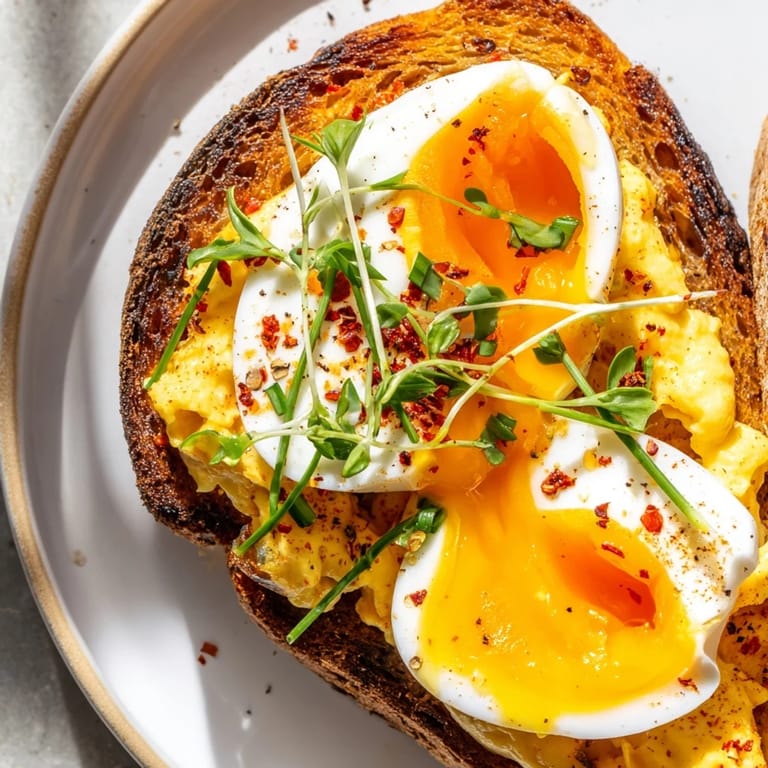
 There's something magical about the way a perfectly cooked egg transforms a simple slice of toast into an entire experience. I discovered this dish on a lazy Sunday morning when I had three eggs left in the carton and absolutely no plan, so I decided to cook each one differently and pile them onto a single golden slice of sourdough. The contrast of textures—creamy, runny, and soft—hitting my palate all at once felt like tasting the same ingredient three completely different ways. It became my favorite way to slow down and actually taste breakfast instead of just gulping it down.
I made this for my roommate one morning when she complained that her usual scrambled eggs felt boring, and watching her face light up as she tried each section was worth every dirty pan. She kept saying things like "wait, now the runny yolk is mixing with the scramble" and "these textures are insane together," and suddenly breakfast became something we actually talked about. That's when I realized this dish isn't just food—it's an edible conversation about how the same ingredient can taste like three totally different things.
Ingredients
- 1 large slice sourdough or country-style bread: Use bread thick enough to hold the weight of three eggs without collapsing—thin slices become soggy and sad within seconds.
- 1 large egg for scrambling: Room temperature eggs cook more evenly, and this one will be your creamy, gentle introduction to the plate.
- 1 large egg for soft-boiling: The 6½-minute timer is crucial here; any longer and the yolk sets too firm and loses that luxurious liquid center.
- 1 large egg for frying: Pick one with a beautiful yolk color if you can—it's the star of this show and deserves to shine.
- 1 tbsp unsalted butter: Unsalted lets you control the salt level across all three cooking methods, which matters more than you'd think.
- 1 tsp olive oil: This keeps the fried egg from sticking and adds a subtle richness that butter alone can't provide.
- Salt and freshly ground black pepper: Season each egg as you go rather than all at once, since flavors taste different when eggs are hot versus cool.
- Chopped fresh chives, chili flakes, microgreens (optional): These aren't just pretty—chives add a gentle onion bite, chili flakes bring a slow burn, and microgreens add a peppery snap that completes the experience.
Tired of Takeout? 🥡
Get 10 meals you can make faster than delivery arrives. Seriously.
One email. No spam. Unsubscribe anytime.
Instructions
- Toast your bread until it's golden and sturdy:
- Preheat your oven to 180°C and place the bread on a baking sheet for 5-7 minutes, watching it turn from pale to that perfect golden-brown that actually holds up under egg weight. You want it crisp on the outside but still tender enough to bite through easily.
- Start your soft-boiled egg first:
- Bring a small pot of water to a gentle boil, carefully lower in one egg, and set a timer for exactly 6½ minutes—this is the sweet spot where the yolk stays liquid but the white is just set. The second the timer goes off, plunge it into ice water to stop the cooking, then peel it gently and slice it in half.
- Make silky scrambled eggs with patience:
- Heat ½ tablespoon butter over medium-low heat (lower heat than you think you need), whisk one egg with a tiny pinch of salt and pepper, then pour it in and stir slowly with a spatula. This isn't a race—you're looking for soft, creamy curds that look a little underdone, because they'll continue cooking slightly after you remove them from heat.
- Fry your final egg with care:
- Wipe out the skillet, add the remaining ½ tablespoon butter plus the olive oil over medium heat, crack in your egg, and let it cook for 2-3 minutes until the whites are fully set but the yolk still jiggles slightly when you tilt the pan. Season it immediately with salt and pepper while it's still hot.
- Arrange your three egg preparations with intention:
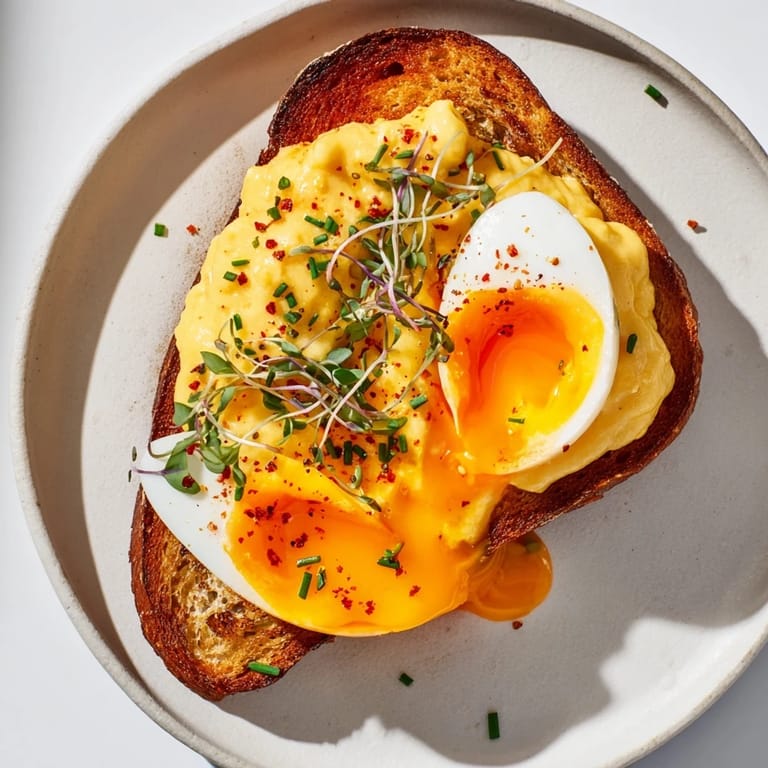
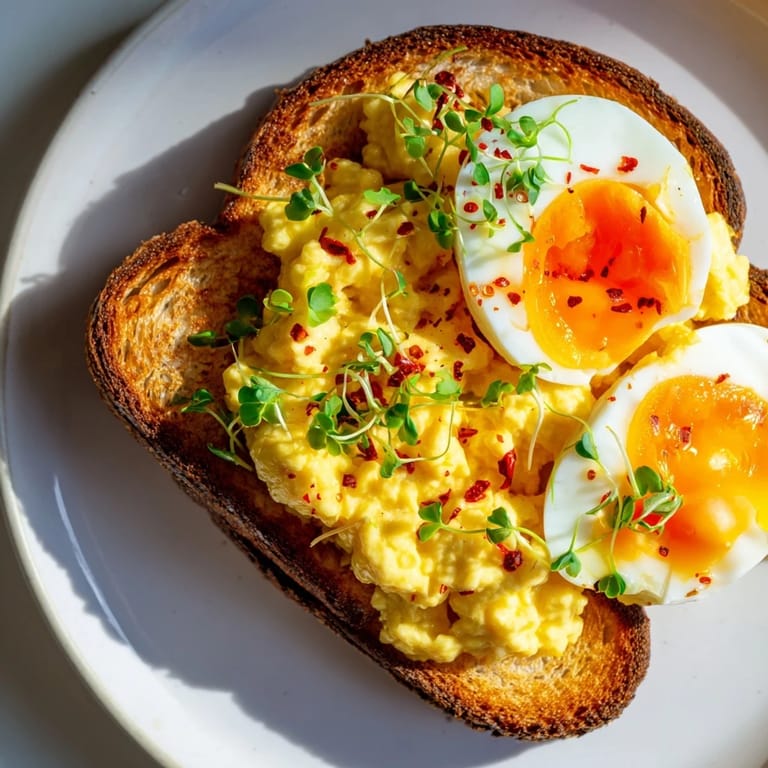
- Place the toasted bread on a plate, then divide it into thirds—scrambled egg on one section, soft-boiled halves on another, and the fried egg on the last. This visual structure makes eating the dish feel intentional and lets you taste the contrast with each bite.
- Finish with garnishes that sing:
- Scatter chives, chili flakes, and microgreens over the top if you have them, letting the heat slightly soften the chives and awaken their flavor.
 Save to Pinterest
 The first time I really understood why people get excited about good eggs was eating this dish on a Tuesday morning when everything in my life felt chaotic, and suddenly I was completely present just noticing how the runny yolk mixed with the scramble and how the chili flakes cut through all that richness. Food doesn't always need to be complicated to feel meaningful.
Why Three Different Egg Styles Matter
Each cooking method brings something entirely different to the plate—the scramble is your comfort zone, soft and familiar, while the soft-boiled egg is your moment of luxury with that glossy, liquid center, and the fried egg is your wild card where the crispy edges play against the runny yolk. When you eat all three in one bite, your palate experiences every texture and temperature variation that eggs can offer, and somehow they all support each other instead of competing. It's the same ingredient reminding you that technique is everything in cooking.
Timing Is Everything Here
The only real trick to this dish is getting all three eggs done at approximately the same moment so everything is still warm when it hits the plate. I learned this the hard way by starting with the scramble first and ending up with cold eggs by the time the fried egg was ready, so now I do soft-boiled first (it takes the longest), then scramble while that's going, and finish with the fried egg right before plating. Once you understand this rhythm, the whole thing comes together in about 15 minutes flat.
Make It Your Own
This is genuinely one of the most flexible dishes you can make once you understand the basic structure, which means there's no shame in experimenting with what works for your kitchen and your taste. Swap in a poached egg instead of fried, try an omelette instead of scramble, add roasted mushrooms or avocado slices tucked between the sections, use gluten-free bread if that's what you need—the magic happens because you're celebrating three different egg techniques on one plate, and everything else is just personal preference.
- Add smoked salmon or crispy bacon to turn this into a more substantial meal that still feels light and breakfast-like.
- Use hot sauce or everything bagel seasoning instead of chili flakes if that's more your style—it's your plate, after all.
- Make this on weekend mornings when you actually have time to cook instead of rushing, and you'll remember why breakfast deserves better than cereal.
 Save to Pinterest
 This dish taught me that breakfast doesn't need to be fast to be simple, and that sometimes the most satisfying meals are just three familiar techniques on one plate. Make it when you want to feel like you're taking care of yourself, even on a Tuesday morning.
Recipe Questions & Answers
- → How do you achieve the perfect soft-boiled egg?
Boil water, gently lower the egg, and cook for about 6½ minutes. Immediately transfer to ice water to stop cooking and make peeling easier.
- → What bread works best for this dish?
Sourdough or country-style bread provides a sturdy, flavorful base that crisps well under heat.
- → Can I customize the egg styles?
Yes, try substituting poached or omelette eggs to create different textures and presentations.
- → What garnishes complement these flavors?
Fresh chives, chili flakes, and microgreens add brightness and subtle heat without overpowering the eggs.
- → How can I make this dish suitable for gluten-free diets?
Replace the bread with a gluten-free option and ensure all other ingredients comply with dietary needs.