 Save to Pinterest
 There's this moment when you plate up a teriyaki salmon bowl and the steam hits your face, carrying that unmistakable blend of soy and ginger, and suddenly you understand why this dish has become my go-to when I want something that feels both effortless and impressive. My neighbor mentioned she'd been craving Japanese food one Tuesday evening, and instead of suggesting takeout, I found myself pulling salmon from the freezer and remembering how quickly this comes together. The glaze catches the light when you plate it, and somehow that small detail makes the whole meal feel intentional, even when you've only spent thirty-five minutes in the kitchen.
I made this for my sister last spring when she was going through a phase of trying to eat better, and watching her face light up when she realized comfort food and nutrition weren't mutually exclusive felt like a small victory. She asked for the recipe immediately, and now whenever I see her, she mentions how often she's made it. That's when you know a recipe has truly landed, when someone you care about claims it as their own.
Ingredients
- Salmon fillets: Four pieces at about 150 grams each, and it genuinely doesn't matter if they're skin-on or skinless, though I've found the skin helps keep them moist and adds a subtle crispy texture if you're patient with the sear.
- Soy sauce: The foundation of the glaze, so use something you'd actually taste on its own, not the bargain bottle that tastes like salt and regret.
- Mirin: This is the secret to that glossy finish, the thing that transforms soy sauce from savory to savory-sweet without tasting like you dumped in sugar.
- Brown sugar: Two tablespoons rounds out the sweetness and helps everything caramelize beautifully when it hits the pan.
- Rice vinegar: Just a tablespoon, but it's what stops the sauce from becoming cloying and keeps things bright.
- Sesame oil: Two teaspoons adds a depth you won't be able to pinpoint but will absolutely notice if it's missing.
- Garlic and ginger: Minced fresh garlic and grated fresh ginger are non-negotiable here; the powdered versions will make this taste generic.
- Cornstarch slurry: This thickens the sauce so it clings to the salmon instead of pooling on the plate.
- Bell pepper, carrot, broccoli, and sugar snap peas: These stay crisp because you're stir-frying them quickly over high heat, which means they keep their texture and color instead of becoming sad and mushy.
- Jasmine or sushi rice: The rice is your canvas, so choose something that's actually fragrant and fluffy.
- Sesame seeds and spring onions: The garnishes matter because they add a final crunch and freshness that keeps the bowl from feeling heavy.
Tired of Takeout? 🥡
Get 10 meals you can make faster than delivery arrives. Seriously.
One email. No spam. Unsubscribe anytime.
Instructions
- Prepare your rice foundation:
- Rinse the rice under cold water until the water runs clear, which removes the starch and prevents it from being gluey. Combine it with water in a saucepan, bring to a boil, then reduce heat, cover, and let it simmer for fifteen minutes before removing from heat and letting it stand covered for another five minutes, which is when the grains finish setting.
- Build the teriyaki glaze:
- While rice cooks, combine soy sauce, mirin, brown sugar, rice vinegar, sesame oil, minced garlic, and grated ginger in a small saucepan over medium heat, stirring until the sugar dissolves completely. Stir in your cornstarch slurry and cook for one to two minutes until the sauce thickens enough to coat the back of a spoon, then set it aside and try not to taste it straight from the pan, though honestly, I always do.
- Sear the salmon with intention:
- Season your salmon fillets with salt and pepper, then add a splash of oil to a large nonstick skillet over medium-high heat and wait until it shimmers before laying the salmon skin-side down if you're using skin-on fillets. You'll hear a satisfying sizzle and see the edges turn opaque after three to four minutes, which is when you flip it and cook the other side for two to three minutes until the flesh is just cooked through.
- Glaze and rest:
- Brush the salmon generously with the teriyaki sauce and cook for one minute more, letting the sauce caramelize slightly, then remove from heat and let it rest while you finish the vegetables.
- Stir-fry with speed:
- Heat vegetable oil in a wok or large skillet over high heat until the oil shimmers, then add your sliced bell pepper, julienned carrot, broccoli florets, and sugar snap peas all at once. Stir-fry for three to four minutes, tossing constantly so everything cooks evenly and stays crisp, then transfer to a bowl.
- Compose your bowl:
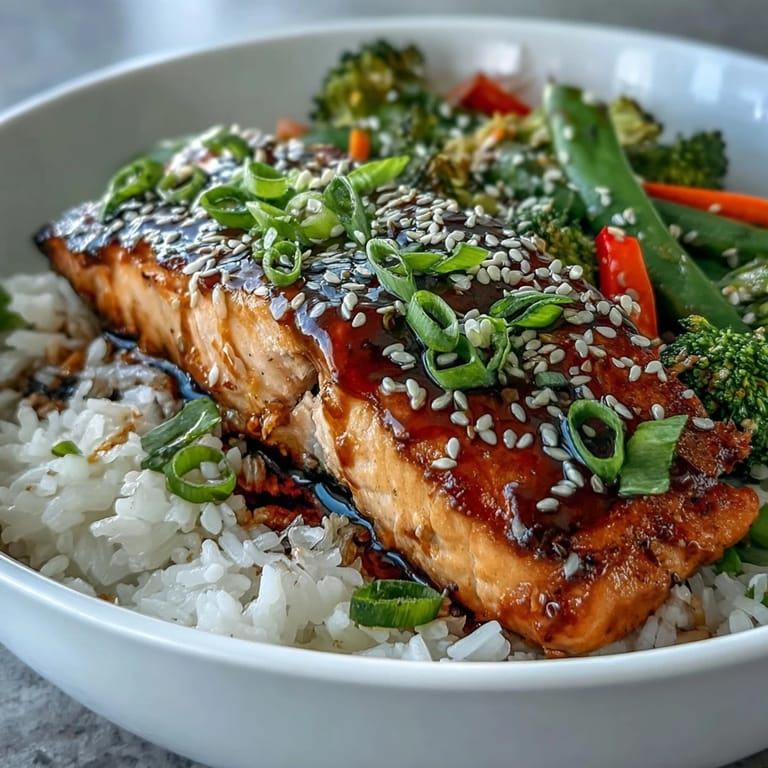
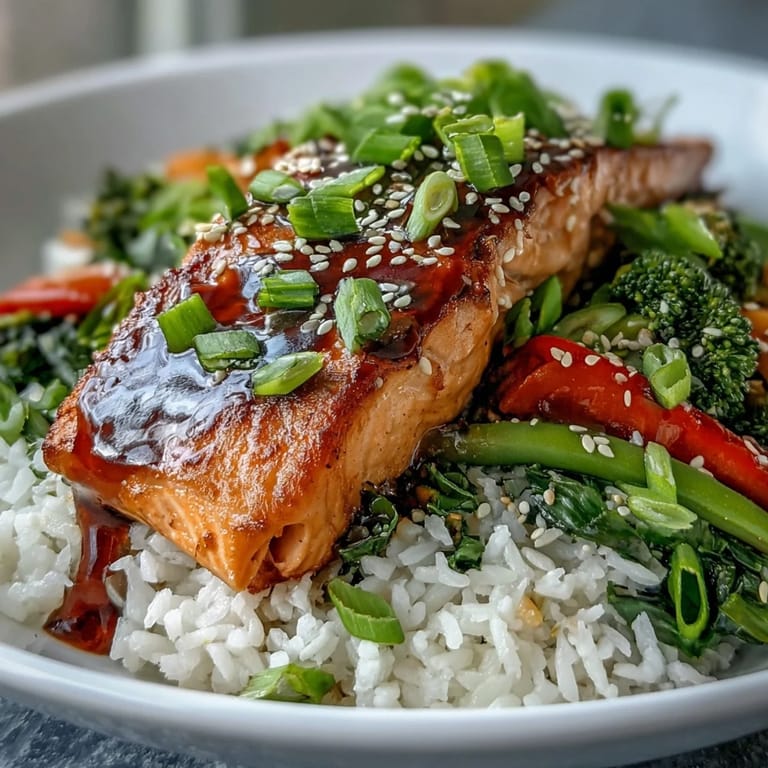
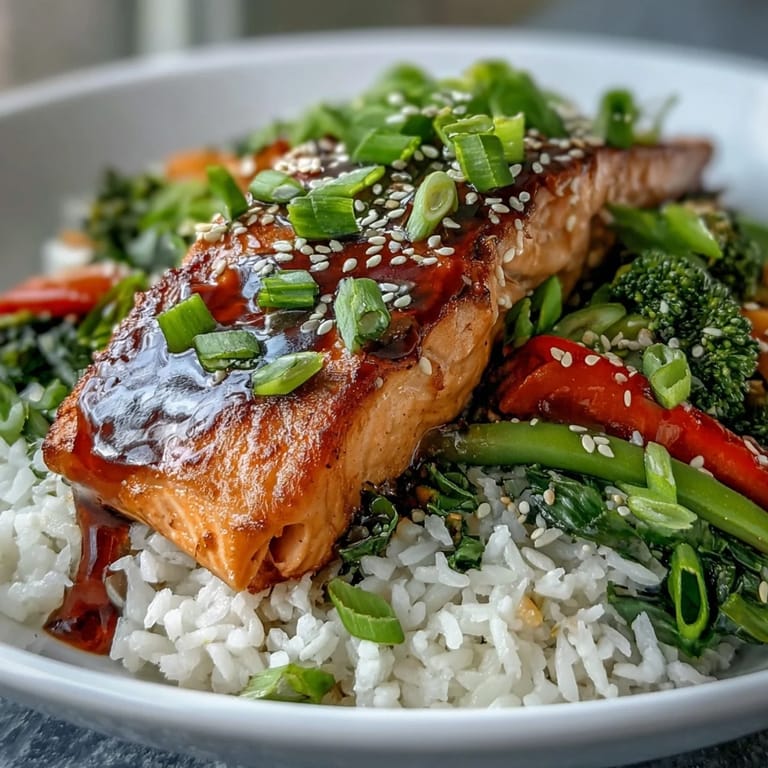
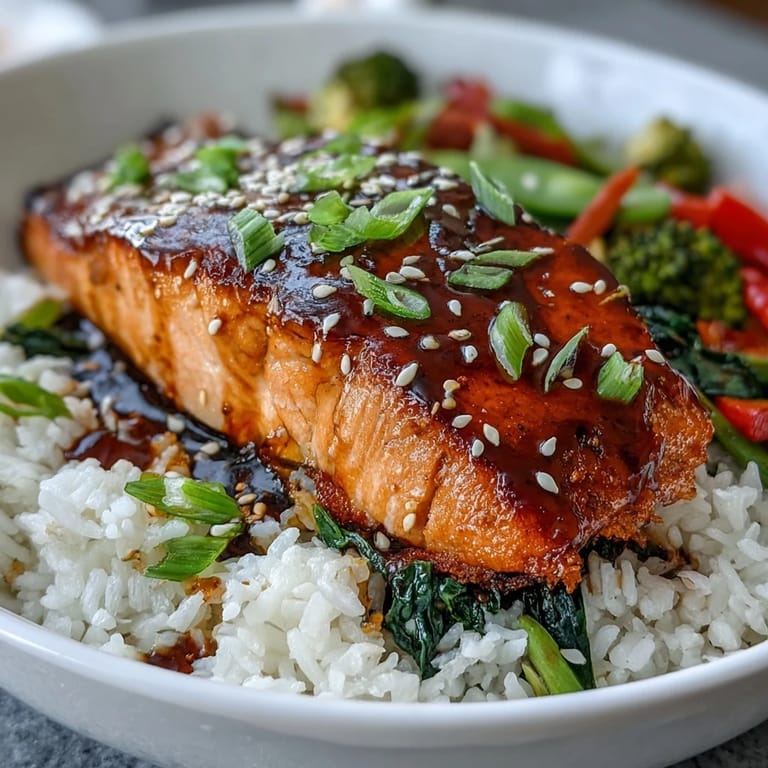
- Divide the fluffy rice between four bowls, top each with the stir-fried vegetables, then carefully place a teriyaki-glazed salmon fillet on top. Drizzle extra sauce over everything, scatter sesame seeds and sliced spring onions across the top, and serve immediately while the rice is still warm.
 Save to Pinterest
  Save to Pinterest
 There's something quiet and centering about this meal, the way the warm rice softens slightly under the warm salmon while the crisp vegetables stay snappy and bright, everything held together by a sauce that tastes like someone understood exactly what food should taste like. It's the kind of bowl that makes you sit down and actually eat instead of multitasking, which is maybe the most important thing a recipe can do.
Why This Dish Works Every Single Time
The structure of this bowl is balanced in a way that feels almost mathematical. You've got protein that's tender and glazed, vegetables with actual texture, rice that absorbs the sauce, and that final hit of nuttiness from the sesame seeds and sesame oil in the glaze. Nothing overwhelms anything else, which is why this bowl feels satisfying rather than heavy, and why people keep coming back to it.
Timing and Temperature Choreography
The real skill here isn't technique, it's managing the timing so everything finishes at the same moment. Start your rice first since it takes the longest, make your sauce while the rice simmers, sear the salmon when you've got about five minutes left on the rice, then do your stir-fry in the final minutes before plating. Once you've done this twice, it becomes automatic, and you'll find yourself moving through the kitchen with a rhythm that feels almost meditative instead of stressful.
Flexibility Without Losing the Plot
The vegetables in this bowl are a suggestion, not a decree, which is why I've swapped in zucchini when bell peppers looked sad at the market, or added mushrooms when I had them on hand. The only rule is that you keep the total amount roughly the same and respect the high-heat stir-fry timing so you don't end up with mushy vegetables. Spring is when I load this with asparagus and snap peas, summer brings zucchini and baby corn, and fall is when I add shiitake mushrooms and think about pairing this with a crisp white wine like Sauvignon Blanc.
- You can marinate the salmon in half the teriyaki sauce for fifteen minutes before cooking if you want deeper flavor and don't mind the extra fifteen minutes of prep.
- Leftover components keep separately in the refrigerator for two to three days, which means you can make components ahead and assemble fresh bowls without cooking again.
- If you want to make this vegetarian, crispy tofu or hearty mushrooms work beautifully in place of the salmon, though you'll want to extend the cooking time slightly.
 Save to Pinterest
  Save to Pinterest
 This is the kind of meal that bridges the gap between fast food and proper cooking, where you feel like you've actually made something worthwhile in the time it would take to order and wait for delivery. Make it once and you'll understand why it's become part of my regular rotation.
Recipe Questions & Answers
- → What vegetables work best in this bowl?
Bell peppers, broccoli florets, julienned carrots, and sugar snap peas provide excellent texture and color. You can easily substitute with seasonal options like zucchini, mushrooms, baby corn, or snow peas depending on what's available.
- → Can I use other types of fish?
While salmon works beautifully with teriyaki glaze, you can substitute with other fatty fish like sockeye, king salmon, or even tuna steaks. For lighter options, cod or halibut also pair well, though they may cook faster than salmon.
- → How do I store leftovers?
Store components separately in airtight containers in the refrigerator for up to 2 days. Keep the salmon, rice, and vegetables in separate containers to maintain texture. Reheat gently in the microwave or briefly in a skillet, adding a splash of water to refresh the rice.
- → Is the teriyaki sauce make-ahead friendly?
Yes, prepare the teriyaki sauce up to 1 week in advance and store it in an airtight container in the refrigerator. The cornstarch may cause slight thickening when chilled, but gently reheating will return it to the perfect consistency.
- → What can I serve alongside this bowl?
Miso soup, seaweed salad, or a simple cucumber salad with rice vinegar make excellent accompaniments. For extra protein, consider adding edamame or a soft-boiled egg. A crisp white wine like Sauvignon Blanc complements the sweet and savory flavors beautifully.