 Save to Pinterest
 There's something almost meditative about standing at the stove with a hot wok, watching thin slices of beef sear and turn golden while steam rises around you. My neighbor once mentioned offhandedly that teriyaki bowls were her go-to weeknight dinner, and I realized I'd been overcomplicating Japanese food in my head for years. One evening, I decided to stop overthinking it and just make the thing, and what surprised me most wasn't the impressive result—it was how quickly the kitchen filled with that unmistakable sweet and savory aroma that made everyone emerge from whatever they were doing asking when dinner would be ready.
I made this for my sister during a busy spring when she was juggling too many things at once, and watching her slow down between bites felt like the whole meal had done its job. She asked for seconds immediately, and I remember her saying it tasted like what she'd been craving without knowing it—that specific balance of sweet, salty, and bright that just makes sense with rice.
Ingredients
- Flank steak or sirloin, thinly sliced (500 g): The thinner you slice it, the more surface area absorbs the glaze—I learned this the hard way by overthinking thickness, and now I aim for about the width of a coin so it cooks through in just minutes without turning chewy.
- Cornstarch (2 tbsp total): One tablespoon coats the beef to give it that slight crisp, while the slurry thickens the sauce to silky perfection without any floury taste.
- Soy sauce (80 ml): This is your savory anchor, so don't skimp on quality—a darker, aged soy sauce brings depth that brightens everything.
- Mirin (60 ml): Sweet rice wine that feels almost creamy when it hits the pan, creating that glossy finish that makes the bowl feel special.
- Honey or brown sugar (2 tbsp): Choose one depending on your mood—honey dissolves faster, while brown sugar adds a subtle molasses note that lingers.
- Rice vinegar (2 tbsp): Just enough acid to cut through the sweetness and prevent the sauce from feeling one-dimensional.
- Garlic and ginger (2 cloves and 1 tsp): Fresh, never the jarred versions—the difference in brightness is immediate and worth the thirty seconds of mincing.
- Carrots, bell pepper, broccoli (mixed vegetables): I choose these for their ability to stay slightly crisp while absorbing sauce, but honestly any vegetable you like works as long as you cut it thin enough to cook quickly.
- Spring onions and sesame seeds (for garnish): These finish the bowl with texture and freshness that keeps each bite interesting.
- Cooked rice (2 cups): Warm rice is essential—cold rice becomes a barrier between sauce and grain, which is a quiet tragedy I prevent by always having rice ready.
Tired of Takeout? 🥡
Get 10 meals you can make faster than delivery arrives. Seriously.
One email. No spam. Unsubscribe anytime.
Instructions
- Build your sauce foundation:
- Combine soy sauce, mirin, honey, rice vinegar, minced garlic, and grated ginger in a small saucepan over medium heat, letting them simmer together until the kitchen smells like a teriyaki restaurant. The sauce should bubble gently, never aggressively—this is where the flavors marry into something greater than their individual parts.
- Thicken with purpose:
- Whisk your cornstarch slurry into the simmering sauce and watch it transform from glossy liquid to silky coating in just two to three minutes. Remove it from heat before it gets too thick, since it'll continue setting slightly as it cools.
- Prepare your beef:
- Toss your thin beef slices with cornstarch until each piece is lightly dusted—this helps it brown beautifully and stay tender instead of steaming in its own moisture. Don't skip this step even though it feels small.
- Sear with confidence:
- Get your skillet or wok screaming hot with oil, then add the beef in a single layer if you can manage it, letting it brown hard on one side before stirring. The beef should look golden and slightly caramelized after two to three minutes, which means it's just cooked through and ready to be removed before it toughens up.
- Stir-fry your vegetables:
- In the same skillet, add your carrots, bell pepper, and broccoli, keeping the heat high and stirring constantly so they cook quickly and stay bright. Three to four minutes should give them that tender-crisp texture where they're cooked but still have backbone.
- Bring it all together:
- Return the beef to the skillet, pour that gorgeous teriyaki sauce over everything, and toss until every piece is glossy and coated. One minute of gentle heating melds all the flavors together without breaking down the vegetables further.
- Compose and serve:
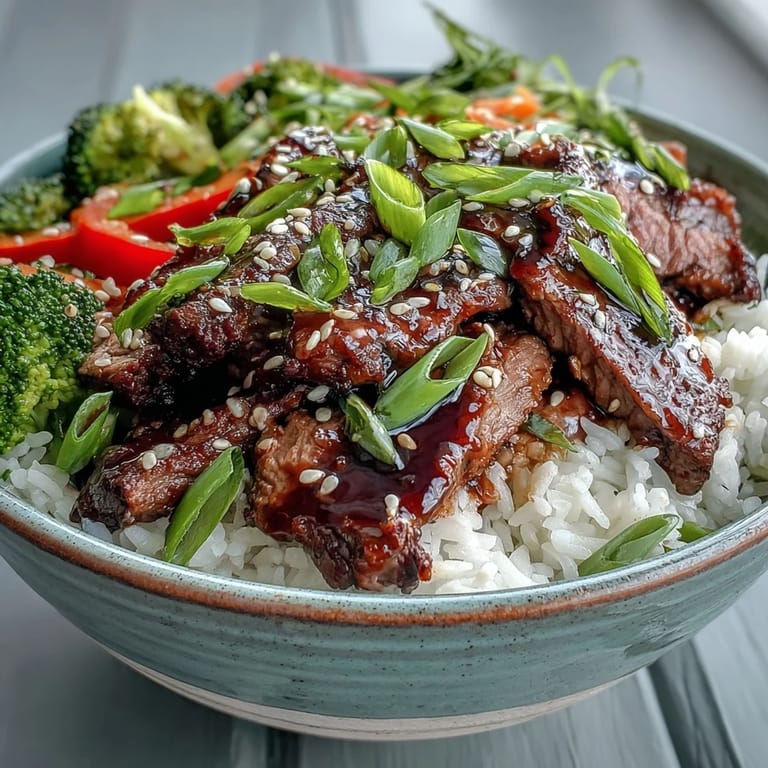
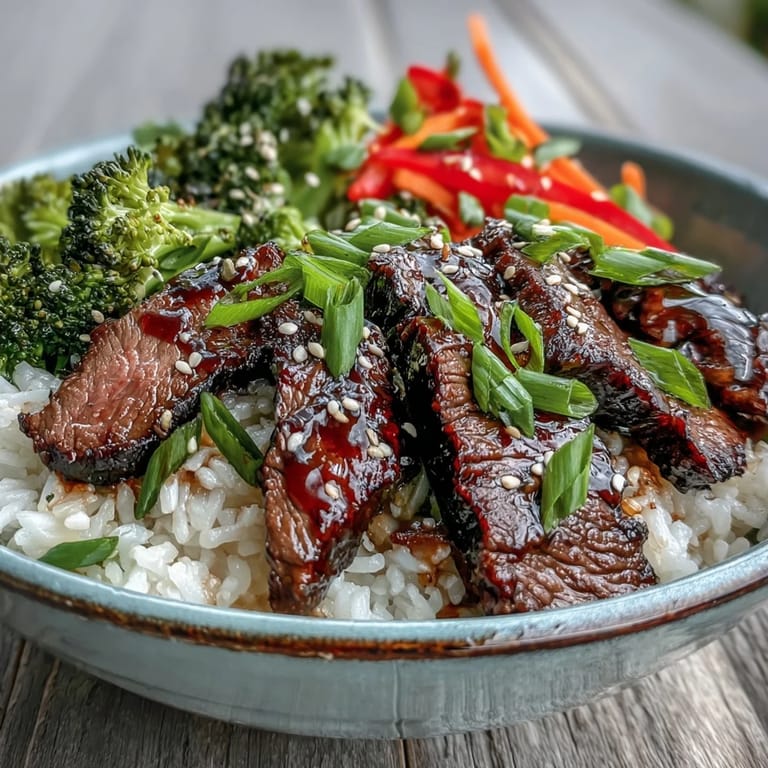
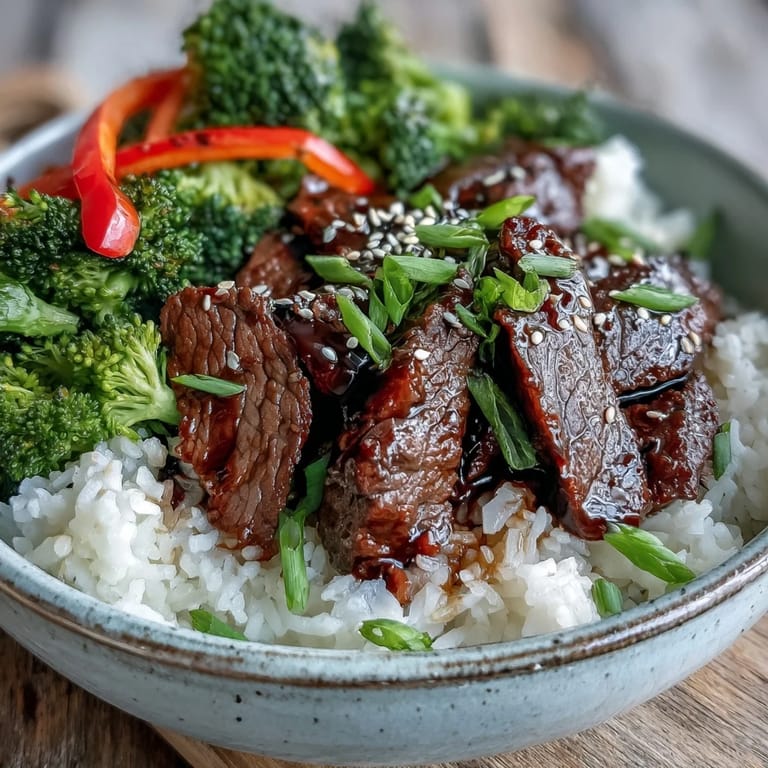
- Divide your warm rice among bowls, then top with the beef and vegetable mixture, letting some of the sauce pool into the rice. Finish with a scatter of spring onions and sesame seeds for that final layer of freshness and crunch.
 Save to Pinterest
 The first time someone told me this simple bowl changed their dinner routine, I understood why comfort food matters—it's not about complexity, it's about reliability and the way it makes you feel taken care of. That evening taught me that the best recipes are the ones that become part of someone's regular life, not museum pieces made once and never again.
Variations That Work
Chicken breast cut into bite-sized pieces works beautifully if you want something lighter, cooking in almost the same time as beef and absorbing the sauce just as generously. Tofu pressed and cubed becomes almost savory-sweet when treated the same way, appealing to vegetarian nights when you still crave that umami satisfaction.
Vegetable Swaps and Additions
Edamame stirred in at the end stays tender and adds protein without changing the flavor profile, while snap peas bring a delicate crunch that feels almost delicate against the rich sauce. Mushrooms, especially shiitake or cremini, absorb the teriyaki and become deeply savory additions that make the bowl feel more substantial without weighing it down.
Making It Your Own
The beauty of this bowl is that it invites adaptation without losing its essential character—you can make it your dinner staple by rotating vegetables based on what's in season or what you find yourself buying at the market. The sauce is forgiving enough to handle adjustments too, whether you want more spice from a pinch of chili flakes or deeper richness from a splash of sesame oil drizzled at the end.
- For a gluten-free version, swap regular soy sauce for tamari or certified gluten-free soy sauce without changing the ratios.
- Brown rice works equally well if you prefer the texture and nutrition, though it needs a few extra minutes to warm through.
- Make the sauce up to three days ahead and refrigerate it, then reheat gently while you cook the beef and vegetables for a weeknight shortcut.
 Save to Pinterest
 This teriyaki bowl has become my answer to the question of what to cook when I want something that tastes impressive but doesn't demand my entire evening. There's real magic in how simple ingredients transform into something that makes people feel genuinely happy to sit down and eat.
Recipe Questions & Answers
- → What cut of beef works best?
Flank steak or sirloin are ideal choices because they're lean yet tender when sliced thinly against the grain. Look for well-marbled pieces that will stay juicy during quick high-heat cooking.
- → Can I make this gluten-free?
Absolutely. Substitute regular soy sauce with tamari or a certified gluten-free soy sauce alternative. The rest of the ingredients naturally contain no gluten, making this an easy adaptation.
- → How do I store leftovers?
Keep components separate in airtight containers in the refrigerator for up to 3 days. The beef and vegetables reheat beautifully in a skillet over medium heat, while rice can be warmed in the microwave or steam-fried.
- → What vegetables can I add?
Snap peas, edamame, shiitake mushrooms, zucchini, or baby corn all work wonderfully. Just adjust cooking times accordingly—denser vegetables like carrots need a few extra minutes while delicate greens cook quickly.
- → Can I use chicken instead?
Chicken thighs or breast work perfectly as a substitution. Slice them thinly against the grain and follow the same cooking method, adjusting timing to ensure the chicken reaches 165°F internally before adding the sauce.
- → Why use cornstarch on the beef?
Lightly coating the beef in cornstarch before stir-frying creates a protective layer that seals in juices and helps the teriyaki sauce cling to the meat, giving each bite a glossy, velvety texture.