 Save to Pinterest
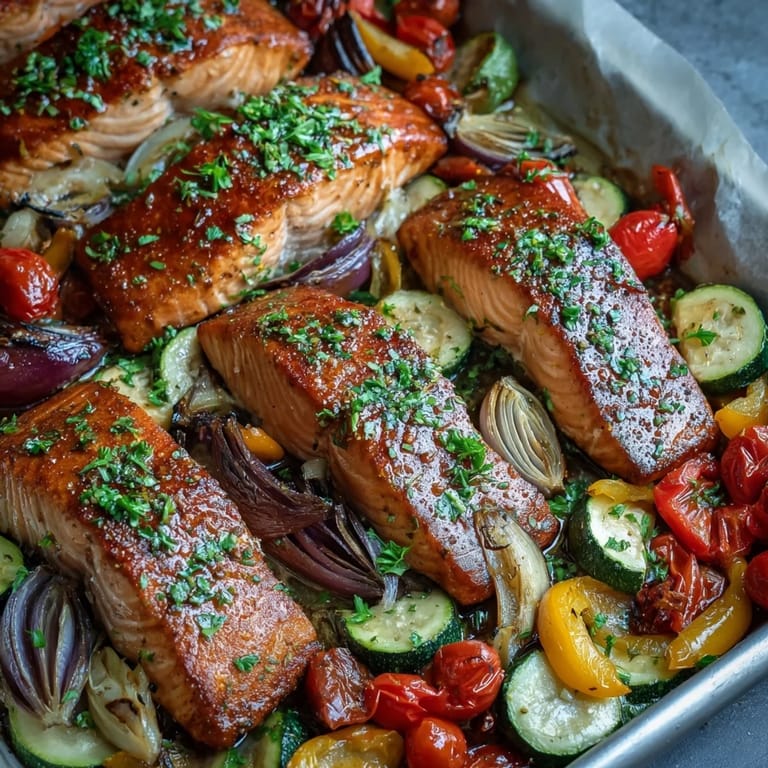
 There's something almost magical about throwing everything on one pan and walking away while the oven does the heavy lifting. I discovered this sheet pan method on a Tuesday night when I was too tired to juggle multiple pots, and honestly, it changed how I think about weeknight cooking. The salmon comes out impossibly tender, the vegetables caramelize into something almost candy-like, and your kitchen doesn't smell like a disaster zone. It's the kind of meal that feels fancy enough for company but lazy enough for when you're running on fumes.
My partner came home early one evening to find our kitchen filled with the most incredible roasted smell, and I watched their face light up when they realized dinner was already done and waiting. That moment made me realize this recipe does something special—it looks effortless but tastes like you actually tried, and somehow that balance makes people feel cared for in the most understated way.
Ingredients
- Salmon fillets (4, about 5–6 oz each): Pat them completely dry before cooking—this tiny step is what gets you that beautiful caramelized exterior instead of a steamed, pale fillet.
- Red onion: Cut into wedges so the layers stay intact and turn sweet and jammy as they roast.
- Carrots: Slice them uniformly so everything finishes at the same time; too thick and they'll still be crunchy when the salmon is done.
- Red and yellow bell peppers: The colors aren't just pretty; they add different flavor notes, with yellow being slightly sweeter.
- Zucchini: Half-moons cook faster than thick rounds and won't turn into mush by the time the salmon is ready.
- Cherry tomatoes: Halving them helps them release their juices into the pan, creating a light pan sauce.
- Olive oil: Use good oil you actually like tasting; it's tasting right here, not hiding in a sauce.
- Dried Italian herbs: If you have fresh herbs lying around, use those instead—just add them in the last few minutes so they don't turn bitter.
- Lemon zest and fresh parsley: These finish the dish with brightness and keep it from tasting heavy.
Tired of Takeout? 🥡
Get 10 meals you can make faster than delivery arrives. Seriously.
One email. No spam. Unsubscribe anytime.
Instructions
- Heat your oven and prep the pan:
- Get that oven to 425°F and line your sheet pan with parchment or foil—this isn't laziness, it's strategy, because your future self will be grateful for the easy cleanup and nothing will stick.
- Season and spread the vegetables:
- Toss your onion, carrots, peppers, zucchini, and tomatoes with olive oil, herbs, salt, and pepper until everything glistens, then spread them out in a single layer so they actually roast instead of steam.
- Give vegetables a head start:
- Roast them alone for 10 minutes—this matters because salmon cooks faster and you want the veggies to already be caramelizing at the edges when the fish joins the party.
- Prepare the salmon:
- Pat your fillets dry (seriously, this step again because it's that important), brush with oil, sprinkle with lemon zest, salt, and pepper—keep it simple so the salmon flavor shines.
- Add salmon to the pan:
- Pull out the hot pan, make a little space in the vegetable situation, and nestle the salmon fillets in there like they belong.
- Final roast:
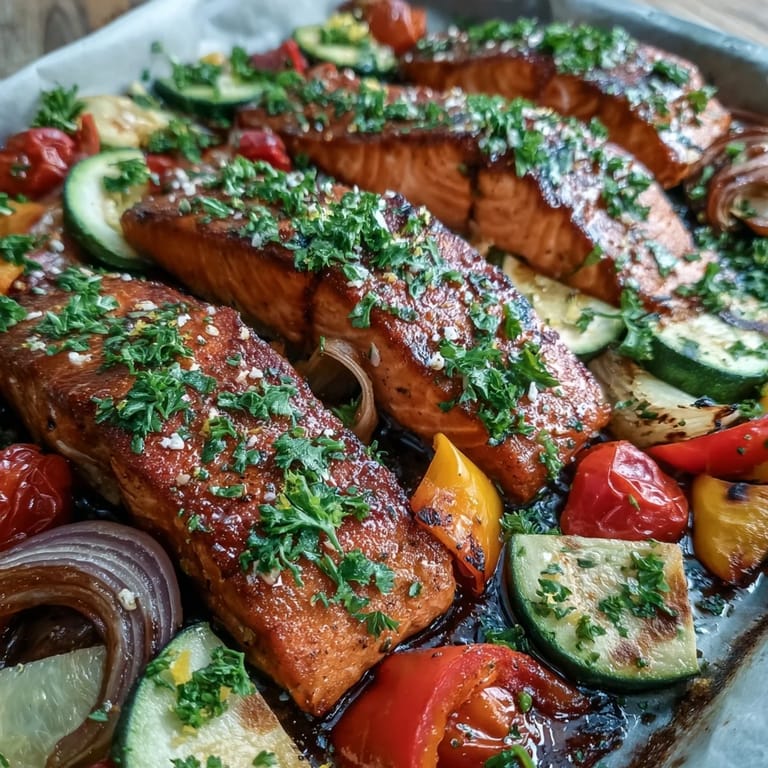
- Back in the oven for 12–15 minutes until the salmon flakes easily when you poke it with a fork and the vegetables have those gorgeous caramelized edges—trust your nose; you'll smell when it's ready.
- Finish with brightness:
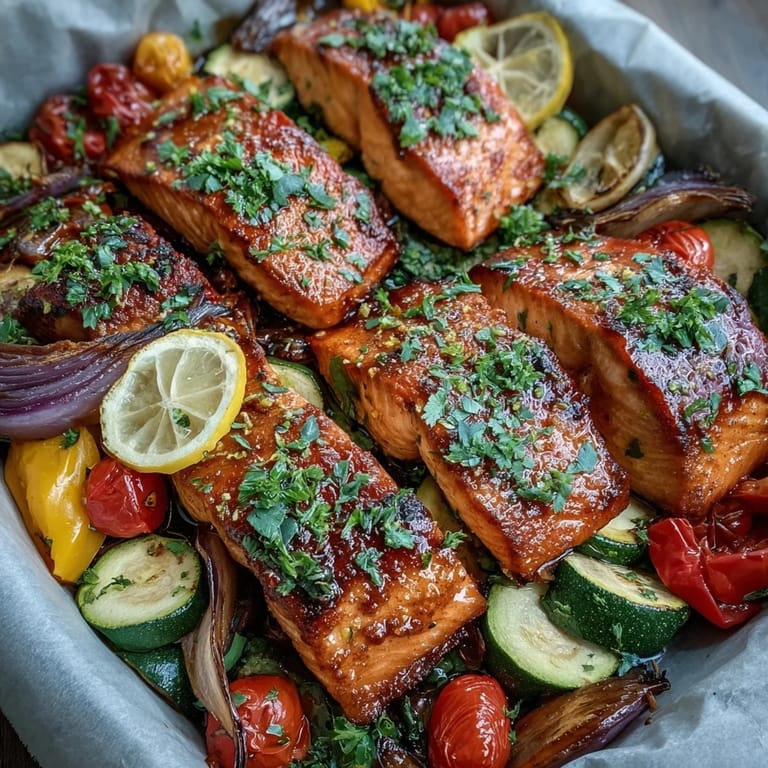
- Top with fresh parsley and serve with lemon wedges so people can add as much tartness as they want.
 Save to Pinterest
 I made this for my mom after she mentioned feeling tired of cooking, and watching her eat something this nourishing without any fuss made me realize that sometimes the best gift is making dinner feel effortless. That's when food becomes about more than flavor—it becomes about care.
Swapping In What You Actually Have
This recipe is genuinely forgiving about substitutions because the method is what matters, not the exact vegetables. I've used asparagus when carrots were looking tired, thrown in broccoli when it was what the farmers market had left, and even added cubed sweet potato when I wanted something more substantial. The point is you're roasting things together, so as long as you cut them to roughly the same size, they'll play nicely and finish around the same time.
Elevating It Without Extra Work
Sometimes I crumble feta cheese over the top right before serving, and other nights I drizzle everything with a little balsamic glaze that catches the light and makes the dish look fancier than it actually was. A squeeze of fresh lemon just before eating brings everything into focus too—it's the kind of small gesture that makes people think you spent way more time on this than you actually did.
Making It Your Own
The real magic of this recipe is how it becomes a canvas for whatever you're craving or whatever your kitchen can offer. Once you understand that the salmon needs 12–15 minutes and the vegetables need a 10-minute head start, you can freestyle the rest. Experiment with different herb combinations, throw in whatever vegetables are calling to you, and notice how the roasting brings out sweetness in things you might normally skip.
- Season the veggies generously before roasting—they won't absorb salt as well once they're hot.
- If your salmon fillets are extra thick, give them an extra 2–3 minutes in the oven.
- Save any pan juices and drizzle them over the finished bowls for extra flavor.
 Save to Pinterest
 This is the meal I reach for when I want to feel like I'm taking care of myself without it feeling like a chore. It's proof that good food doesn't require complicated techniques or hours of your life.
Recipe Questions & Answers
- → What vegetables work best in this bowl?
Red onions, carrots, bell peppers, zucchini, and cherry tomatoes roast beautifully together. You can also add asparagus, broccoli, sweet potatoes, or any seasonal vegetables you enjoy.
- → How do I know when the salmon is done?
The salmon is finished when it flakes easily with a fork and reaches an internal temperature of 145°F. The flesh should appear opaque and slightly pink throughout.
- → Can I use frozen salmon fillets?
Yes, thaw the salmon completely before cooking and pat it dry to remove excess moisture. This helps achieve better caramelization and prevents the fish from becoming watery.
- → What temperature should the oven be set to?
Preheat your oven to 425°F for optimal roasting. This high heat ensures the vegetables caramelize nicely while the salmon cooks through without drying out.
- → How long will leftovers keep?
Store leftovers in an airtight container in the refrigerator for up to 3 days. Reheat gently in the microwave or enjoy cold over salad greens for a quick lunch.
- → What sides pair well with this dish?
This bowl works beautifully with quinoa, brown rice, or crusty bread to soak up the juices. A light white wine like Sauvignon Blanc complements the flavors perfectly.