 Save to Pinterest
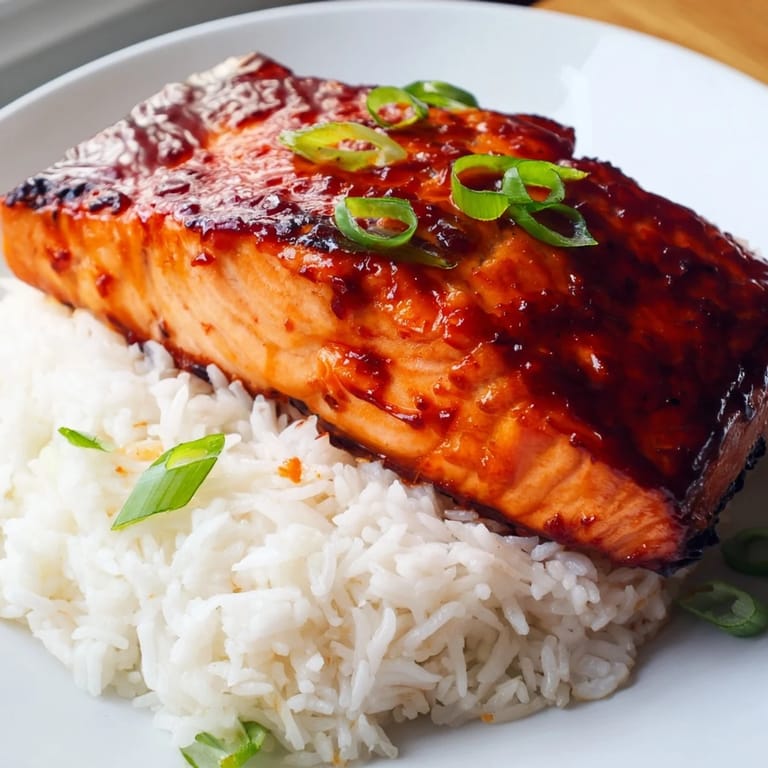
 There's something about the smell of salmon hitting a hot pan that instantly transports me to a dinner party gone wonderfully wrong. I'd promised my friend David something special, but halfway through cooking I realized I had gochujang instead of the teriyaki I'd planned on. Instead of panicking, I grabbed an orange from the fruit bowl, squeezed it into the chili paste, and what emerged was this sticky, tangy glaze that made everyone at the table stop mid-conversation. That happy accident became the dish I return to whenever I want something that feels both impressive and effortless.
I made this for my sister's book club night, and watching four different people ask for the recipe before dessert even arrived told me everything I needed to know. The rice was still steaming when someone mentioned how the orange brightness cut through the richness of the salmon skin, and I realized this dish had that magical balance where nothing overpowers anything else.
Ingredients
- Salmon fillets (4, about 150 g each): Look for fillets that are roughly the same thickness so they cook evenly; skin-on keeps them from drying out and gives you that crispy edge.
- Gochujang: This Korean chili paste is the backbone of the glaze, bringing umami and gentle heat without overwhelming the citrus.
- Orange juice (1/4 cup, freshly squeezed): Fresh juice matters here because it adds brightness that bottled can't quite match; it also balances the spice beautifully.
- Soy sauce (2 tablespoons): Standard soy sauce adds saltiness and depth, though tamari works if you're avoiding gluten.
- Honey (2 tablespoons): This is what creates that sticky, caramelized quality when the salmon broils.
- Rice vinegar (1 tablespoon): A small amount rounds out the glaze with gentle acidity that ties everything together.
- Ginger (1 teaspoon, grated fresh): Freshly grated ginger has a punch that powdered simply can't deliver; the warmth here is essential.
- Garlic clove (1, minced): Just one clove keeps things balanced without making the glaze garlicky.
- Sesame oil (1 teaspoon): A small amount adds a toasty richness that makes the whole glaze taste more sophisticated.
- Jasmine rice (1 1/2 cups): This variety cooks up fluffy and slightly fragrant, the perfect neutral base for the bold salmon.
- Water (3 cups) and butter (2 tablespoons): The butter makes the rice taste less like something from a rice cooker and more like someone actually cared about each grain.
- Scallions (3, thinly sliced): These add color and a fresh onion brightness that cuts through the richness at the end.
- Sesame seeds and orange zest (optional garnishes): Toasted sesame seeds add texture and a subtle nuttiness; orange zest brings visual pop and reminds you of the citrus in the glaze.
Tired of Takeout? 🥡
Get 10 meals you can make faster than delivery arrives. Seriously.
One email. No spam. Unsubscribe anytime.
Instructions
- Make the glaze:
- Whisk together gochujang, orange juice, soy sauce, honey, rice vinegar, ginger, garlic, and sesame oil in a medium bowl until it's smooth and glossy. This takes about a minute and the aroma will tell you immediately that something good is happening.
- Marinate the salmon:
- Pat your salmon fillets completely dry with paper towels (this helps the glaze stick and prevents steaming), place them in a shallow dish, and coat with 2 tablespoons of glaze. Let them sit for 10 minutes while you handle the rice; this isn't long enough to fully cure the fish, but it's enough for the flavors to start their work.
- Cook the rice:
- Rinse your jasmine rice under cold water, rubbing it gently between your fingers until the water runs clear; this removes excess starch that makes rice gluey. In a saucepan, combine the rinsed rice, 3 cups water, butter, and salt, bring it to a boil, then cover, reduce heat to low, and simmer for 15 minutes without peeking.
- Prepare for broiling:
- While the rice cooks, preheat your broiler to high and line a baking sheet with foil, then lightly oil it. This prevents sticking and makes cleanup infinitely easier.
- Broil the salmon:
- Place the marinated salmon skin-side down on your prepared sheet and brush with more glaze. Broil 5–7 inches from the heat for 6–8 minutes, brushing with additional glaze halfway through, until the surface is caramelized and the flesh flakes easily (internal temperature around 52–54°C or 125–130°F for medium).
- Finish the glaze:
- Pour the remaining glaze into a small saucepan and simmer over medium heat for 2–3 minutes until it thickens slightly and becomes more syrupy. This concentration intensifies all the flavors.
- Bring it all together:
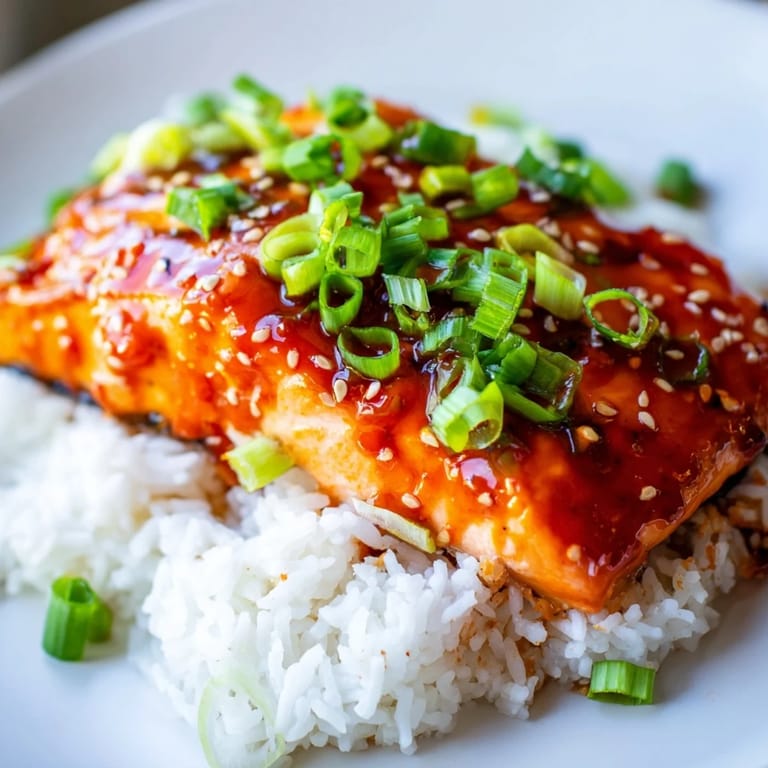
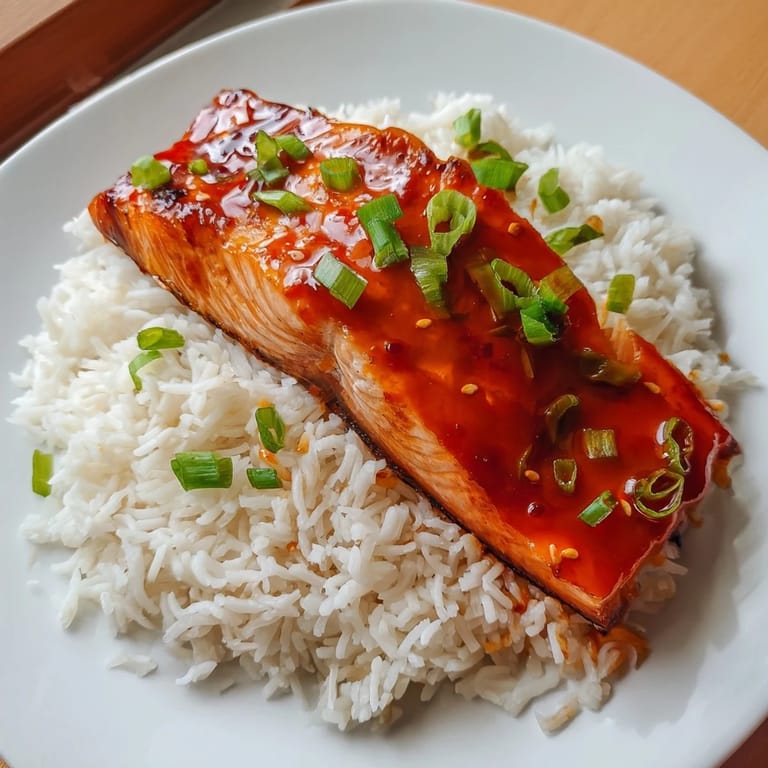
- Fluff the rice with a fork, divide it among bowls, top each with a salmon fillet, drizzle with the thickened glaze, and scatter scallions, sesame seeds, and orange zest across the top.
 Save to Pinterest
 My nephew, who claims to dislike fish, asked for seconds the first time I made this, which told me that sometimes a good glaze and perfect cooking temperature can change minds in ways you never expect. That moment shifted how I think about cooking for skeptics—it's not about hiding flavors, it's about making them sing.
Why This Glaze Works
The magic here is balance: gochujang brings heat and umami, orange juice adds brightness and acidity, honey creates sweetness and caramelization, and sesame oil ties everything into something coherent. None of these ingredients overpowers the salmon itself; instead, they amplify its natural richness. The first time I tasted this combination, I realized that Asian flavors aren't about being bold at the expense of other things—they're about layering so that each bite has multiple dimensions.
Making Ahead and Timing
You can make the glaze up to a day in advance and keep it in the refrigerator, which means on a busy evening you're literally just cooking rice and broiling salmon. The marinating window is short on purpose—10 minutes is enough to let flavors begin their work without the acid in the orange juice starting to break down the fish too much. If you're cooking for guests, you can have the rice done and resting while the salmon broils, so everything comes together warm at the same time.
Variations and Swaps
I've made this with brown rice when I wanted something with more texture, and it's wonderful with a slightly earthier flavor underneath. You can also stir a pinch of chili flakes into the glaze if you want more heat, or add a splash of fish sauce if you want to deepen the umami without making it obviously fishier. Some nights I've topped it with a drizzle of sriracha and cilantro instead of just scallions, and while that's technically a different dish, the core idea—tender salmon, bright glaze, fluffy rice—holds strong.
- Swap jasmine rice for brown rice or quinoa if you want more fiber and a nuttier flavor.
- A crisp white wine like Sauvignon Blanc or a citrusy IPA pairs beautifully because both have enough acidity to echo the orange in the glaze.
- You can broil or pan-sear the salmon depending on what your kitchen setup allows, though broiling gets you that caramelized edge more reliably.
 Save to Pinterest
 This is the kind of meal that makes you feel like you've accomplished something in the kitchen without actually spending much time there, which is exactly when cooking feels least like work and most like pleasure. It's become my go-to answer when someone asks what I'm making for dinner and wants it to feel special.
Recipe Questions & Answers
- → What type of rice pairs well with the orange salmon?
Jasmine rice works best for its fluffy texture and subtle aroma, complementing the tangy glaze. Brown rice or quinoa can also be used for a nuttier flavor.
- → How can I achieve the sticky glaze on the salmon?
Broiling the salmon while brushing it with the gochujang-orange glaze creates caramelization that results in a sticky, flavorful coating.
- → Can I prepare the glaze in advance?
Yes, the glaze can be mixed ahead of time and refrigerated for up to 24 hours to deepen the flavors before marinating the salmon.
- → What garnishes enhance the dish's flavor and appearance?
Fresh scallions add a vibrant crunch, while toasted sesame seeds and orange zest provide aromatic and textural contrast.
- → Is it necessary to use sesame oil in the glaze?
Sesame oil adds a nutty undertone integral to the glaze’s flavor profile, but it can be omitted if unavailable or for a milder taste.