 Save to Pinterest
 There's something about the sound of chicken thighs hitting a hot pan that makes me pause and actually pay attention in the kitchen. One autumn afternoon, I was browsing through a farmers market when a vendor handed me a sample of their fresh apple cider alongside a small bottle of maple syrup, and something clicked—why not marry those two together? That evening, I roasted chicken thighs with that sticky, tangy glaze and the smell alone brought my partner to the kitchen three times asking what I was making. The caramelized apples and golden skin made it feel like a dish I'd been making forever, even though it was completely improvised.
I made this for a small dinner party on a random Tuesday, mostly because I had apples sitting on my counter and was tired of the usual rotation. One guest said halfway through eating, 'This tastes like fall in a bite,' and suddenly this recipe felt less like something I'd invented and more like something that had been waiting for the right moment to exist. That compliment stuck with me more than it probably should have.
Ingredients
- Bone-in, skin-on chicken thighs (8 thighs, about 1.2 kg): The bone keeps the meat incredibly tender and the skin crisps up gorgeously under the glaze—don't skip this choice, it's the whole reason this works.
- Pure maple syrup (1/3 cup): The grade matters less than you'd think, but pure syrup will give you that deep, complex sweetness that pairs with the vinegar beautifully.
- Apple cider or unsweetened apple juice (1/3 cup): Fresh cider is ideal if you can find it, but regular unsweetened juice works just as well and won't water down your glaze.
- Apple cider vinegar (2 tbsp): This is your secret weapon—it cuts through the sweetness and keeps the dish from feeling dessert-like, adding a subtle tang that makes people reach for seconds.
- Dijon mustard (2 tbsp): A touch of this adds depth and helps the glaze stick to the chicken while adding a gentle sharpness.
- Olive oil (2 tbsp): Just enough to help everything emulsify and carry the flavors evenly.
- Garlic, minced (2 cloves): Mince it fine so it dissolves into the glaze rather than sitting in chunks.
- Fresh thyme leaves (1 tsp, or 1/2 tsp dried): Fresh thyme has a brighter, more delicate flavor that really shines in this dish if you have it on hand.
- Smoked paprika (1/2 tsp): This brings a whisper of smokiness that makes the dish feel more layered without overpowering anything.
- Salt and black pepper (1/2 tsp salt, 1/4 tsp pepper): Season your chicken separately first—it makes a real difference in how the meat tastes.
- Medium apples like Honeycrisp or Gala (2 apples): Slightly tart varieties with a firm texture hold up best during baking and actually add complexity to the glaze as they soften.
Tired of Takeout? 🥡
Get 10 meals you can make faster than delivery arrives. Seriously.
One email. No spam. Unsubscribe anytime.
Instructions
- Set the stage:
- Heat your oven to 400°F (200°C) and line your baking dish with parchment paper—this saves you from scrubbing later and lets the glaze caramelize without sticking. Having everything ready before you start means you won't be fumbling around once the chicken hits the heat.
- Dry and season the chicken:
- Pat each thigh thoroughly dry with paper towels (wet skin won't crisp up, and that's non-negotiable), then season both sides with a pinch of salt and pepper. This step seems small but it's what separates sticky, golden skin from pale, steamed skin.
- Make the glaze:
- Whisk together the maple syrup, apple cider, cider vinegar, Dijon mustard, olive oil, minced garlic, thyme, smoked paprika, salt, and pepper in a medium bowl until it's smooth and glossy. Take a tiny taste—it should be sweet but with a noticeable tang that makes your mouth water.
- Arrange and coat:
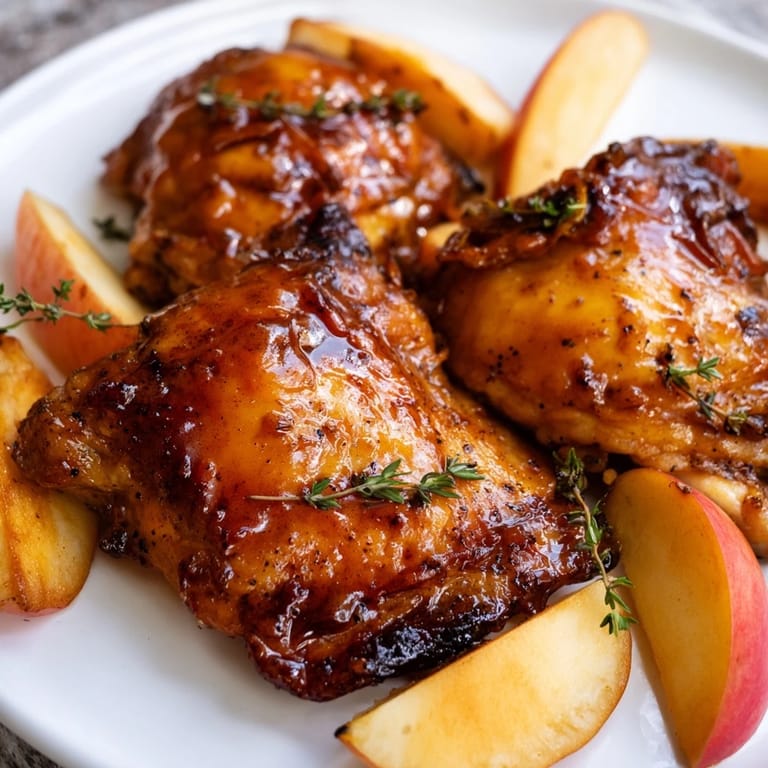
- Place the chicken thighs skin-side up in the dish and tuck the apple wedges around them like they belong there, then pour the glaze evenly over everything. Turn the chicken once with tongs to make sure the glaze coats the bottom, but keep it skin-side up for the oven.
- Bake with a little attention:
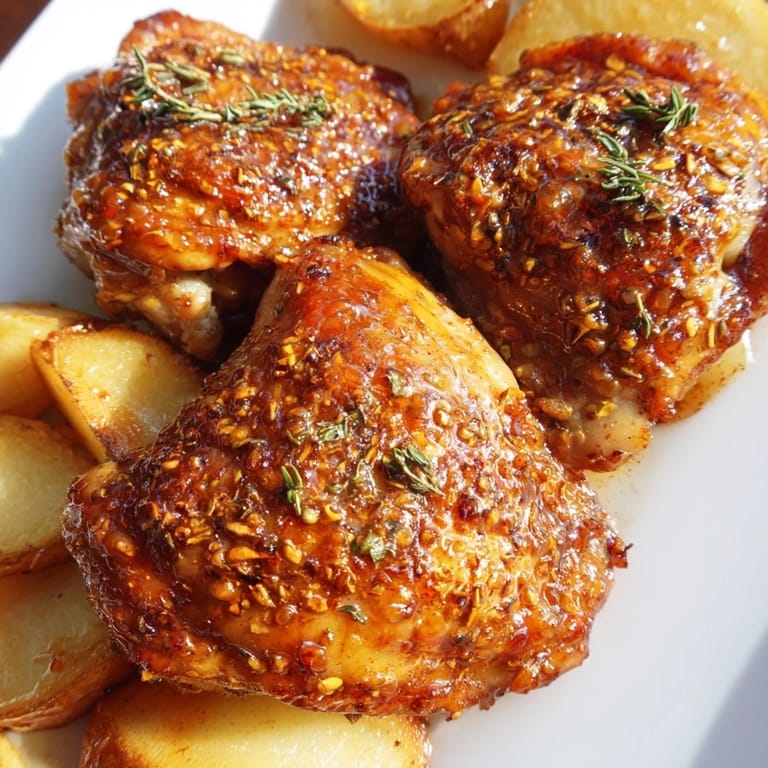
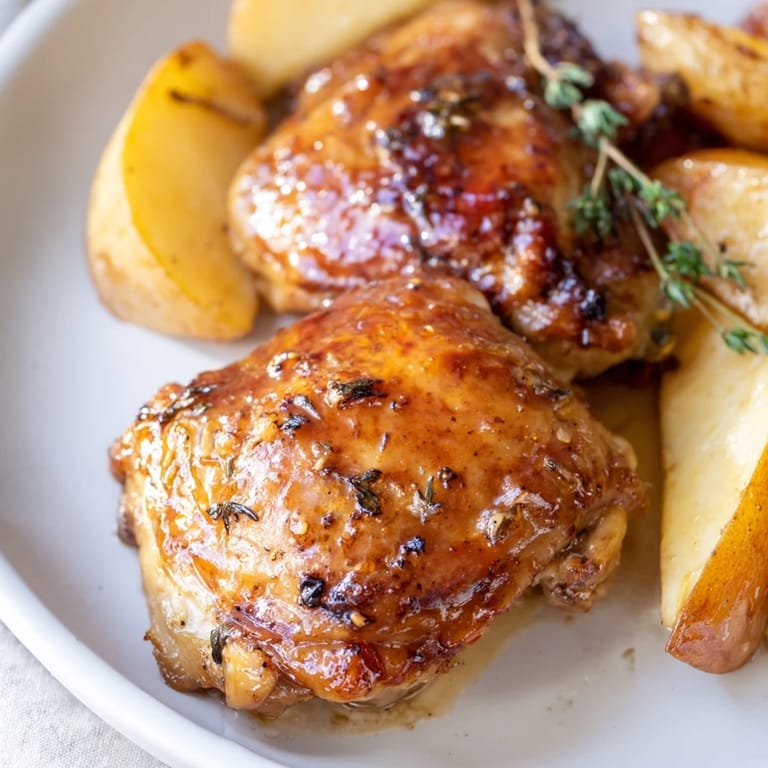
- Slide it into the oven for 30–35 minutes, basting the chicken with pan juices once or twice halfway through—this is when the glaze starts sticking and caramelizing. You'll know it's done when the internal temperature hits 165°F (74°C) and the skin looks deep golden and sticky.
- Optional finishing touch:
- For extra color and crispiness, crank the broiler to high for 2–3 minutes at the very end, but watch it closely so nothing burns. The chicken should finish looking bronzed and irresistible.
- Rest and serve:
- Let it sit for 5 minutes before plating—this keeps all the juices where they belong, inside the chicken. Garnish with fresh thyme if you have it and drizzle any pan juices over the top.
 Save to Pinterest
 I'll never forget my roommate standing over the stove as the chicken came out, sticky and golden, saying it smelled like a fall farmers market had exploded in our kitchen in the best possible way. That's when I knew this recipe had found its place in my regular rotation—not because it's complicated, but because it tastes like it matters.
Why This Dish Works
The magic here is balance—maple syrup wants to be sweet, but the apple cider vinegar keeps it honest, and the Dijon mustard adds a subtle sharpness that makes your palate wake up with each bite. The chicken thighs release their own juices, which mix with the glaze and create this glossy, stick-to-the-plate sauce that coats everything in the pan. What starts as separate ingredients becomes something that tastes like it's been simmering for hours, even though you've barely touched anything since it went into the oven.
Making It Your Own
The base recipe is solid, but I've played with it enough times to know where you can make it yours without losing what makes it work. A tiny pinch of chipotle powder adds smokiness if you want a more complex heat, or you could swap fresh rosemary for thyme and suddenly it tastes different but equally right. The apples are non-negotiable—they soften into the glaze and add sweetness that feels more sophisticated than just relying on the maple syrup alone.
Serving and Pairing
Serve this alongside something that can soak up the glaze—mashed potatoes are an obvious choice, but roasted root vegetables or a simple grain like rice work beautifully too. A crisp apple cider feels like the natural drink pairing, though a dry Riesling works if you want something with a bit more acidity to cut through the richness. The leftovers reheat without complaint and actually taste better the next day when all the flavors have had time to get to know each other.
- Don't skip basting halfway through; those little moments of attention are what create the sticky, caramelized finish.
- If you can't find fresh thyme, dried thyme is fine, but use half the amount since it's more concentrated.
- Let the chicken rest for those 5 minutes—it feels like wasting time, but it locks in the juices and keeps everything tender.
 Save to Pinterest
 This dish has become one of those recipes I reach for when I want something that feels special without actually being stressful. It's proof that good food doesn't require hours or a complicated technique—it just requires caring about the right things.
Recipe Questions & Answers
- → What cut of chicken works best with the glaze?
Bone-in, skin-on chicken thighs hold moisture well and develop a crispy, caramelized exterior under the glaze.
- → Can I use a different type of apples?
Yes, apples like Honeycrisp or Gala provide sweetness and texture that complement the glaze nicely.
- → How do I ensure the chicken stays juicy?
Patting the chicken dry before seasoning and baking at a high temperature helps seal in juices while the glaze adds flavor.
- → Is it possible to adjust the glaze flavor?
Adding a pinch of chipotle powder adds smokiness, or you can tweak the balance of maple syrup and vinegar for sweetness or tang.
- → What sides pair well with this dish?
Roasted vegetables, mashed potatoes, or rice complement the flavors and create a balanced meal.