 Save to Pinterest
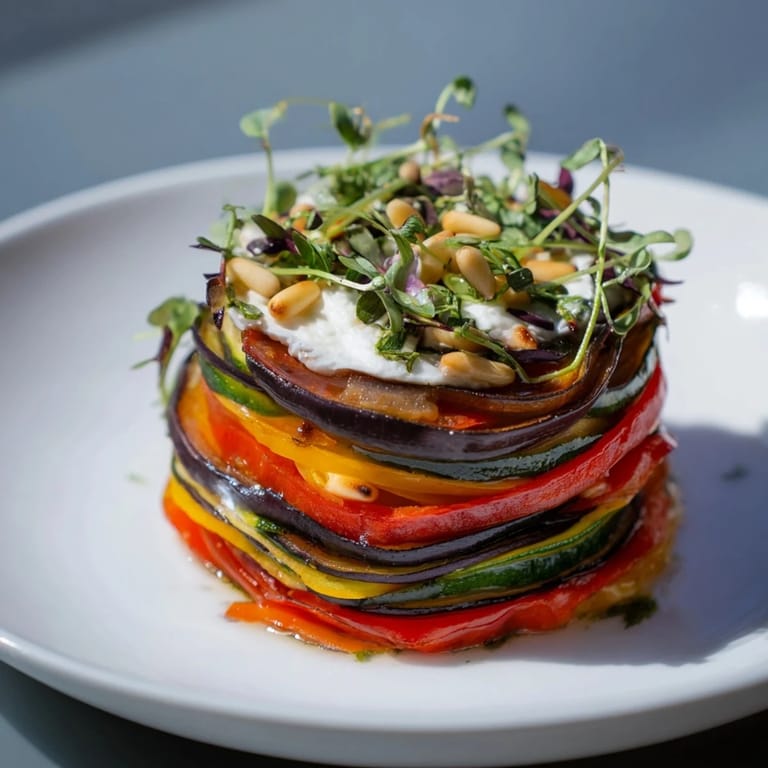
 I'll never forget the first time I created the Snail Shell Spiral—it was at a dinner party where I wanted to impress without spending hours in the kitchen. As I arranged those vibrant vegetable slices into a perfect spiral on the plate, something magical happened. The dish transformed from simple roasted vegetables into edible art, and watching my guests lean in closer to admire it before taking that first bite reminded me why I fell in love with cooking in the first place. That night, I discovered that the most memorable meals are often the ones that make people pause and really see what's on their plate.
I made this for my sister's engagement party, and she still talks about it three years later. Not because it was complicated, but because it proved that you don't need meat or heavy sauces to create something truly special. As people gathered around the table and reached for a slice of that spiral, I realized it had become the conversation starter of the evening. That's when I knew this recipe deserved a permanent spot in my collection.
Ingredients
- 1 small eggplant, thinly sliced lengthwise: Eggplant gives the spiral a deep, elegant purple that anchors the color palette. The key is slicing it lengthwise so you get those long, beautiful strips that wrap naturally around the spiral.
- 1 medium zucchini, thinly sliced lengthwise: This provides a delicate green and cooks down beautifully without falling apart. I always choose smaller zucchini because they have fewer seeds and a better texture.
- 1 red bell pepper, seeded and thinly sliced: The bright red adds visual drama and brings a subtle sweetness that balances the earthiness of the other vegetables.
- 1 yellow squash, thinly sliced lengthwise: Its pale golden color bridges the gap between the greens and reds visually, while its mild flavor doesn't compete with the cheese.
- 1 small carrot, peeled and thinly sliced lengthwise: Carrots add a natural sweetness and gorgeous orange hue, plus they hold their structure beautifully when roasted.
- 100 g goat cheese, softened: This is your flavor anchor. Soft goat cheese spreads like a dream and creates a creamy base that the vegetables rest on. Room temperature is essential here.
- 2 tbsp crème fraîche: This little addition makes the cheese mixture even creamier and slightly tangy, which brightens all the roasted vegetable flavors.
- 2 tbsp fresh basil leaves, finely chopped: Basil brings freshness and a hint of anise-like warmth. Chop it just before using so the oils stay vibrant.
- 1 tbsp fresh thyme leaves: Thyme adds an herbal earthiness that makes people think you've been cooking all day. Don't skip the fresh herbs—dried just won't have the same life.
- 2 tbsp olive oil: Good quality olive oil is your friend here. It helps the vegetables roast evenly and adds its own gentle flavor to the final dish.
- ½ tsp sea salt and ¼ tsp freshly ground black pepper: These season everything perfectly when applied before roasting. Fresh pepper makes all the difference in the world.
- 1 tbsp pine nuts, lightly toasted: These add a buttery crunch that contrasts beautifully with the soft vegetables and creamy cheese. Toast them yourself—just thirty seconds in a dry pan—and they transform completely.
- Microgreens, for garnish (optional): These are your final touch of elegance. They add a peppery bite and show that you cared about every detail.
Tired of Takeout? 🥡
Get 10 meals you can make faster than delivery arrives. Seriously.
One email. No spam. Unsubscribe anytime.
Instructions
- Get your oven ready and prep your stage:
- Preheat your oven to 200°C and line a baking tray with parchment paper. This takes just two minutes but makes everything that follows infinitely easier. There's something satisfying about starting with a clean, prepared workspace.
- Season and brush your vegetables:
- Take each slice and lightly brush both sides with olive oil. Here's where I learned the hard way to be gentle—don't drench them, just a light coating that helps them roast evenly. Then sprinkle with salt and pepper. Feel the texture of each slice as you work; you're getting to know your vegetables.
- Roast until they're just right:
- Spread the slices on your prepared tray in a single layer and slide them into the oven for 10 to 12 minutes. You're not trying to crisp them; you want them pliable and slightly softer but still holding their shape. Set a timer so you don't get distracted. When they're done, they should smell amazing—vegetal and slightly caramelized. Let them cool for a few minutes while you move to the next step.
- Create your creamy base:
- In a small bowl, combine the softened goat cheese, crème fraîche, chopped basil, and thyme leaves. Stir until smooth and completely combined. If the goat cheese is too firm, let it sit at room temperature for another minute or two. This mixture should be spreadable, almost like a soft butter.
- Spread your foundation in a spiral:
- On your serving plate, imagine a center point. Starting right there, spread a thin layer of the cheese mixture in a continuous spiral, winding outward. Don't make it too thick—think of it as a canvas for the vegetables, not the star. The spiral should be about as wide as your pinky finger.
- Arrange your vegetables in an overlapping spiral:
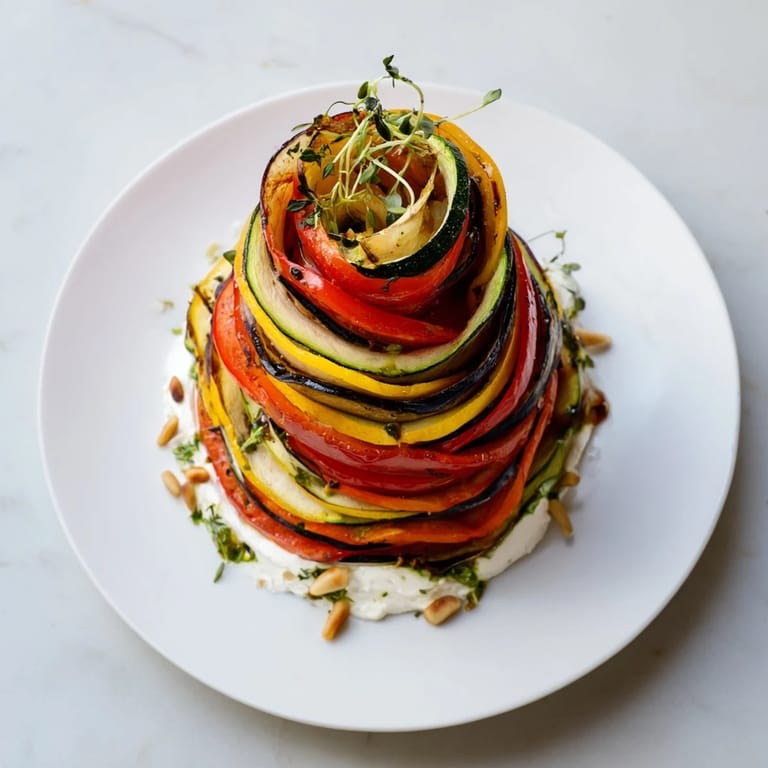
- Now comes the meditative part. Beginning at the center where you started your cheese spiral, lay down a vegetable slice, overlapping it slightly with the previous one, and continue spiraling outward. Alternate the colors as you go—eggplant, then zucchini, then red pepper, then yellow squash, then carrot—then start the pattern again. Each overlap should be about a quarter of the slice, creating that continuous, elegant spiral. Your hands become more confident as you move outward; trust that instinct.
- Finish with the flourish:
- Sprinkle the toasted pine nuts over the spiral in a loose, scattered way. If you're using microgreens, add them now in little clusters. Step back and admire what you've created. It's beautiful, and it's all you.
- Serve with care:
- Bring the plate to room temperature if it's been in the fridge, or serve it warm from the kitchen. Either way, it's perfect as an elegant appetizer or a light lunch with crusty bread on the side.
 Save to Pinterest
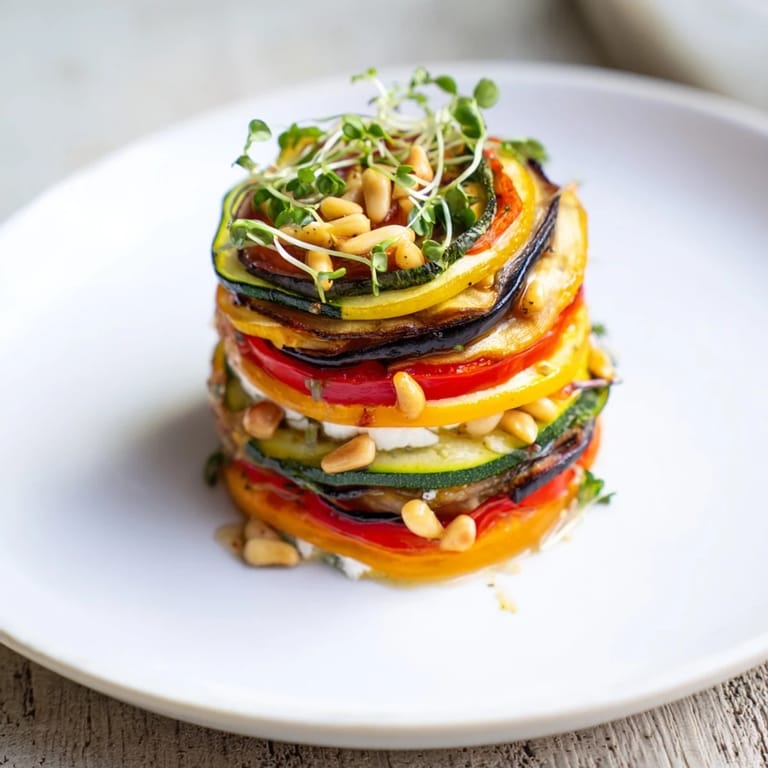
 I'll never forget serving this to my mother-in-law, who is notoriously hard to impress in the kitchen. She took one photo of the plate before eating, which she never does. Then she asked for the recipe while taking her second bite. That moment—when food transcends the plate and becomes something that makes people feel cared for—that's what this dish does best.
Why This Spiral Works
The spiral isn't just pretty; it's practical. The overlapping arrangement means every bite contains a little bit of vegetable, a little bit of that creamy cheese, and all those fresh herbs. The spiral shape also creates natural portion lines, so when you're serving it, you can easily cut wedges that look intentional and planned. The way the vegetables layer means that the flavors build gradually as you eat from the center outward—first you get the creaminess, then as you move toward the edge, more of the roasted vegetable flavors come through. It's architecture that serves flavor.
Variations to Make It Yours
Once you've made this once, you'll start seeing variations everywhere. I've made it with thinly shaved beets for an even earthier flavor and a deeper color palette. I've added roasted sweet potato slices for a touch of natural sweetness. I've even made a vegan version using a really good plant-based cheese spread, and honestly, it was just as creamy and delicious. The template is so forgiving that you can swap vegetables based on what's in season, what looks beautiful at the market, or what you're craving. The only rule I keep is the lengthwise slicing and the spiraling arrangement—those two things are what make it special.
- Try adding thin slices of roasted beets or sweet potato for deeper colors and interesting sweetness.
- Experiment with different herbs like dill, chives, or oregano depending on your mood.
- Make it vegan by substituting the goat cheese and crème fraîche with a high-quality plant-based spread.
Serving and Pairing Ideas
This dish is elegant enough for a dinner party but simple enough for a Wednesday lunch. I love serving it with crusty bread to soak up those herby, cheesy flavors that pool around the spiral. A crisp white wine—something like a Sauvignon Blanc or a light Pinot Grigio—complements it beautifully without overpowering the delicate vegetables. It also makes a stunning light lunch when you pair it with a simple green salad dressed in lemon vinaigrette. The best part is that it's completely at home at room temperature, so you can make it earlier in the day and bring it to the table without any last-minute stress. That's real elegance in cooking—when you can be relaxed and present with your guests instead of rushing around the kitchen.
- Serve with warm crusty bread to complement the creamy cheese and capture those wonderful herb flavors.
- Pair with a crisp white wine or a light rosé for an elegant meal that feels special without being complicated.
- Make it ahead of time and serve at room temperature for stress-free entertaining that lets you actually enjoy your guests.
 Save to Pinterest
 This spiral has become my go-to when I want to cook something that feels fancy but doesn't require fancy skills. It's proof that simple, fresh ingredients, arranged with a little intention and care, can create something truly memorable.
Recipe Questions & Answers
- → What vegetables work best for the spiral arrangement?
Thinly sliced eggplant, zucchini, red bell pepper, yellow squash, and carrot create vibrant colors and textures that hold well in the spiral layout.
- → How do I ensure the vegetable slices are pliable for shaping?
Roasting the slices briefly at 200°C (400°F) until tender but not browned makes them flexible for easy layering.
- → Can I substitute goat cheese with a different spread?
Yes, using a creamy spread like plant-based cheese or ricotta maintains the smooth base for the spiral layering.
- → What herbs complement the cheese mixture?
Fresh basil and thyme add aromatic depth and freshness to the goat cheese blend, enhancing the overall flavor.
- → How should the dish be served for best flavor?
Serving at room temperature allows the flavors of the roasted vegetables and cheese mixture to fully develop and shine.