 Save to Pinterest
 There's something about a pot of soup simmering on the stove that makes a Tuesday feel less like Tuesday. My neighbor stopped by one cold afternoon while I was stirring this together, and the smell alone pulled her into the kitchen—suddenly we were talking about her daughter's soccer game and how exhausted she felt, and somehow a bowl of this soup made everything seem more manageable. That's when I realized this recipe wasn't just about feeding people; it was about creating a moment where the kitchen felt like the warmest room in the house.
I made this for my sister when she had just moved into her new place, kitchen still mostly empty except for basics. She sat at her breakfast bar with a steaming bowl, feet curled under her on the stool, and admitted she'd been eating cereal for dinner all week. Watching her face light up with that first spoonful reminded me why I love cooking for people—it's one of the few things that can say 'you matter' without needing words.
Ingredients
- Chicken thighs or breasts (1 lb): Thighs are more forgiving and stay tender even if you simmer a few minutes longer, while breasts are leaner if that matters to you—I tend to use thighs because they're harder to mess up.
- Low-sodium chicken broth (8 cups): This is your foundation, so taste it first; some broths are saltier than others and you'll want room to season as you go.
- Carrots and celery: These create the flavor base along with onion, so don't skip them even if you think you don't like celery—it melts into the soup and you won't taste distinct pieces.
- Yellow onion (1 medium): Dicing it small means it'll soften completely into the broth and sweeten it naturally.
- Garlic (2 cloves): Minced fine so it distributes throughout every spoonful rather than getting stuck in one bite.
- Green beans, peas, and corn: Frozen vegetables work just as well as fresh and honestly often have better flavor since they're frozen at peak ripeness.
- Egg noodles (6 oz): Cook separately first if you're worried about them absorbing too much broth, but I add them directly to the pot and they soak up flavor beautifully.
- Olive oil (2 tbsp): Use enough to coat the pot so vegetables don't stick as they soften.
- Thyme, parsley, bay leaf: These dried herbs do heavy lifting—don't use more than suggested or you'll overpower the subtle chicken flavor.
Tired of Takeout? 🥡
Get 10 meals you can make faster than delivery arrives. Seriously.
One email. No spam. Unsubscribe anytime.
Instructions
- Build your aromatic base:
- Heat oil in a large pot over medium heat, then add onion, carrots, and celery. You'll hear them start to sizzle immediately, and after about five minutes they should be soft enough that a wooden spoon glides through them easily.
- Wake up the garlic:
- Add minced garlic and stir constantly for a full minute—this keeps it from burning and releases those pungent compounds that make everything smell homey.
- Brown the chicken gently:
- Push your vegetables to the sides and add chicken pieces to the center, letting them sit for two minutes before stirring so they develop a light golden exterior. This takes about three to four minutes total and adds depth you'd miss if you skipped it.
- Pour in the broth and seasonings:
- Add your chicken broth along with thyme, parsley, bay leaf, green beans, salt, and pepper, then stir everything together so nothing sticks to the bottom. Bring to a boil over medium-high heat, which usually takes about five minutes depending on your stove.
- Let it simmer:
- Once boiling, reduce heat to low and leave it uncovered for fifteen minutes so the chicken finishes cooking through and flavors meld together.
- Add noodles and final vegetables:
- Stir in egg noodles, peas, and corn, then simmer for another eight to ten minutes until noodles are tender and chicken is completely cooked. Taste a noodle to make sure it's soft but not mushy.
- Fish out the bay leaf:
- Use a spoon to locate and remove the bay leaf so no one accidentally bites it. Taste and adjust salt and pepper to your preference.
- Serve with intention:
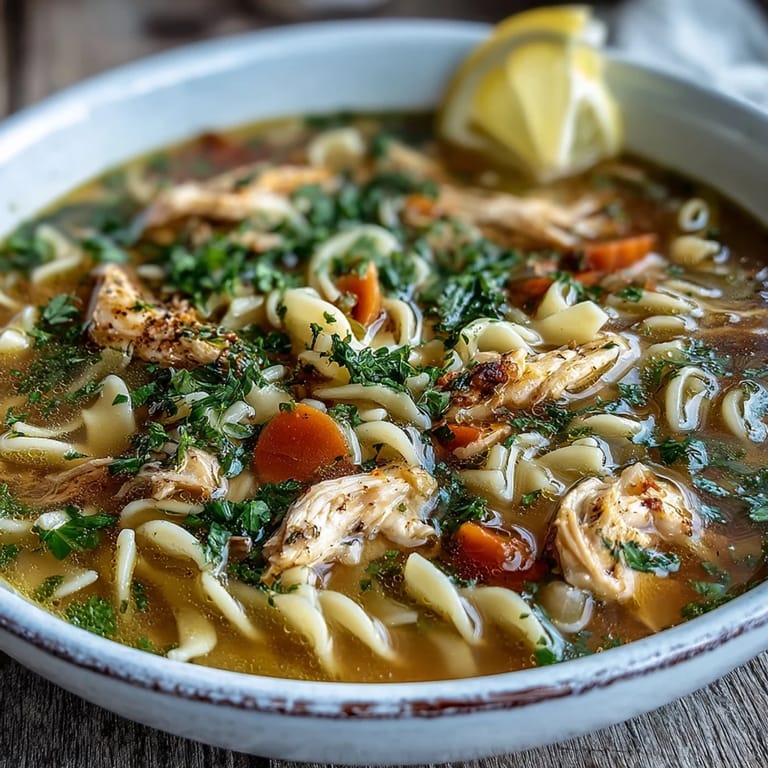
- Ladle into bowls and add a sprinkle of fresh parsley and a squeeze of lemon if you're feeling fancy. The lemon brightens everything and cuts through the richness of the broth.
 Save to Pinterest
 My son came home from school saying he was 'starving to death' in that dramatic way kids do, and instead of his usual eye-roll at home-cooked food, he actually asked for seconds. He dipped his spoon in slowly, blew on it like it was lava, and suddenly the kitchen filled with the kind of quiet that means someone is genuinely satisfied.
Why This Soup Stays on My Rotation
There's an elegance in simplicity that I didn't appreciate until I started cooking regularly. No fancy techniques, no ingredient list longer than your arm, just honest vegetables and chicken coming together in a way that tastes like someone cared enough to make it. Every time I make it, I notice something different—maybe it's how the thyme deepens the broth, or the way frozen peas add a subtle sweetness that balances the savory celery.
The Magic of One-Pot Meals
Cooking in one pot means flavors build on each other rather than existing separately—the oil that browns the chicken carries its richness into the broth, the vegetables soften and release their essence, and by the time you add noodles, they're swimming in this deeply flavored liquid. It's the kind of cooking that feels less like following directions and more like watching something come alive.
Variations and Flexibility
I've made this soup in so many different ways depending on what's in my kitchen or what mood I'm in. Winter versions get extra carrots and celery for earthiness, summer versions get zucchini and fresh herbs stirred in at the end, and one memorable night when I was out of regular noodles, I used broken spaghetti and it was somehow even better. The base is so solid that it welcomes change rather than resisting it.
- Swap green beans for spinach or kale if you want something darker and more mineral-tasting.
- Use rotisserie chicken if you're short on time—just shred it and add it at the very end so it doesn't overcook.
- A squeeze of lemon or a splash of white wine at the end lifts the whole soup into new territory.
 Save to Pinterest
 This soup has a way of turning an ordinary evening into something worth remembering. Make it when you need comfort, make it when you're cooking for someone you care about, or make it just because your kitchen deserves to smell this good.
Recipe Questions & Answers
- → What type of chicken works best?
Boneless, skinless thighs or breasts are ideal for even cooking and tenderness.
- → Can I use different vegetables?
Yes, zucchini, spinach, or mushrooms can be added to enhance flavor and texture.
- → How do I prevent noodles from getting mushy?
Add noodles towards the end of cooking and simmer just until tender to maintain their texture.
- → What herbs complement this dish?
Dried thyme, parsley, and bay leaf create a balanced herbal aroma and depth.
- → Is this adaptable for gluten-free diets?
Replacing regular noodles with gluten-free alternatives makes this dish suitable for gluten-free needs.