 Save to Pinterest
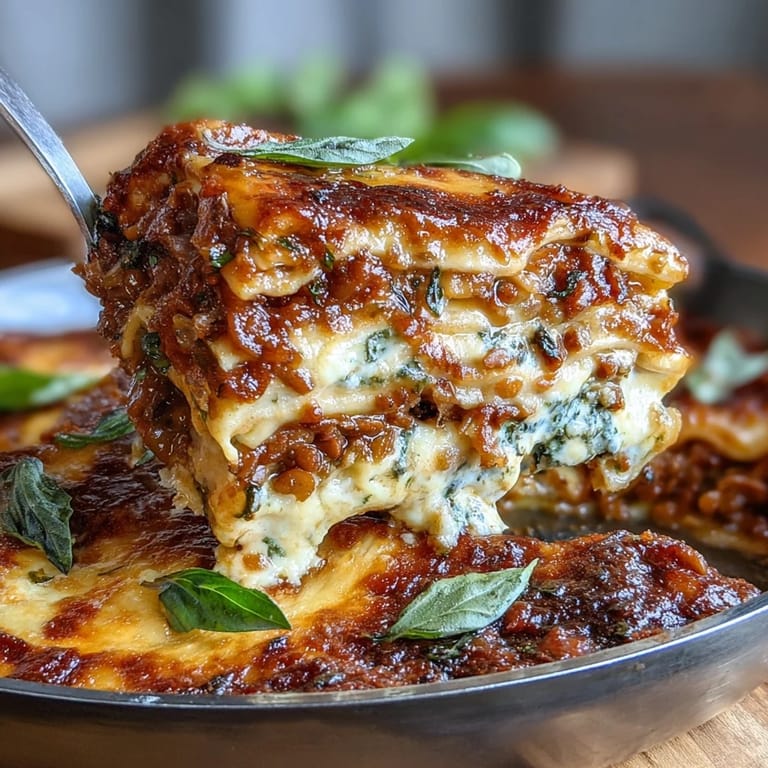
 Last Tuesday, I stood in my kitchen watching smoke curl up from a pan of caramelizing mushrooms and wondered why lasagne always seemed to demand so much fussing. That's when it hit me—what if I stopped fighting the dish and just cooked everything in one pan, layering right there as I went? The result was this smoky vegetable lentil lasagne, which has since become my go-to when I want something that feels both ambitious and utterly manageable. It's the kind of meal that makes your kitchen smell incredible without requiring you to juggle five different pots.
I made this for my sister's family last month when they stopped by unexpectedly, and watching her kids ask for seconds without interrogating what they were eating felt like winning the lottery. My brother-in-law, who's usually skeptical about vegetarian mains, kept going back for more and actually seemed surprised when I told him it was lentil-based. There's something about feeding people food they didn't expect to love that changes the whole mood of an evening.
Ingredients
- Olive oil: You'll need just enough to coat the pan and soften everything without making it greasy, so don't skimp on quality here.
- Onion, garlic, carrots, celery, and red bell pepper: These are your flavor foundation, and taking time to chop them properly means they'll cook evenly and build that sweet, savory base.
- Mushrooms: Finely chopped mushrooms add umami and create a texture that mimics ground meat in the most honest way—let them release their moisture fully before moving on.
- Courgette (zucchini): Dice this smaller than the other vegetables so it softens at the same pace and doesn't leave hard chunks.
- Smoked paprika, dried oregano, thyme, and chili flakes: The paprika is non-negotiable for that smoky character, and the others round it out without overwhelming anything.
- Chopped tomatoes, tomato paste, and balsamic vinegar: Tomato paste adds deep concentration while balsamic at the end brings a subtle sweetness that catches people off guard.
- Red lentils, rinsed: These break down into an almost creamy texture and absorb all the flavors around them beautifully.
- Vegetable stock: Use the full amount so the lentils cook through completely and the sauce stays saucy rather than becoming a thick sludge.
- Ricotta, mozzarella, and Parmesan: Room temperature ricotta spreads more easily, and freshly grated cheese melts more evenly than pre-shredded.
- No-boil lasagne sheets: They soften from the moisture in the sauce, so don't be tempted to pre-boil them or you'll end up with mushiness.
- Fresh basil: Tear it with your hands rather than cutting so you don't bruise it—add it only after baking so it stays bright and aromatic.
Tired of Takeout? 🥡
Get 10 meals you can make faster than delivery arrives. Seriously.
One email. No spam. Unsubscribe anytime.
Instructions
- Heat your oil and start with the aromatics:
- Pour olive oil into your ovenproof pan over medium heat and let it shimmer slightly before adding the chopped onion. You'll know it's ready when the onion starts turning translucent at the edges and the kitchen smells warm and inviting, usually about 3 to 4 minutes.
- Build your vegetable base:
- Add the garlic, carrots, celery, and red bell pepper, stirring occasionally and letting everything soften together. The vegetables should be tender but not collapsing, which takes about 5 minutes of patient cooking.
- Introduce the mushrooms and courgette:
- Stir in the finely chopped mushrooms and diced courgette, then let them cook until they've released their moisture and the pan looks noticeably less wet. This step matters because mushrooms release liquid that would otherwise make your final dish watery, and you want that evaporation to happen now.
- Toast your spices:
- Sprinkle in the smoked paprika, oregano, thyme, and chili flakes if you're using them, stirring constantly for about a minute. You'll smell the difference immediately as the heat releases the oils in the spices and transforms them from dusty to aromatic.
- Add your tomatoes and lentils:
- Stir in the chopped tomatoes, tomato paste, rinsed red lentils, and vegetable stock, seasoning with salt and pepper. Bring everything to a gentle simmer, then cover the pan and let it cook undisturbed for 20 to 25 minutes until the lentils have softened and started to break down into the sauce.
- Finish the bolognese:
- When the lentils are tender and the mixture has thickened considerably, stir in the balsamic vinegar—you'll notice it adds a subtle sweetness that rounds out all the savory flavors. Taste and adjust seasoning if needed.
- Prepare for layering:
- Preheat your oven to 180°C (350°F) while you carefully remove half of the veggie bolognese from the pan and set it aside in a bowl. This is what gives you room to layer without the pan overflowing.
- Start your first layer:
- Arrange lasagne sheets directly over the remaining sauce in the pan, breaking them if needed to fit the shape. Dollop about half of the ricotta over the sheets in small spoonfuls, then sprinkle a third of the mozzarella and Parmesan over that.
- Add your second bolognese layer:
- Spread the reserved half of the veggie bolognese over the cheese layer, then add another layer of lasagne sheets. You're essentially building three thin layers rather than traditional thick ones, which helps everything cook more evenly.
- Create your final layers:
- Top the second bolognese with the remaining ricotta, another third of the mozzarella and Parmesan, then the final lasagne sheets. Sprinkle the last of the mozzarella and Parmesan on top—this will turn golden and crispy as it bakes.
- Bake covered, then finish uncovered:
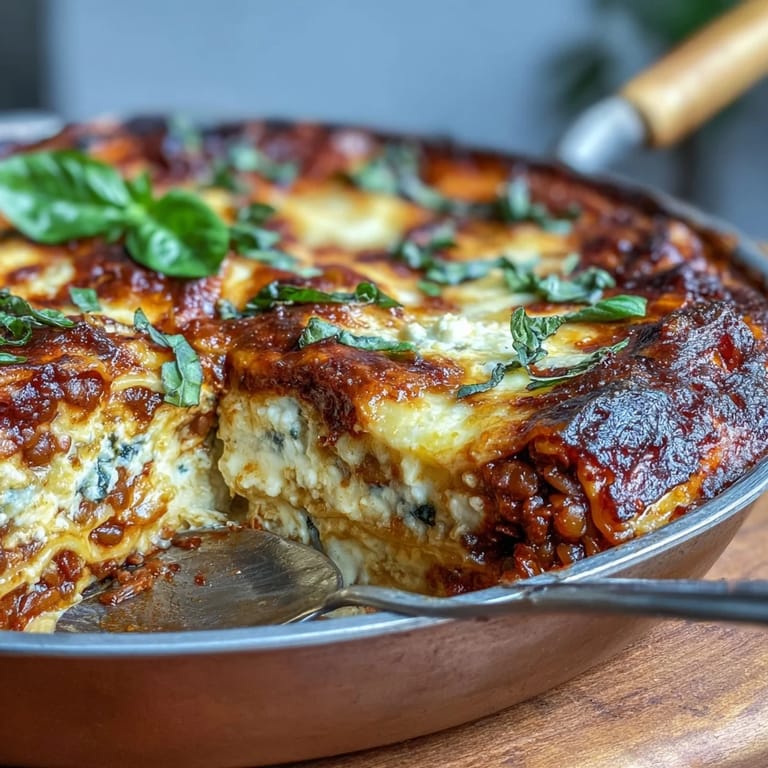
- Cover the pan tightly with foil and bake for 25 minutes, which allows the pasta and cheese to soften without the top burning. Remove the foil and bake for another 10 to 15 minutes until the cheese is bubbling and golden around the edges.
- Let it rest before serving:
- Pull the pan from the oven and let it sit for 10 minutes undisturbed—this is crucial because it allows the layers to set slightly so you can serve neat portions instead of everything sliding together. Tear fresh basil over the top just before serving.
 Save to Pinterest
 The best moment came when my partner, who usually reads during dinner, put his phone down halfway through and asked where I learned to make something like this. I hadn't, really—I'd just started paying attention to what was actually happening in the pan instead of following steps blindly. That's when cooking stopped feeling like a chore and started feeling like a conversation.
Why This Works as a One-Pan Dish
Most lasagne recipes treat the bolognese and the assembly as completely separate events, which is why you end up with a sink full of dishes. By building everything in the same ovenproof pan, you're using the residual moisture and heat to soften the pasta directly, which actually intensifies the flavors rather than diluting them. The bottom layer of vegetables caramelizes slightly against the hot pan while everything else cooks, creating pockets of deeper flavor that you wouldn't get if you'd made the sauce separately. It's not a shortcut so much as a smarter way of thinking about how heat and ingredients interact.
The Secret of Red Lentils
Most people think of lentils as something that stays firm and identifiable in a dish, but red lentils are different—they actually want to break down and become creamy. This is exactly what you need in a vegetarian lasagne because they create that rich, almost meaty texture without any strange substitutes. When you rinse them before cooking, you're removing excess starch that would otherwise make everything gluey, and the lentils will absorb all the smoky, savory flavors around them. By the time the lasagne goes into the oven, the lentils have already thickened the sauce and created a body that holds everything together.
Serving and Storage
This lasagne is best eaten the day you make it while the cheese is still creamy, but it actually improves overnight as the flavors settle and deepen, so don't hesitate to make it ahead. Store leftovers covered in the fridge for up to three days, and you can reheat individual portions in a low oven without drying anything out. It also freezes beautifully for up to two months if you cover the whole pan well before cutting it into pieces.
- A simple green salad with lemon dressing cuts through the richness perfectly and adds brightness to each bite.
- Crusty bread is non-negotiable for soaking up every last bit of sauce from your plate.
- A light red wine like Chianti echoes the tomato and smoke flavors without overwhelming the delicate vegetables.
 Save to Pinterest
 This lasagne taught me that feeding people well doesn't require complicated techniques or endless cleanup, just attention and care. Make it once and it becomes the meal you turn to when you want to feel competent in the kitchen and generous at the table.
Recipe Questions & Answers
- → Can I prepare this in advance?
Absolutely. Assemble the entire dish up to 24 hours ahead, cover tightly, and refrigerate. You may need to add 5-10 minutes to the baking time if cooking from cold.
- → What makes this bolognese smoky?
Smoked paprika provides the distinctive smoky flavor. For even more depth, add a pinch of liquid smoke along with the spices during step four.
- → Do I need to cook the lasagne sheets first?
No. Use oven-ready (no-boil) lasagne sheets directly. They'll soften perfectly as they bake in the saucy vegetable mixture.
- → Can I make this vegan?
Yes. Replace the ricotta, mozzarella, and Parmesan with plant-based alternatives. The lentils already provide excellent protein and texture.
- → Why rest before serving?
Resting for 10 minutes allows the layers to set, making it much easier to cut clean portions. The flavors also meld during this time.
- → Can I freeze leftovers?
Yes. Cut into portions, wrap individually, and freeze for up to 3 months. Thaw overnight in the refrigerator before reheating at 180°C for about 20-25 minutes.