 Save to Pinterest
 I was staring at a wilting bunch of arugula one Thursday evening, trying to avoid another salad, when the idea hit me. What if I treated it like basil? The pesto came together in minutes, and the cottage cheese—something I'd bought on a whim—made it impossibly creamy without any nuts. My kitchen smelled bright and peppery, and I knew I'd stumbled onto something I'd make again and again.
The first time I served this to friends, they kept asking what made the pesto so light and rich at the same time. When I told them it was cottage cheese, there was a moment of silence, then forks scraping plates for every last bit. One friend even texted me the next day asking for the recipe, which is how I knew it was a keeper.
Ingredients
- Linguine: The flat noodles hold onto the pesto beautifully, but any long pasta works if thats what you have on hand.
- Salt for pasta water: This is your only chance to season the pasta itself, so make the water taste like the sea.
- Fresh arugula: The star of the show, its peppery bite softens into something almost nutty when blended.
- Cottage cheese: It sounds odd until you taste it, adding creaminess and a subtle tang that balances the arugula perfectly.
- Grated Parmesan cheese: Use the real stuff if you can, it brings a salty depth that pre-grated versions just dont match.
- Garlic clove: One is enough, it sharpens the pesto without overpowering the delicate arugula.
- Extra virgin olive oil: A fruity, good-quality oil makes all the difference here since its front and center.
- Fresh lemon juice: Brightens everything up and keeps the pesto from feeling too heavy.
- Salt and freshly ground black pepper: Taste as you go, every batch of arugula has a different level of spice.
- Extra arugula leaves, additional Parmesan, and black pepper for serving: A little flourish at the end makes it feel special.
Tired of Takeout? 🥡
Get 10 meals you can make faster than delivery arrives. Seriously.
One email. No spam. Unsubscribe anytime.
Instructions
- Boil the pasta:
- Get a big pot of water boiling with enough salt that it tastes like the ocean. Cook the linguine until its just shy of tender, with a little bite left in the center. Before you drain it, scoop out half a cup of that starchy water, its liquid gold for loosening the sauce later.
- Blend the pesto:
- Toss the arugula, cottage cheese, Parmesan, garlic, olive oil, lemon juice, salt, and pepper into your food processor. Blitz it until its smooth and creamy, stopping to scrape down the sides so nothing gets left behind.
- Toss everything together:
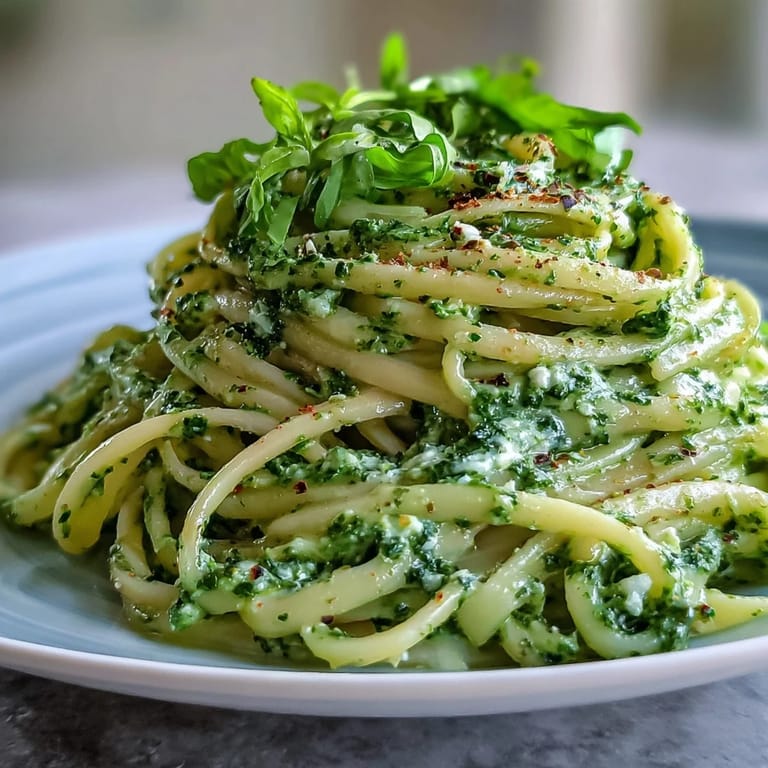
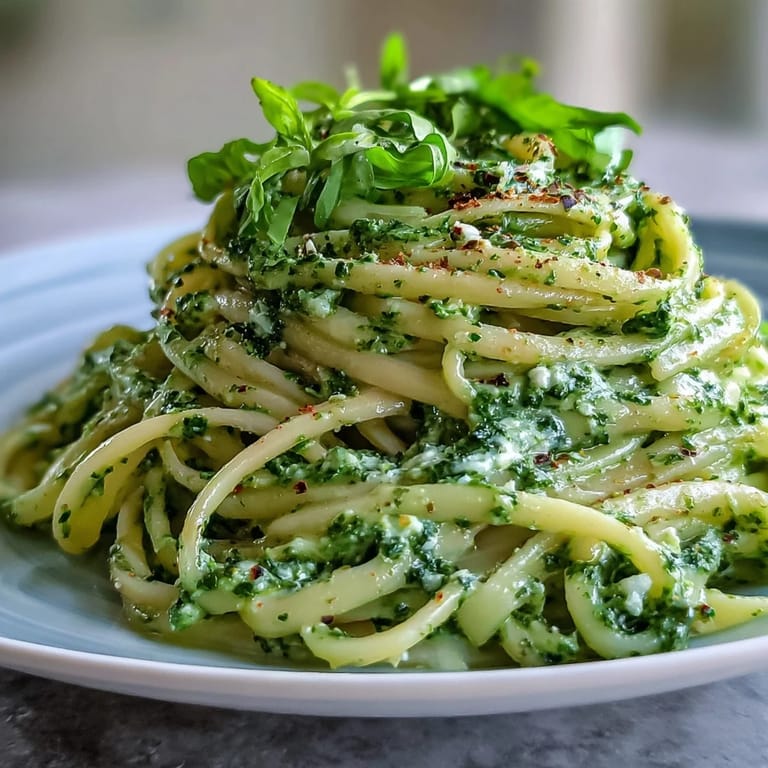
- Put the drained pasta back in the pot and pour in the pesto. Toss it all together, adding splashes of that reserved pasta water until the sauce clings to every strand without being goopy. It should look glossy and inviting.
- Serve it up:
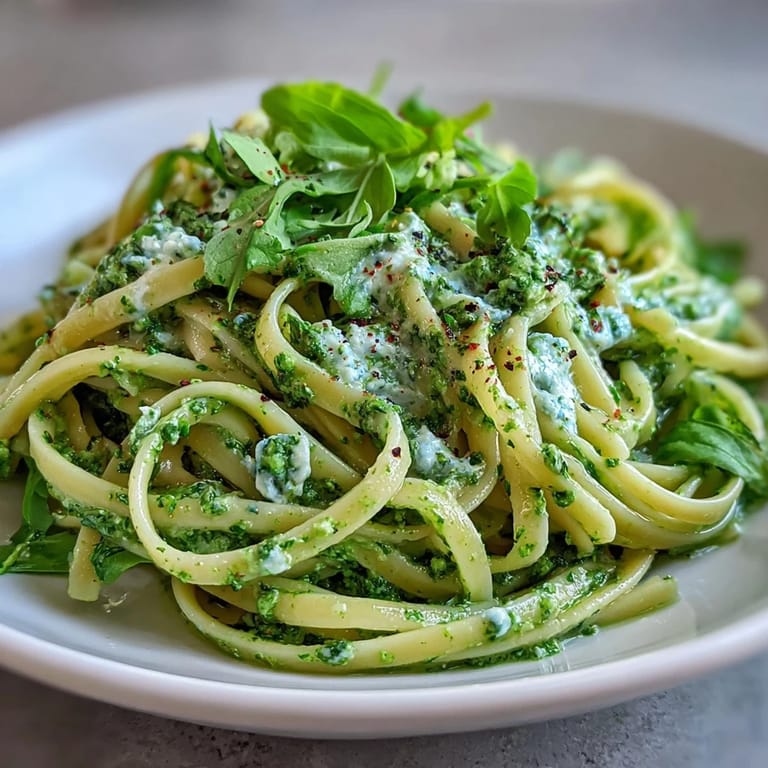
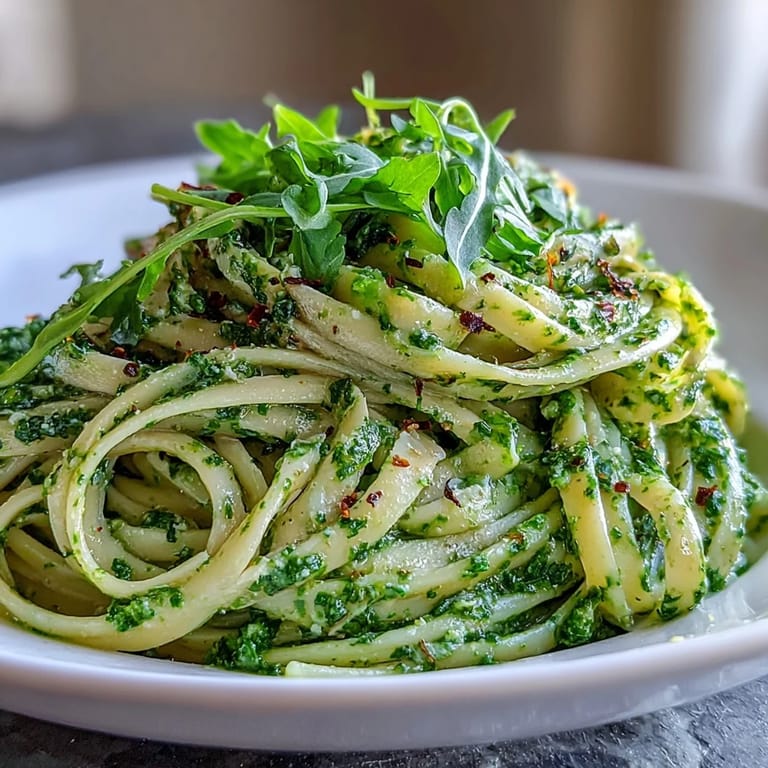
- Pile it into bowls and top with a few fresh arugula leaves, a generous shower of Parmesan, and a few grinds of black pepper. Serve it hot, while the pasta is still steaming.
 Save to Pinterest
  Save to Pinterest
 There was a rainy Sunday when I made this for myself, curled up on the couch with a bowl bigger than I care to admit. The peppery warmth of the arugula, the creaminess, the comfort of twirling pasta on a fork—it felt like exactly what I needed. Sometimes a dish becomes more than dinner, it becomes a little ritual of taking care of yourself.
Choosing Your Arugula
Baby arugula is milder and works if you want a gentler pesto, but the mature stuff with the jagged leaves has more bite and character. I usually grab whatever looks freshest at the store, but if the arugula tastes too sharp on its own, a pinch of sugar in the pesto can mellow it out. Avoid anything yellowing or wilted, it will make the pesto taste sad and bitter.
Making It Your Own
Ive stirred in roasted cherry tomatoes, draped grilled chicken over the top, and once even folded in sauteed mushrooms when I had them sitting in the fridge. Ricotta can stand in for cottage cheese if thats more your speed, though it makes the pesto a bit richer and less tangy. A handful of toasted pine nuts or walnuts on top adds crunch if youre not avoiding nuts, but honestly, this dish doesnt need the help.
Storing and Reheating
Leftovers keep in the fridge for up to three days, though the arugula will darken a bit as it sits. When you reheat it, add a splash of water or milk to the pan and warm it gently over low heat, stirring until the sauce loosens up again. The pesto itself freezes well in an ice cube tray if you want to make extra, just pop out a cube or two whenever you need a quick sauce.
- Store pasta and pesto together in an airtight container to keep everything moist.
- Reheat on the stovetop rather than the microwave for the best texture.
- Fresh garnishes like arugula and Parmesan should be added after reheating, not before storing.
 Save to Pinterest
  Save to Pinterest
 This is the kind of pasta that makes weeknights feel a little less ordinary, bright and satisfying without any fuss. I hope it finds a spot in your regular rotation the way it has in mine.
Recipe Questions & Answers
- → Can I use a different type of pasta?
Yes, any long pasta like spaghetti, fettuccine, or penne works well. Adjust cooking time according to package directions and use the same method for combining with the pesto.
- → How do I store leftover arugula pesto?
Store the pesto in an airtight container in the refrigerator for up to 3 days. Pour a thin layer of olive oil on top to prevent browning. Stir before using and bring to room temperature for best flavor.
- → Why use cottage cheese instead of nuts?
Cottage cheese adds creaminess and protein while keeping the pesto nut-free. It creates a lighter texture than traditional pine nuts and blends smoothly with the peppery arugula for a unique, balanced flavor.
- → Can I make this dish vegan?
Yes, substitute the cottage cheese with silken tofu or cashew cream, and replace Parmesan with nutritional yeast or vegan parmesan. The result will be equally creamy with a similar savory depth.
- → What can I serve with this pasta?
This linguine pairs beautifully with grilled chicken, roasted cherry tomatoes, or a simple green salad. For wine, choose a crisp Sauvignon Blanc or light Pinot Grigio to complement the peppery arugula.
- → How can I make the pesto more garlicky?
Add an additional garlic clove or two to the food processor when blending. For a milder garlic flavor, roast the cloves first before adding them to the pesto mixture.