 Save to Pinterest
 My grandmother used to say that lutefisk was the taste of patience, and she wasn't wrong. The first time I watched her transform a hard, dried piece of cod into something tender and delicate, I was mesmerized by the kitchen magic happening before my eyes. There's something about a dish that demands a full week of your attention that makes you respect it in ways quick recipes never will. Now, every time I prepare this, I'm reminded of her hands moving through that soaking ritual with such calm certainty.
I still remember the Christmas Eve when my dad took his first bite after years of refusing this dish, convinced it was going to taste like seaweed and regret. The mustard sauce changed his mind entirely—he went back for seconds while telling stories about winters in Norway he'd only read about. Food has this strange power to bridge gaps between generations, and lutefisk did that at our table.
Ingredients
- 1 kg dried cod (lutefisk): This is the star, and those hard, translucent pieces will soften into something almost delicate once you commit to the soaking time—don't skip it, even though it feels endless.
- Cold water (enough to cover fish for soaking): Change it daily without fail; this step is what removes the alkali treatment and transforms the texture entirely.
- 1 tbsp coarse salt: After soaking, this brief salt cure firms up the fish just enough before baking, giving it structure.
- 2 tbsp unsalted butter: Use real butter here—it's the foundation of a sauce that should taste luxurious, not generic.
- 2 tbsp all-purpose flour: This thickens without being heavy, and you can swap for gluten-free flour if needed without losing anything important.
- 300 ml whole milk: Full-fat is the non-negotiable choice; skim milk will make you regret it immediately.
- 2 tbsp Dijon mustard: The sharp, sophisticated one—this is what gives the sauce its personality and cuts through the richness perfectly.
- 1 tbsp whole-grain mustard: These seeds add texture and a subtle earthiness that keeps the sauce from tasting one-dimensional.
- 1 tsp sugar: Just enough to balance the mustard's sharpness without making anything sweet.
- Salt and white pepper, to taste: White pepper is milder and keeps the sauce looking clean, but regular pepper works if that's what you have.
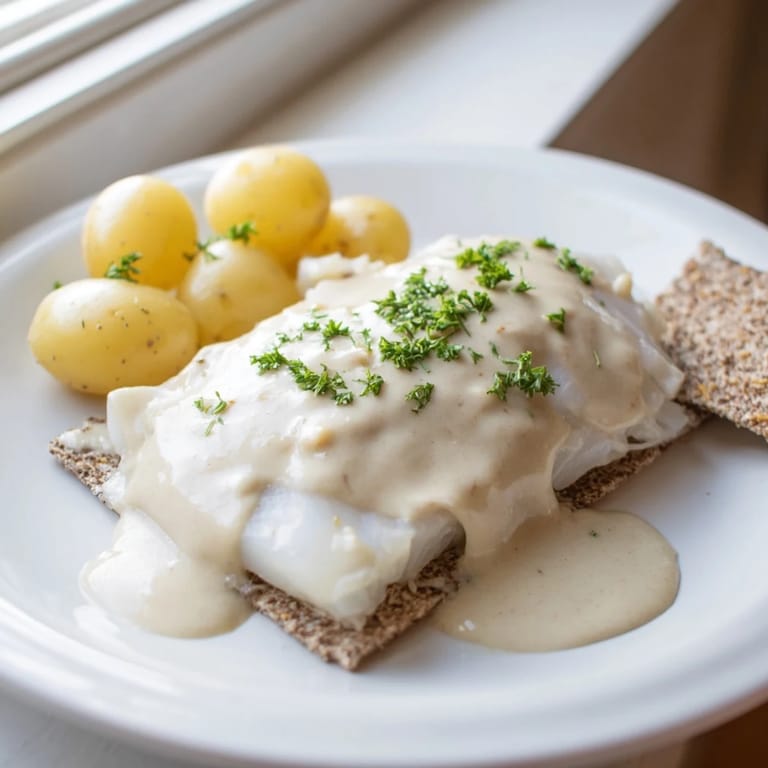
- 4 small boiled potatoes: These are your anchors on the plate, absorbing sauce and providing comfort.
- 4 slices crispbread or flatbread: For soaking up every last drop of that beautiful sauce.
- Chopped fresh parsley (optional): A small handful of green brings the plate to life and tastes fresh against all that creamy richness.
Tired of Takeout? 🥡
Get 10 meals you can make faster than delivery arrives. Seriously.
One email. No spam. Unsubscribe anytime.
Instructions
- Start the long patience game:
- Rinse your dried cod under cold water until the water runs clearer and the fish pieces feel less like driftwood. Place them in a large container and cover completely with cold water, then set up your calendar—every single day for the next five to six days, drain that water and replace it with fresh cold water, watching as the fish gradually plumps up and becomes almost unrecognizable.
- Finish the fish cure:
- After the final soaking day, drain the fish and sprinkle it with that coarse salt, letting it sit for thirty minutes to firm up the texture. Rinse away the salt thoroughly, pat the fish dry with paper towels (this matters for even cooking), and preheat your oven to 200°C while you arrange the pieces in a baking dish covered loosely with foil.
- Bake until it flakes:
- Bake for twenty-five to thirty minutes—you're looking for opaque flesh that gives way easily when you press it with a fork, not something dry or rubbery. The foil keeps everything gentle and moist, which is exactly what you want after a week of coaxing this fish back to life.
- Build the mustard foundation:
- Melt butter in a saucepan over medium heat, then whisk in flour and cook for just one minute, stirring constantly so it doesn't brown. Add the milk slowly while whisking to catch any lumps before they have a chance to form, then let it simmer gently for three to four minutes until it thickens slightly and coats the back of a spoon.
- Season with character:
- Stir in both mustards, the sugar, and a pinch each of salt and white pepper, tasting as you go because mustard strengths vary wildly by brand. This sauce should be creamy and luxurious, with just enough mustard punch to complement the mild fish without overwhelming it.
- Bring it all together:
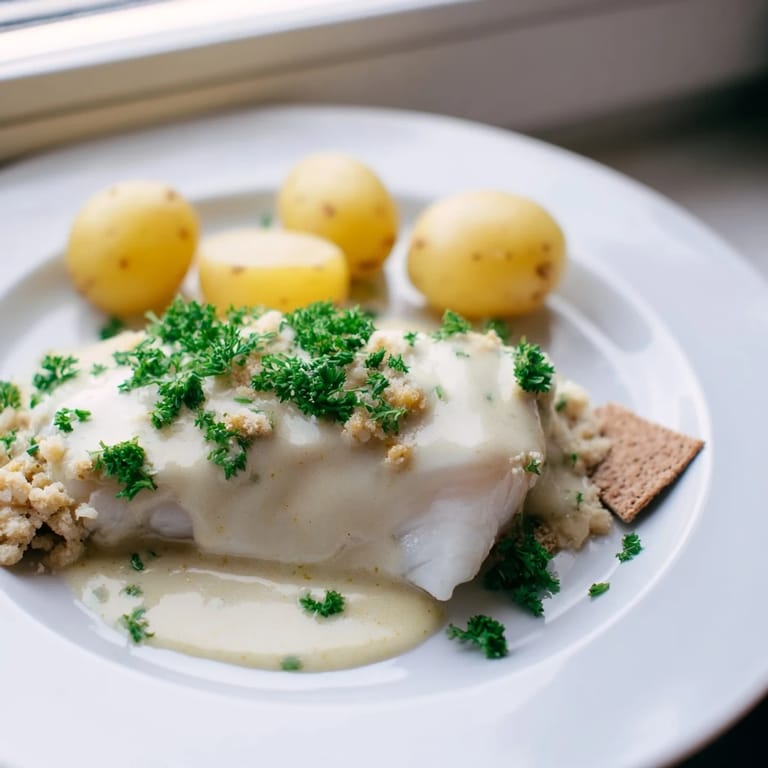
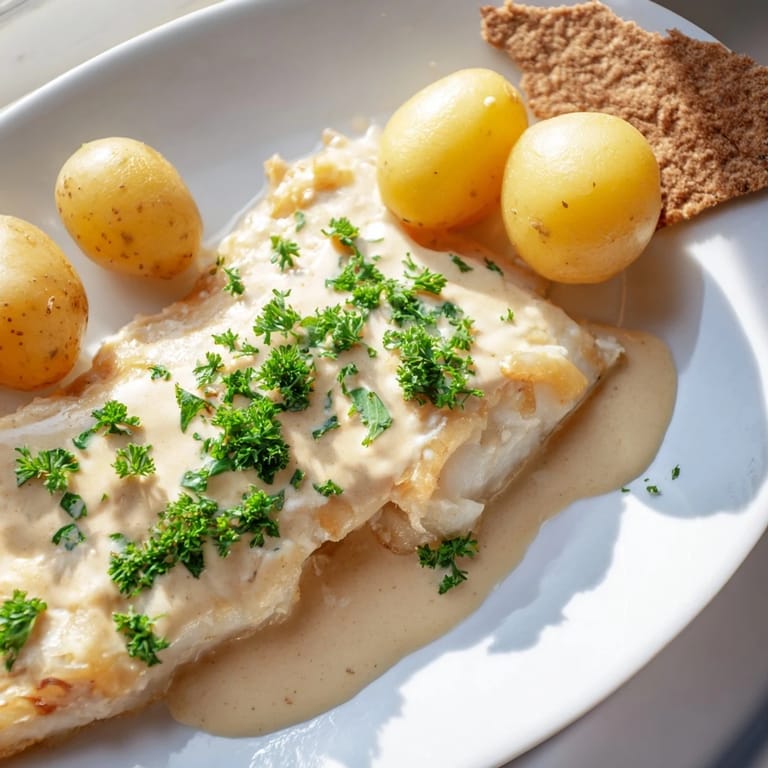
- Plate the hot lutefisk alongside boiled potatoes and your bread choice, then spoon that warm mustard sauce generously over everything. A small handful of fresh parsley scattered on top adds color and freshness that ties the whole dish together.
 Save to Pinterest
 There's a quiet peace that comes from eating something that took you a week to prepare, something that required daily ritual and actual planning. My family gathers around the table when this appears, and somehow we all slow down a little, appreciating the effort in every bite.
The Ritual of Soaking
The soaking period isn't just a cooking step—it's almost meditative if you let it be. I've learned to use those five or six days as a checkpoint in my week, a reminder that good things take time and that rushing food is rarely the answer. The water transforms from clear to slightly cloudy as the fish releases its brine treatment, and by day four or five you can already see the fish plumping up, becoming almost translucent at the edges. It's one of those cooking processes that teaches you patience without making you feel like you're waiting.
Why the Mustard Sauce Matters
Without this sauce, lutefisk is just mild and pleasant, but with it, the dish becomes something memorable and layered. The Dijon brings sophistication, the whole-grain mustard adds texture, and the cream carries all those flavors to every bite of fish. I once tried making this with a thin mustard gravy that was too sharp, and it overshadowed everything—the balance is what makes this sauce special, not any single ingredient. The sugar is the secret weapon here, just enough to smooth the mustard's edges without making anything sweet.
Serving and Pairing
This dish deserves a proper table and company that appreciates it, though it's equally wonderful eaten quietly on a winter evening with just bread and butter nearby. Boiled potatoes are traditional because they're neutral enough to let the fish and sauce shine, and the crispbread serves double duty as both a textural contrast and a vehicle for soaking up sauce. If you're feeling adventurous, my grandmother used to serve hers with small piles of crispy bacon and buttered peas alongside, which added a salty richness that some people loved deeply.
- A chilled glass of aquavit or a crisp lager is the traditional choice and makes perfect sense—the cold and effervescence cut through the creamy sauce beautifully.
- Serve this dish hot and eat it right away; it loses something fundamental if it sits around getting cold and congealing.
- Make extra sauce because people always want more, and the bread disappears faster than you'd expect once people start soaking it in that creamy mustard heaven.
 Save to Pinterest
 This is a dish that carries stories and seasons within it, a reminder that some of the most meaningful food isn't always the most complicated. Make it, share it, and watch how it connects you to something bigger than Tuesday night dinner.
Recipe Questions & Answers
- → How long should the dried cod be soaked?
Soak the dried cod in cold water for 5 to 6 days, changing the water daily to rehydrate and soften it properly.
- → What is the best way to bake the lutefisk?
Preheat oven to 200°C (390°F), cover fish with foil in a baking dish, and bake for 25-30 minutes until opaque and flaky.
- → How is the mustard sauce prepared?
Start by melting butter, whisk in flour to form a roux, gradually add milk, then stir in Dijon and whole-grain mustards with sugar, salt, and white pepper.
- → What are traditional accompaniments for this dish?
Boiled potatoes and crispbread or flatbread are commonly served alongside the fish and mustard sauce, sometimes garnished with fresh parsley.
- → Can this dish be adapted for gluten-free diets?
Yes, substitute all-purpose flour with a gluten-free flour in the mustard sauce to accommodate gluten-free needs.