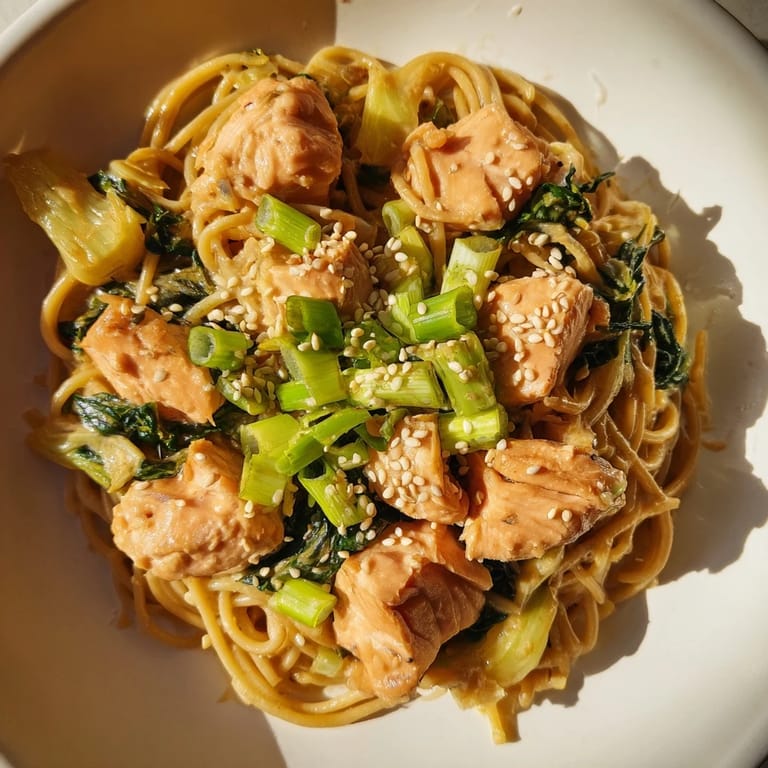
 Save to Pinterest
 There's something about the way miso transforms in a hot pan that caught me off guard the first time I tried it. I was standing in my kitchen on a Tuesday evening, a block of white miso paste in one hand and a whisk in the other, wondering if I was about to make something brilliant or just a salty mess. But then the butter hit the pan, the garlic bloomed, and suddenly this umami-rich sauce came together like it had been waiting my whole life to exist. That moment taught me that the best meals often come from small experiments, especially when you combine cuisines that shouldn't work but absolutely do.
I made this for my partner on a day when they'd had one of those weeks where nothing went right, and watching them take that first bite—eyes closing, fork pausing mid-air—reminded me that food is really just love you can taste. The salmon stayed tender, the bok choy had that perfect snap, and the sauce clung to every strand of pasta like it belonged there. Sometimes the best recipes are the ones that show someone they matter, and this one does that without any fuss.
Ingredients
- Salmon fillets (400 g): Buy them from a counter you trust if you can; the quality makes a real difference in how buttery and forgiving the fish turns out when cooking.
- Linguine or spaghetti (300 g): Long pasta works here because it catches the sauce in all those little ridges and curves, but honestly use whatever you have.
- Baby bok choy (2 heads): The leaves wilt down to almost nothing, so don't be shy with how much you chop; it adds brightness and a bit of texture that cuts through the richness.
- Garlic (2 cloves): Mince it fine so it dissolves into the butter and doesn't leave chunks floating around.
- Scallions (2, sliced): Save these for garnish at the end so they stay crisp and green.
- Unsalted butter (60 g): This is your foundation, so don't skimp on quality; salted butter will throw off the balance.
- White miso paste (2 tbsp): The white variety is less intense than red, which means it blends smoothly without overpowering; find it in the Asian section or order online if your store doesn't stock it.
- Soy sauce (2 tbsp): This adds saltiness and depth; if you're avoiding gluten, swap it for tamari.
- Mirin (2 tbsp): It's sweet and syrupy, which is exactly what keeps this sauce from tasting one-dimensional.
- Heavy cream (100 ml): The cream mellows everything out and makes the whole dish feel luxurious without being heavy.
- Sesame oil (1 tsp): A little goes a long way; it's there to whisper sesame flavor, not shout.
- Black pepper (½ tsp): Grind it fresh so it actually has a bite to it.
Tired of Takeout? 🥡
Get 10 meals you can make faster than delivery arrives. Seriously.
One email. No spam. Unsubscribe anytime.
Instructions
- Get your pasta started:
- Fill a large pot with salted water and bring it to a rolling boil—the water should taste like the sea. Drop in your pasta and cook until it's just shy of tender, about a minute or two before the package says it's done, because it'll finish cooking in the pan with everything else.
- Build your aromatics:
- While the pasta is going, melt butter and sesame oil together in a large skillet over medium heat until the kitchen starts smelling impossibly good. Add your minced garlic and let it sizzle for about a minute; you'll know it's ready when the raw edge is gone and it's turned pale golden.
- Cook the salmon gently:
- Add your salmon pieces to the hot pan and resist the urge to fuss with them; let them sit for 2 to 3 minutes per side until they're opaque and flake easily. The pieces will be delicate, so handle them with a gentle hand.
- Make the miso magic:
- Remove the salmon and set it aside, then add the remaining butter to the pan. Once it's melted, whisk in the miso paste slowly so it doesn't clump; keep whisking until it's completely smooth, then add the soy sauce and mirin.
- Bring in the cream and vegetables:
- Pour in the heavy cream and season with black pepper, stirring until everything's combined into a silky sauce. Add your chopped bok choy and let it cook for 2 to 3 minutes until it's tender but still has a hint of its original color.
- Bring it all together:
- Return the salmon to the pan, then add your drained pasta along with a splash of that reserved pasta water. Toss everything gently so the sauce coats every strand and the salmon stays in pieces instead of breaking apart into mush.
- Finish with flourish:
- Taste it once; if it needs a little more body, add another splash of pasta water and stir. Serve immediately into warm bowls and top with scallions, sesame seeds, and a wedge of lemon on the side.
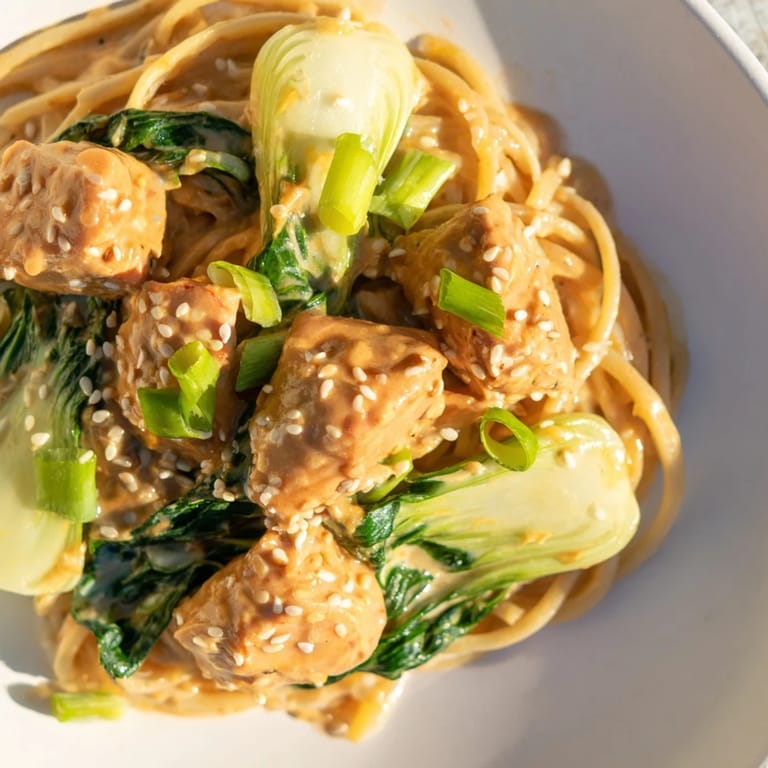 Save to Pinterest
 I'll never forget the moment I realized that cooking doesn't have to be complicated to be meaningful, and this dish taught me that lesson in one evening. It's become the meal I make when I want to feel capable and when I want someone else to feel seen, and somehow those two things are often the same thing.
Why Miso Paste Changed Everything
Before I understood miso, I thought Asian ingredients were intimidating and specific, locked behind a wall of culinary knowledge I didn't have. Then I tried it in butter and realized it's just concentrated flavor that wants to play well with others. White miso especially is milder and sweeter than its red counterpart, which means it plays nicely with cream and pasta without taking over the show. Once you get comfortable with it, you start seeing it as an ingredient that belongs in places you'd never expect.
The Secret to Silky Sauce
The difference between a sauce that clings to your pasta and one that pools at the bottom comes down to one thing: pasta water. It's starchy and emulsifying, which means it helps the butter, cream, and miso paste hold hands and become something greater than the sum of their parts. I learned this the hard way by ignoring the instruction and ending up with a broken sauce that separated, but now I save at least a cup religiously. Think of it as liquid gold for your pan.
Bringing It All Together
The magic moment happens when everything hits the pan at once: the salmon, the pasta, the bok choy, all getting coated in that umami-rich sauce while steam rises up around you. It feels chaotic for about thirty seconds, and then it comes together like a small kitchen miracle. The whole dish is about balance, and as long as you've tasted and adjusted as you go, you'll get there.
- If the sauce seems too thick, add pasta water a tablespoon at a time until it reaches the consistency of heavy cream.
- Don't skip the lemon wedges at the end; a little acid brightens everything and cuts through the richness without making it feel lighter than it is.
- If you can't find baby bok choy, spinach works beautifully and wilts down even more gracefully.
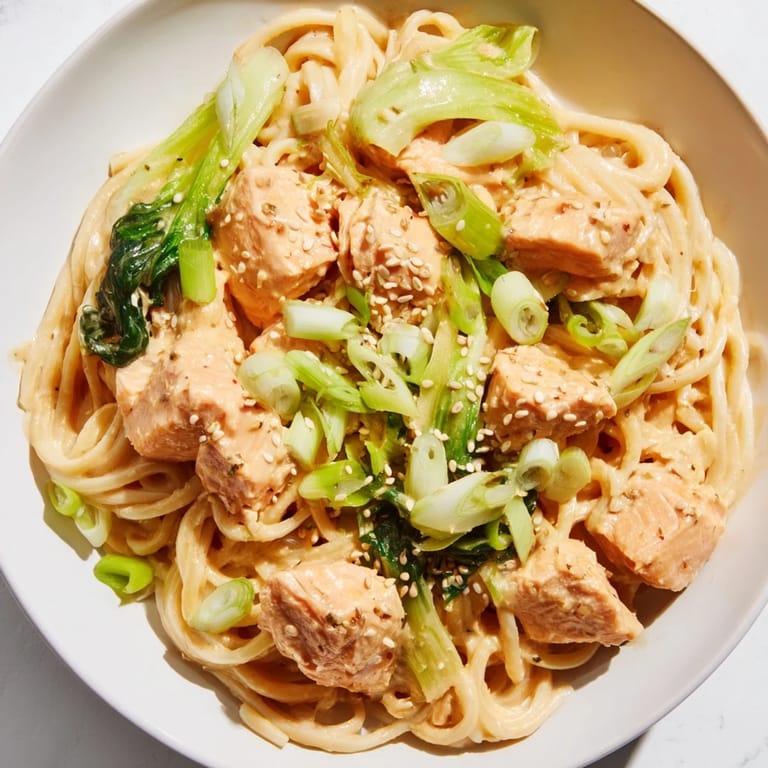 Save to Pinterest
 This is the kind of meal that reminds you why you cook in the first place, and why the simplest moments in the kitchen often turn out to be the ones worth remembering. Make it for someone you care about, or make it for yourself on a Tuesday when you need a little magic.
Recipe Questions & Answers
- → What type of salmon is best for this dish?
Skinless, boneless salmon fillets cut into bite-sized pieces work best for even cooking and easy tossing with the sauce.
- → Can I substitute bok choy for other greens?
Yes, spinach or baby spinach are great alternatives that wilt quickly and complement the creamy sauce well.
- → How do I achieve the silky texture in the sauce?
Adding reserved pasta water while tossing the pasta and salmon in the sauce helps create a smooth, clingy coating.
- → Is it essential to use both miso paste and soy sauce?
Both add depth and umami; miso lends creamy richness while soy sauce contributes saltiness and complexity. Omitting either affects balance.
- → What garnishes enhance flavor and presentation?
Toasted sesame seeds add nutty crunch, scallions give freshness, and lemon wedges brighten the dish with acidity.
- → Can this dish be made gluten-free?
Use gluten-free pasta and tamari instead of soy sauce to accommodate gluten sensitivities without sacrificing flavor.