 Save to Pinterest
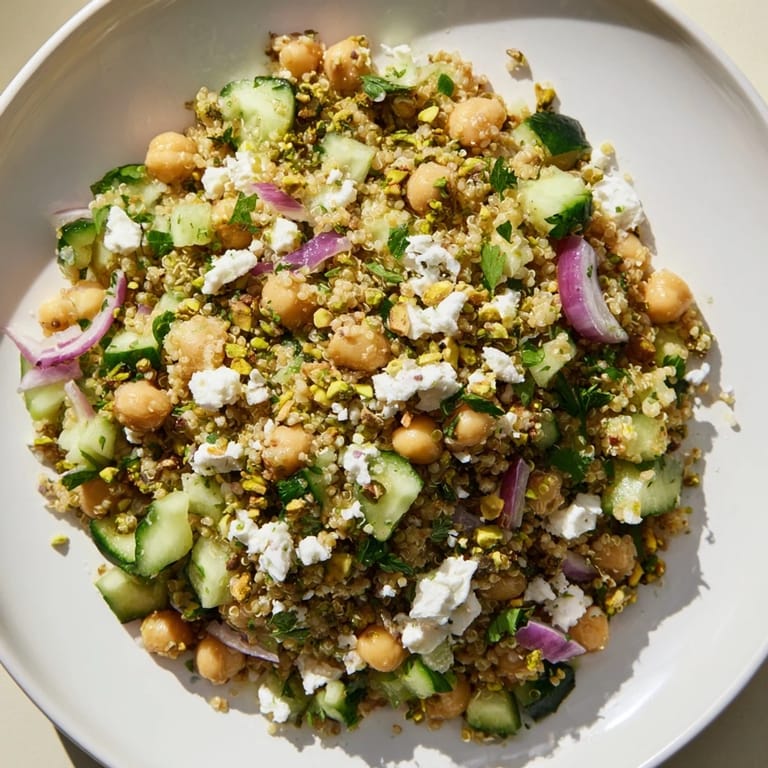
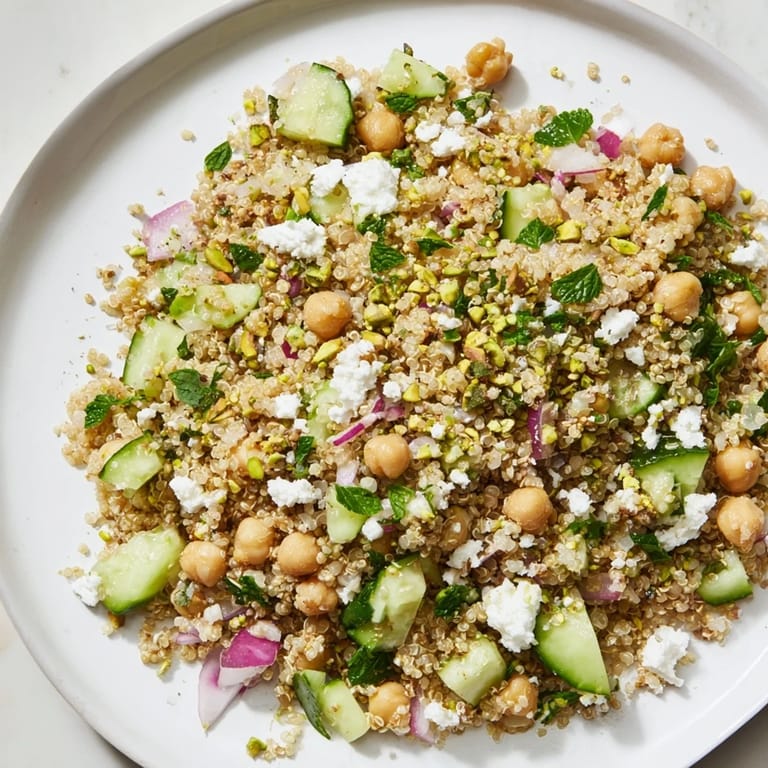
 The first time someone mentioned Jennifer Aniston's famous salad, I thought they were talking about an actual recipe she'd published. Turns out, it's just this incredibly balanced bowl that keeps showing up at farmers markets and lunch spots, and honestly, once you make it, you understand why it's become such a thing. It's the kind of salad that doesn't apologize for being hearty—there's enough going on here that you actually feel satisfied, not like you're eating rabbit food. The beauty of it is how simple it actually is to throw together, even though it looks like you spent the whole morning prepping.
I made this for a potluck once thinking it would be a safe, forgettable side dish. A friend took one bite, came back for seconds, and then asked for the recipe because apparently I'd brought "that salad everyone keeps talking about" without realizing it. The feta got a little softer from the warm grain, the herbs were still bright, and the whole thing just worked. That's when I realized this salad has this quiet confidence about it—it doesn't need much to impress.
Ingredients
- Quinoa or bulgur (1 cup uncooked): The grain base gives you substance and a nutty flavor, plus quinoa has all nine amino acids if that matters to you.
- Water (2 cups): Use a 1:2 ratio and don't skip rinsing the grain first—it actually makes a difference in the final texture.
- Chickpeas (1 can, drained and rinsed): These add protein and an earthy creaminess that makes the salad feel like a real meal.
- Cucumber (1 large, diced): The crisp, fresh element that keeps everything from feeling too dense.
- Red onion (1/2 small, finely chopped): A little sharp bite that balances the richness of the feta and oils.
- Feta cheese (3/4 cup crumbled): Don't use the pre-crumbled kind if you can help it—block feta crumbles better and tastes fresher.
- Fresh parsley (1/2 cup chopped): The herb that does the heavy lifting here, adding brightness without overshadowing anything else.
- Fresh mint (1/4 cup chopped): Just enough to whisper rather than shout, giving the whole thing a subtle coolness.
- Pistachios or slivered almonds (1/3 cup toasted and chopped): Toast these yourself if possible—the difference between raw and toasted is honestly night and day.
- Extra virgin olive oil (3 tbsp): Use one you actually like drinking because you'll taste every bit of it.
- Lemon juice (2 tbsp freshly squeezed): Bottled will work in a pinch, but fresh juice brings this brightness that bottled just can't match.
- Garlic (1 clove minced): Just enough to add a whisper of savory depth without making your breath regrettable.
- Sea salt and black pepper (1/2 tsp and 1/4 tsp): Taste as you go—you might want more depending on your feta and how generous you were with the olive oil.
Tired of Takeout? 🥡
Get 10 meals you can make faster than delivery arrives. Seriously.
One email. No spam. Unsubscribe anytime.
Instructions
- Get your grain going:
- Rinse your quinoa or bulgur under cold water until the water runs clear—this takes about a minute and removes any bitter coating. Bring 2 cups of water to a boil in a medium saucepan, add your rinsed grain, then immediately drop the heat to low, cover it, and let it sit for about 12 minutes for quinoa or 15 for bulgur, then fluff it with a fork and let it cool down while you prep everything else.
- Prep your vegetables and herbs:
- Dice your cucumber into bite-sized pieces, finely chop your red onion (the smaller the pieces, the better it distributes), then roughly chop your parsley and mint—keep them separate from everything else for now.
- Toast your nuts:
- If you haven't already, put your pistachios or almonds in a dry skillet over medium heat for about 3 to 5 minutes, stirring occasionally until they smell toasted and fragrant, then roughly chop them and set them aside.
- Build the salad:
- In a large bowl, combine your cooled grain, drained chickpeas, diced cucumber, chopped red onion, crumbled feta, fresh parsley, mint, and toasted nuts—don't dress it yet or everything gets soggy.
- Make the dressing:
- In a small bowl, whisk together your olive oil, lemon juice, minced garlic, salt, and pepper until it comes together, then taste it and adjust as needed because this is where you control the whole flavor situation.
- Bring it together:
- Pour the dressing over your salad and gently toss everything until it's evenly coated, then taste it again because you might want to add a tiny bit more salt or lemon depending on your mood and the ingredients you used.
 Save to Pinterest
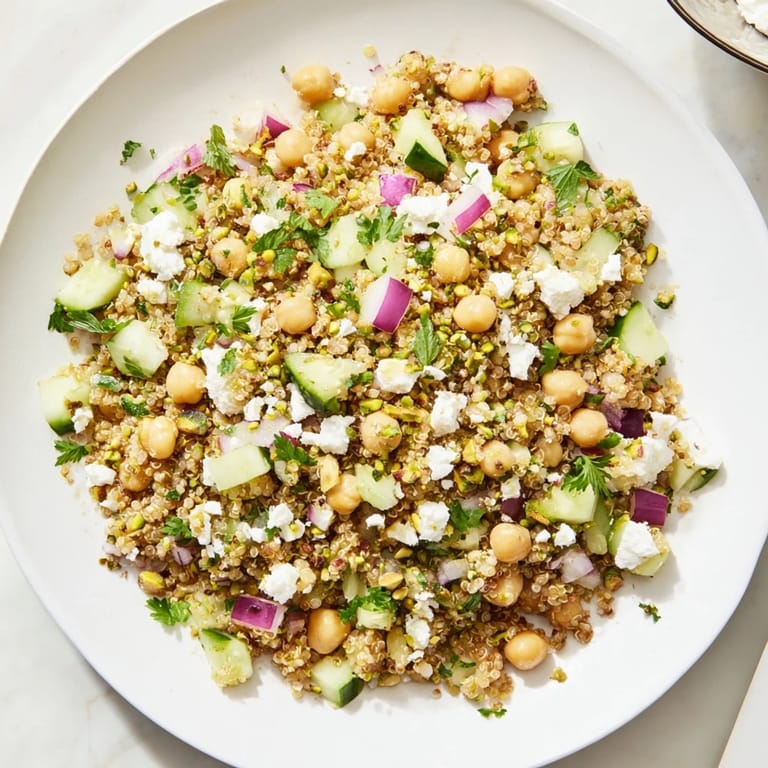
 There's something really satisfying about a salad that fills you up without making you feel like you need a nap afterward. This is the kind of thing you could make on a weeknight when you want something that feels both light and substantial, or throw together for a picnic because it travels well and actually tastes better the next day.
Why This Salad Became a Thing
Somewhere along the way, people realized that salad didn't have to be sad or boring if you actually put thought into it. This one checks every box—there's protein, healthy fats, fresh flavors, and enough texture that you're never bored eating it. The Mediterranean flavors work together so naturally that it feels almost effortless, even though you're actually eating something genuinely good for you. It's the salad equivalent of that friend who somehow looks put-together without trying.
Making It Your Own
The foundation here is solid, but honestly, this salad is forgiving enough that you can play with it. Add diced avocado if you want extra creaminess, throw in some sun-dried tomatoes if you like that tangy sweetness, or use walnuts instead of pistachios if that's what you have sitting in your pantry. The dressing is where you can also get creative—swap the lemon for lime if you want something more tropical, or add a tiny bit of Dijon mustard if you want more depth.
Storing and Serving Smart
This salad holds up beautifully in the fridge for about three days, as long as you keep the dressing separate until you're ready to eat. You can serve it cold straight from the fridge, at room temperature, or even slightly warm if your grain is still warm when you assemble everything. It works as a main dish on its own, or as a side alongside grilled chicken, fish, or even just some crusty bread and hummus if you want to keep it vegetarian.
- Make a double batch on Sunday and you've basically got lunch sorted for the first half of the week.
- If you're taking this somewhere, pack the dressing in a small jar and add it right before eating.
- This salad actually improves a tiny bit after sitting for an hour or two, as all the flavors get to know each other.
 Save to Pinterest
 This is the kind of salad that quietly proves you don't need complicated recipes or fancy techniques to eat something genuinely delicious. Make it once and you'll find yourself coming back to it.
Recipe Questions & Answers
- → Can I use bulgur instead of quinoa?
Yes, bulgur can be used as an alternative to quinoa. Cook it according to package instructions until tender, then cool before mixing.
- → How should the nuts be prepared?
Toast pistachios or slivered almonds lightly to enhance their flavor and add a satisfying crunch to the salad.
- → Is this salad suitable for a vegetarian diet?
Absolutely, the salad includes vegetarian-friendly ingredients like chickpeas and feta cheese to provide protein and texture.
- → Can I make this salad vegan?
To make it vegan, simply omit the feta or substitute with a dairy-free cheese alternative.
- → How can the salad be served?
Serve chilled or at room temperature as a filling main or a side dish alongside grilled meats or fish.
- → What dressing is used in this salad?
The dressing combines extra virgin olive oil, fresh lemon juice, minced garlic, sea salt, and black pepper for a bright, balanced flavor.