 Save to Pinterest
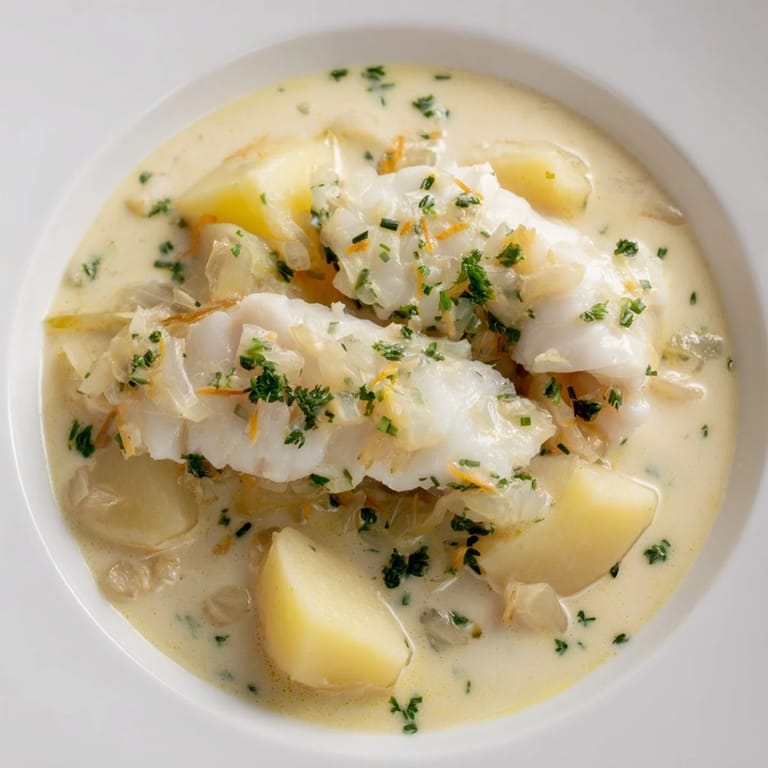
 There's something about a bowl of Icelandic fish stew that stops time on a gray afternoon. I first tasted it years ago when a friend's mother from Reykjavik brought a pot to a potluck, and I was immediately transported—not by nostalgia, but by the sheer simplicity of it. Just fish, potatoes, cream, and the kind of gentle warmth that made me want to sit at a kitchen table for hours. When I finally learned to make it myself, I discovered it wasn't just comfort food; it was an act of quiet generosity.
I made this for my partner on a night when we both needed something more than just dinner—something that felt intentional. The kitchen filled with the smell of butter and onions first, then fish, then cream. He sat at the counter telling me about his day, and by the time we sat down to eat, the stew had done what good food does: it had given us permission to slow down and actually talk. That bowl became our thing for winter.
Ingredients
- Cod or haddock fillets (500 g / 1 lb): White fish is essential here because it breaks apart gently and doesn't overwhelm the delicate cream sauce. Skinless and boneless makes everything smoother, though you can poach the fish yourself if you prefer control over the texture.
- Butter (60 g / 4 tbsp): This is your flavor foundation—don't skip it or replace it with oil. Butter makes the onions turn golden and adds richness that cream alone can't achieve.
- Whole milk (500 ml / 2 cups): Full-fat milk matters because the fat carries the flavor and prevents the stew from tasting thin or separated.
- Heavy cream (100 ml / ⅓ cup + 1 tbsp): Just enough to make it luxurious without being heavy. You can reduce this if you want a lighter version, but then increase the milk slightly.
- Potatoes (500 g / 1 lb): Waxy potatoes like Yukon Gold hold their shape better than starchy varieties, which is why they're traditionally used. Dice them evenly so they cook at the same rate.
- Onion (1 medium): Finely chopped onion dissolves almost completely into the broth, sweetening it subtly. Don't rush this step—let it soften fully.
- Fresh parsley and chives (2 tbsp each): These aren't garnishes; they're the final voice. Fresh herbs brighten the whole dish in a way dried herbs simply cannot.
- Bay leaf, salt, white pepper, and nutmeg: Bay leaf infuses the poaching liquid with subtle flavor. White pepper is traditional because it doesn't leave dark specks in a pale stew. Nutmeg is optional but transforms it if you use just a pinch.
Tired of Takeout? 🥡
Get 10 meals you can make faster than delivery arrives. Seriously.
One email. No spam. Unsubscribe anytime.
Instructions
- Start the potatoes:
- Dice your potatoes into bite-sized pieces and place them in a large pot of salted water. Bring to a boil and cook for 12–15 minutes until they're fork-tender but not falling apart. This is your moment to get everything else prepped—chop your onion, measure your cream, flake your herbs into a small bowl.
- Poach the fish gently:
- While potatoes cook, place your fish fillets in a saucepan of barely simmering water with a bay leaf and pinch of salt. The water should barely move—this keeps the fish tender and white. In 6–8 minutes it will turn opaque and break apart easily. Reserve about ⅓ cup of the poaching liquid before you discard the bay leaf.
- Build the base with butter and onion:
- Drain the potatoes and set aside. In your large pot, melt butter over medium heat and add your finely chopped onion. You're not rushing this—let it soften and turn translucent, about 5 minutes. The kitchen will smell incredible, which is a good sign.
- Gently mash the potatoes:
- Add the cooked potatoes to the pot with the onion and mash them lightly with a potato masher. You want a chunky texture, not a smooth purée. This is where the stew gets its body—those potato pieces will soften further into the cream.
- Bring the fish back together:
- Flake the cooked fish into large pieces, trying to keep them as whole as possible. Add them to the pot along with the reserved poaching liquid. Stir gently so you don't break the fish into tiny fragments.
- Add cream and milk over low heat:
- Pour in your milk and cream, then keep the heat low. Stir frequently as it warms through. This takes about 5–10 minutes, and you're watching for it to become creamy and unified. Never let it boil—boiling breaks the sauce and makes it taste slightly curdled.
- Season and finish:
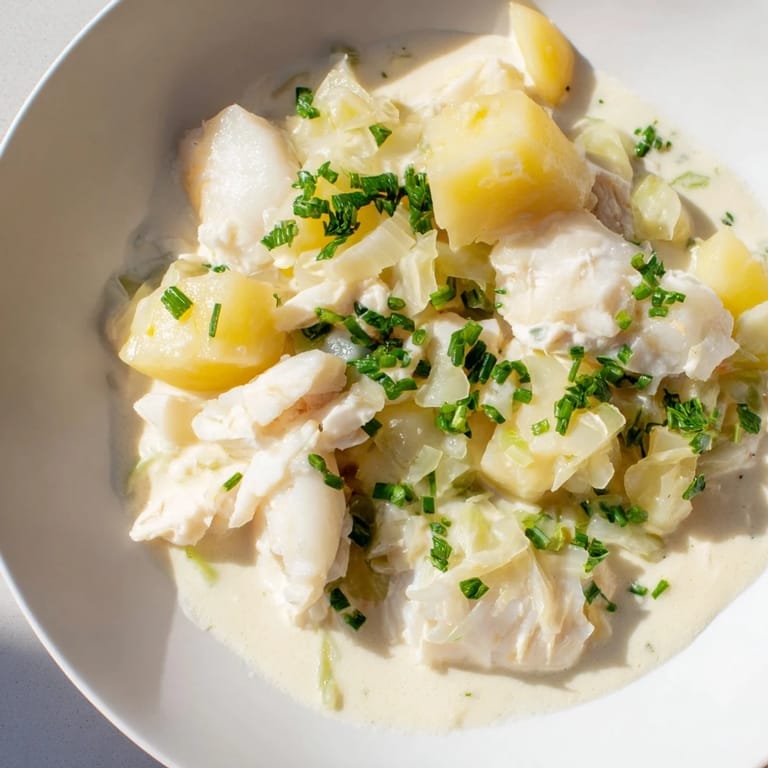
- Add salt, white pepper, and a pinch of nutmeg if you're using it. Stir in about half of your fresh parsley and chives, saving the rest for the top. Taste as you go—seasoning is personal, and you're the expert on your own stew.
 Save to Pinterest
 The first time I served this to people I genuinely cared about, I realized that this stew exists in that space between a meal and a ritual. There's nothing fancy about it, but there's also nothing careless. It asks you to pay attention—to listen for the gentle simmer, to notice when the cream begins to coat a spoon, to taste and adjust. That's when cooking stops being a task and becomes something closer to meditation.
The Icelandic Way
In Iceland, this stew represents comfort in its most honest form. The country's fishing heritage runs deep, and plokkfiskur (the traditional name) shows up on tables not because it's special, but because it's real. You don't need fancy equipment or rare ingredients—you need potatoes, fish from cold waters, cream from grass-fed cows, and time. This is peasant food that tastes like abundance.
Making It Your Own
The beauty of this stew is that it's forgiving. You can make it lighter by using only milk and skipping the cream, and it will still taste wonderful—just less rich. Some people add smoked fish for depth, or a combination of white fish types if they want complexity. I've even seen versions with leeks instead of onions, which adds a subtle sweetness. The core stays the same: fish, potatoes, cream, and intention.
What to Serve It With
Traditionally, this stew comes with dark Icelandic rye bread and a pat of butter on the side. The bread soaks up the broth in a way that feels almost sacred. A simple green salad cuts through the richness, and a crisp white wine—something like a Sauvignon Blanc—complements it without competing. If you're keeping it simple, though, the stew speaks for itself.
- Dark rye bread with butter is not optional; it's the way to finish every spoonful.
- A squeeze of fresh lemon at the table adds brightness if you feel the stew needs it.
- Serve it in deep bowls so the broth stays warm until the last bite.
 Save to Pinterest
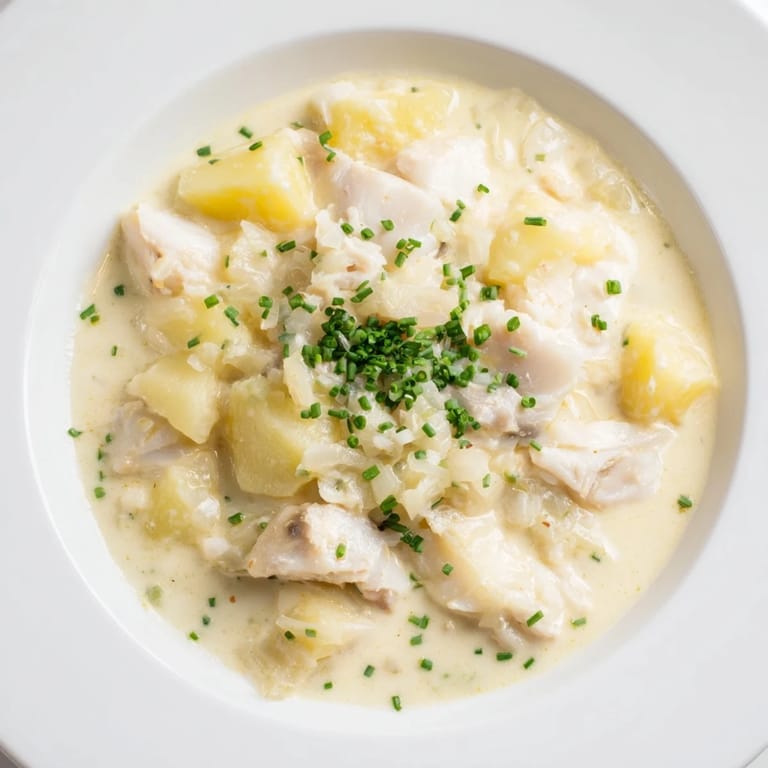
 This stew has become my answer to the question of what real food is. It doesn't try to be anything other than what it is—honest, nourishing, and deeply satisfying. Make it on a day when you have time to do it right, and it will reward you with something far better than a full stomach.
Recipe Questions & Answers
- → What type of fish is best for this stew?
Skinless and boneless white fish such as cod or haddock work best as they flake easily and offer mild flavor that complements the creamy base.
- → Can I use a different type of potato?
Yes, waxy potatoes hold their shape well and maintain texture when gently mashed, making them ideal for this dish.
- → How is the creamy texture achieved?
The creamy consistency comes from combining whole milk and heavy cream with the mashed potatoes and flaked fish, heated gently to avoid boiling.
- → What herbs enhance the flavor best?
Fresh parsley and chives add bright, fresh notes that balance the richness of the stew.
- → Is it important to reserve the fish poaching liquid?
Yes, reserving some poaching liquid enriches the stew’s base with subtle fish flavor and enhanced depth.