 Save to Pinterest
 My first schnitzel came from a small restaurant in Munich, where a woman with flour-dusted hands delivered golden, paper-thin cutlets that crunched when my fork touched them. I watched her work the station from the bar and realized that crispness wasn't about fancy technique—it was about respecting the rhythm of heat and timing. Years later, I tried recreating it at home, and after a few too-thick, soggy attempts, I finally understood: the pounding wasn't just mechanical, it was the whole story.
I made this for my partner on a rainy Tuesday when we both needed something warm and comforting but not heavy. The sound of the cutlets hitting the hot pan brought him into the kitchen, and suddenly we were both laughing at how theatrical it all was—the sizzle, the aroma of butter and breadcrumbs. That meal became one of those unplanned moments that stuck around in memory longer than the expensive dinners I'd carefully planned.
Ingredients
- Boneless pork chops or chicken breasts (4, about 150 g each): Pork chops stay juicier if you don't pound them paper-thin, but chicken forgives heavier pounding—choose based on your mood and what's in the fridge.
- All-purpose flour (100 g): This is your first binding layer, so don't skip it or oversalt here, or the breading will slide off in the pan.
- Eggs (2 large) and milk (2 tbsp): The egg mixture is your glue—thin milk weakens it, so measure carefully.
- Fine dry breadcrumbs (150 g): Use Japanese panko if you want maximum crunch, or fine European breadcrumbs for a more delicate crust.
- Vegetable oil or clarified butter (120 ml): Clarified butter tastes authentically German and handles heat without burning, but neutral oil works fine if that's what you have.
- Salt, freshly ground black pepper, lemon wedges, fresh parsley: The lemon isn't optional—it brightens everything and cuts through the richness like a small miracle.
Tired of Takeout? 🥡
Get 10 meals you can make faster than delivery arrives. Seriously.
One email. No spam. Unsubscribe anytime.
Instructions
- Pound the meat to even thickness:
- Place each cutlet between plastic wrap to avoid splatter, then use firm, confident strokes with the mallet—this isn't delicate work, it's deliberate. Aim for about 1/4 inch thickness, which lets the meat cook through while the breading crisps.
- Season generously:
- Don't be shy with salt and pepper on both sides now; it seasons the meat itself, not just the coating.
- Set up your breading station:
- Arrange three shallow plates in a line: flour, beaten egg-milk mixture, breadcrumbs. This assembly-line approach keeps one hand wet and one dry, which matters more than you'd think.
- Bread each cutlet with intention:
- Flour first, shake off excess, then dip in egg and let it drip for a second, then into breadcrumbs—press gently but firmly so the coating stays put. This gentle pressure is the secret; too hard and you compress the meat, too soft and the breading slides.
- Heat your fat until it shimmers:
- Medium-high heat in a large skillet—the oil should shimmer and almost smoke when you test it with a breadcrumb. If it's not hot enough, your schnitzel will drink the oil instead of crisping.
- Fry until golden brown:
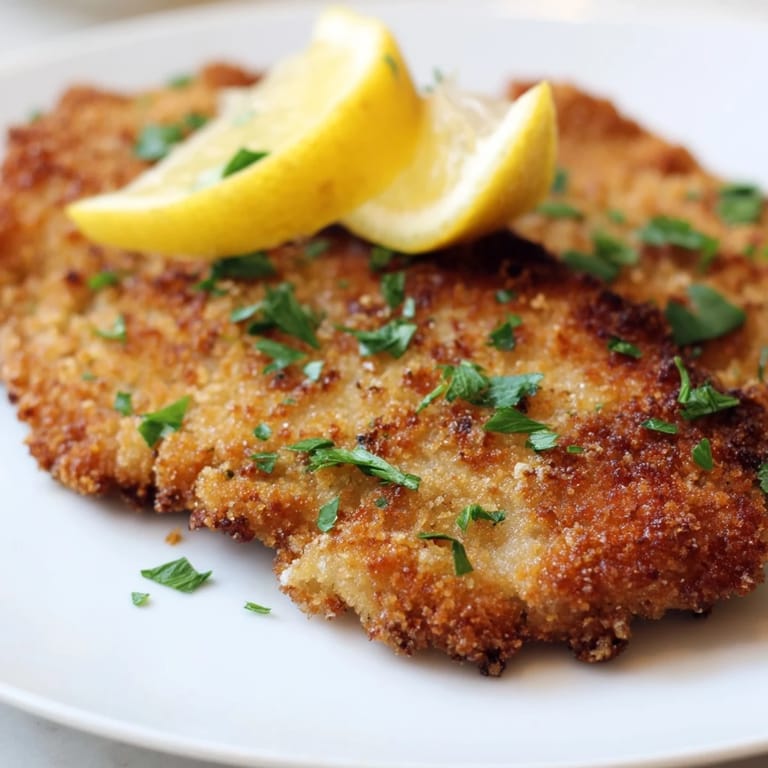
- Two to three minutes per side, listening for that aggressive sizzle that tells you the crust is setting, not steaming. Don't fidget; let each side develop color before flipping.
- Drain on paper towels:
- This brief rest stops the cooking and lets excess oil drain, keeping the crust crispy instead of greasy.
- Serve immediately with lemon and parsley:
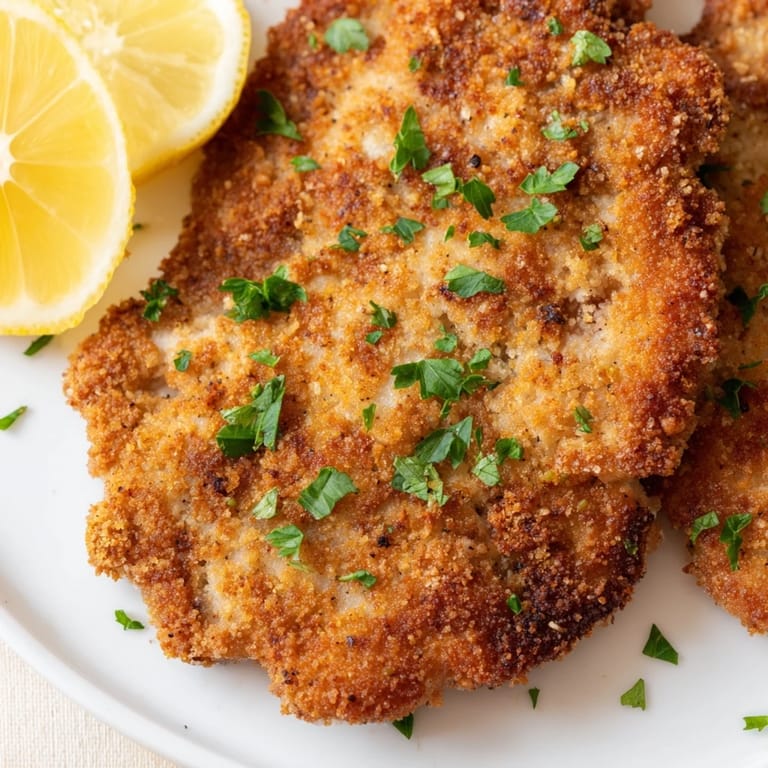
- The moment it hits the plate is the moment to serve—warmth is part of the experience.
 Save to Pinterest
 I served this to my skeptical neighbor who claimed he 'didn't really cook,' and watching him take that first bite—hearing the crunch echo through the kitchen—changed something. He came back the next week asking how I did it, and we ended up making it together while his kids played in the living room. Food that crisps and crackles has a way of turning strangers into friends.
The Art of Even Pounding
Pounding isn't aggression; it's patience. The meat needs to be even thickness so it cooks uniformly and crisps at the same time. Too thick and the outside burns before the inside finishes, too thin and it dries out before you can get a good crust. I learned this by ruining three cutlets before understanding that a meat mallet is more about technique than force.
The Breading Crust Is Everything
The distinction between a soggy, oil-logged schnitzel and a crackling masterpiece lives in how you bread it and how hot your fat gets. Cold breadcrumbs on hot meat create that crucial crust, but the temperature drop when you add the cutlet to the pan matters—keep the heat high enough that it recovers immediately. The breadcrumbs should fry, not just soak.
Serving and Pairing Ideas
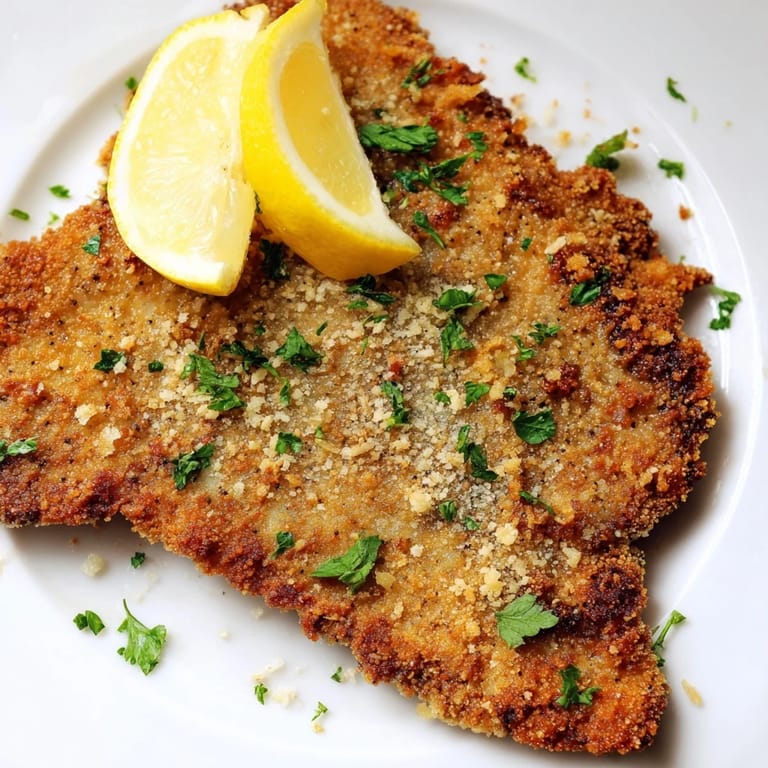
In Germany, schnitzel comes with potato salad (the warm, vinegary kind), cucumber salad, or fresh lemon and parsley. These aren't random suggestions; they're designed to balance the richness and cut through the heaviness with acid and freshness. I've served it with roasted vegetables, simple greens, and even on a salad when I wanted something lighter but still crunchy.
- Potato salad with warm mustard vinaigrette pairs so well it feels inevitable.
- A simple green salad with lemon dressing lets the schnitzel shine without weighing you down.
- Serve with a cold Riesling or pilsner beer, and suddenly it's a proper celebration.
 Save to Pinterest
 Schnitzel is proof that simplicity isn't boring—it's elegant. Once you master the rhythm, you'll find yourself making it on ordinary Tuesdays just to hear that crunchy sound.
Recipe Questions & Answers
- → What type of meat can I use for this dish?
Pork chops or chicken breasts work best, pounded thin to ensure quick and even cooking.
- → How do I get a crispy coating on the cutlets?
Coat the meat evenly with flour, egg, and fine dry breadcrumbs, then fry in hot oil or clarified butter until golden brown.
- → Can I substitute clarified butter with another fat?
Yes, vegetable oil is a good alternative that achieves similar crispiness without adding strong flavors.
- → What sides complement this dish well?
Traditional options include potato salad, cucumber salad, or fries, which balance the crispy cutlets nicely.
- → How should the cutlets be prepared before coating?
Pound the meat to about 1/4 inch thickness to ensure tenderness and even cooking through.
- → Is it necessary to press the breadcrumbs firmly onto the meat?
Press gently to help breadcrumbs adhere but avoid pressing too hard to keep the coating light and crispy.