 Save to Pinterest
 I remember the night I decided to throw an impromptu dinner party with absolutely no time to prepare a traditional meal. As I stood in my kitchen staring at a half-empty refrigerator, my eyes landed on a collection of cheeses I'd been collecting over weeks—aged cheddar, creamy blue, silky brie. That's when the idea struck: what if I created something that told a story? I pulled out a star-shaped cookie cutter I'd used for sugar cookies years ago, and suddenly this cheese board became a celestial canvas. My guests that evening didn't just eat appetizers; they gasped when they saw it. That moment taught me that the most memorable food isn't always the most complicated—sometimes it's simply arranged with a little imagination and heart.
I'll never forget watching my neighbor's eight-year-old daughter carefully arrange the cheese stars like she was placing actual constellations in the night sky. She asked if she could name each one after her favorite stars, and suddenly what was supposed to be a simple appetizer became a game, a story, a memory. That's when I realized this board works for any occasion—elegant enough for grown-up dinner parties, playful enough to make children feel like artists.
Ingredients
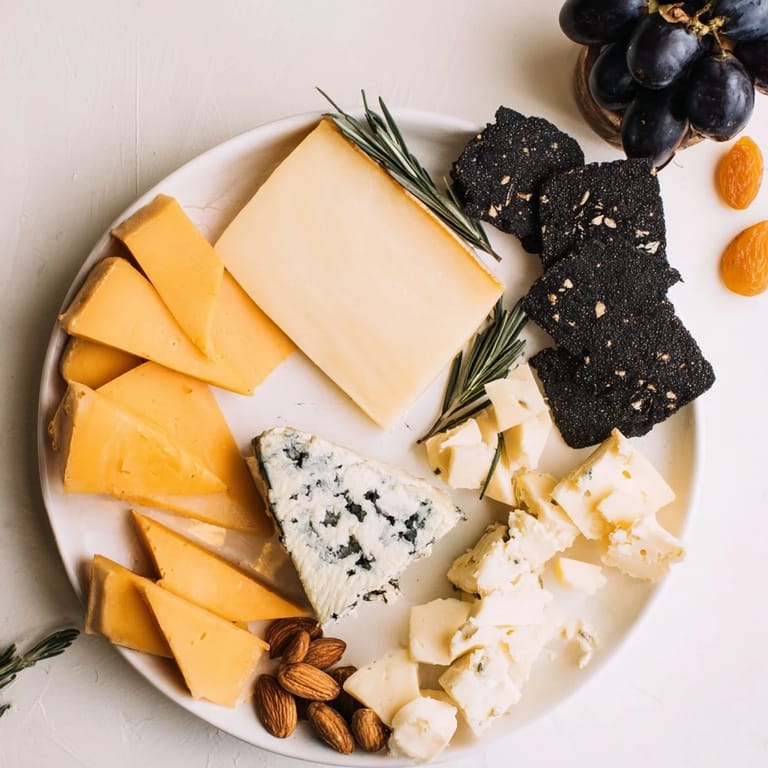
- Aged cheddar (150 g): The sharp, crumbly backbone of this board. I learned to slice it into irregular chunks rather than perfect cubes—the rough edges catch light beautifully and feel more intentional
- Creamy blue cheese (100 g): This is your flavor drama. Its boldness against the milder brie creates the contrast that keeps people reaching back for just one more bite
- Brie or camembert (120 g): The gentle, buttery soul of the board. Keep it slightly cool from the fridge so it spreads like silk when you bite into it, but not so cold it's hard
- Gouda (80 g): Choose a firm one that holds its shape perfectly when you cut stars. This is the only cheese that truly matters for the visual magic
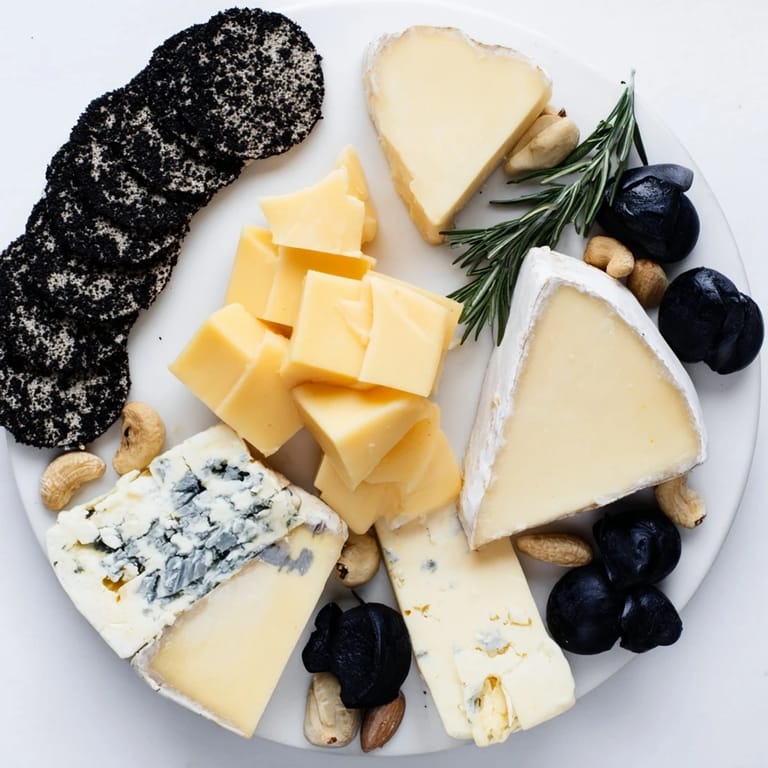
- Charcoal or black sesame crackers (100 g): The darker your crackers, the more dramatic the crescent moon. I discovered activated charcoal crackers create an almost otherworldly effect against the pale cheeses
- Pumpernickel bread, sliced (100 g): The dense, slightly sweet undertone works beautifully with sharp cheese. Slice it thin enough to bend slightly without breaking
- Seeded flatbread (50 g): A textural surprise that adds another layer of visual interest
- Black grapes (1 bunch): These become your night sky pearls. The way light catches them is half the magic
- Dried figs, halved (a small handful): Sweet and chewy, they balance the saltiness of cheese and crackers perfectly
- Marcona almonds (a small handful): Buttery and slightly sweet, these are more forgiving than regular almonds if you're cooking for mixed tastes
- Fresh rosemary sprigs: Not just garnish—they perfume the entire board and make it smell like a Mediterranean escape
- Honey or fig preserves (optional): A drizzle transforms this from good to unforgettable. I learned to warm the honey slightly so it flows like liquid gold across the board
Tired of Takeout? 🥡
Get 10 meals you can make faster than delivery arrives. Seriously.
One email. No spam. Unsubscribe anytime.
Instructions
- Prepare your stars with intention:
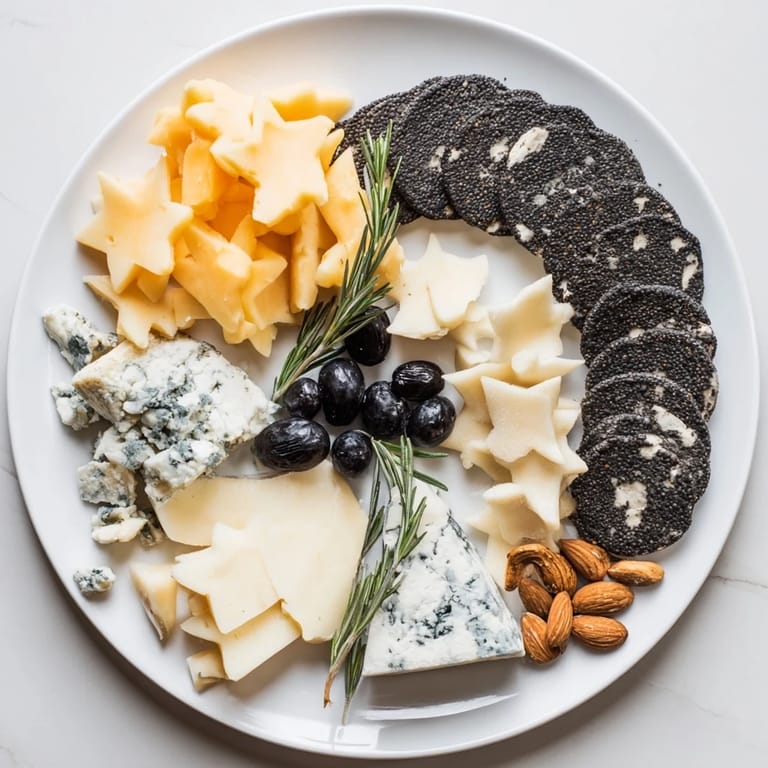
- Take that gouda and let it sit at room temperature for just two minutes—not longer, or it gets too soft to cut cleanly. Press your star cutter down with confidence and a slight twist. You'll hear a satisfying little sound as it releases. Cut 8 to 12 stars depending on your board's size. Each one becomes a tiny work of art, so take your time and enjoy the meditative rhythm of the cutting.
- Create your crescent moon:
- This is where theater happens. Arrange your dark crackers and pumpernickel slices in a curved crescent along one edge of your board. Step back and look at it from above—does it feel like a moon emerging from darkness? Good. If a few crackers break, that's perfect; they fill the gaps more naturally than perfectly intact pieces ever could.
- Layer your cheese in a symphony:
- Along the inside curve of your crescent, begin placing your cheeses. Alternate between the sharp aged cheddar, the creamy blue, and the pale brie. Don't arrange them in neat rows; let them flow and overlap slightly. The beauty is in the variety of color and texture meeting the eye at different angles. This is the moment the board starts speaking to you.
- Scatter your stars across the sky:
- On the opposite side of the board, create an asymmetrical cluster of gouda stars. Some can be slightly overlapping, others floating alone. Pretend you're actually placing stars in a night sky—there's no wrong arrangement, only your own constellation waiting to be discovered.
- Fill the void with magic:
- Now take your grapes, dried figs, and almonds and let them tumble into the spaces between cheese and crackers. Let them nestle naturally rather than forcing them into perfect positions. These little touches are what make the board feel alive and inviting rather than formally arranged.
- Add the finishing breath:
- Tuck fresh rosemary sprigs around the board like aromatic brushstrokes. If you're using honey or fig preserves, drizzle it lightly across the cheeses just before serving—never before, or it dries and loses its glow. Step back and admire what you've created. You've just built something beautiful.
 Save to Pinterest
 There's a moment right before guests arrive when you light a candle near the board and watch the shadows dance across the cheese and grapes. The rosemary releases its scent slowly into the warm air, and suddenly your kitchen smells like an elegant bistro. That's when you know you've created something that matters, not because of the ingredients, but because you arranged them with care and playfulness.
Why This Board Works for Any Occasion
I've served this board at formal dinner parties where it drew compliments from food-savvy guests, and I've also served it at casual family gatherings where the kids insisted on helping arrange the stars. There's something about the celestial theme that transcends formality—it's elegant enough for sophisticated palates but whimsical enough to delight anyone. The best part? You can customize every single element to match who you're serving.
The Art of Cheese Board Pairing
Over time, I've learned that a cheese board isn't just about individual flavors but about how they dance together. The sharp aged cheddar becomes even more interesting when you taste it after the creamy blue cheese coats your palate. The brie feels like a palate cleanser between bold flavors. The honey drizzle brings everything into harmony. I've discovered that serving a crisp white wine or sparkling cider alongside this board creates a moment of real magic—the bubbles and acidity cut through the richness of the cheese in a way that makes everyone slow down and actually taste.
Making It Your Own Constellation
The beauty of this board is that it invites personalization. I've made versions with sharp provolone instead of cheddar for guests who prefer a different kind of intensity, and I've swapped Manchego for gouda when I wanted a slightly nuttier flavor. Once, I even used purple cabbage leaves as an additional visual element when I was out of pumpernickel, and it looked even more dramatic. The core idea—a crescent of dark elements, stars floating free, and everything in between filled with color and texture—remains constant, but your version will be uniquely yours. That's the real magic.
- Cut your star shapes a few hours ahead but keep them covered with plastic wrap until serving, so they stay vibrant
- If your gouda is too soft or hard, test the cutter on a small piece first to see if you need to adjust temperature or technique
- Remember that the most beautiful boards often look slightly imperfect—embrace happy accidents and irregular arrangements
 Save to Pinterest
 A cheese board is an invitation to slow down, to notice the texture of aged cheddar on your tongue, to appreciate how creamy blue cheese evolves as it warms slightly. It's a moment of small luxury that doesn't require hours in the kitchen, just a little creativity and the willingness to arrange things beautifully.
Recipe Questions & Answers
- → What types of cheese are used for the board?
The board features aged cheddar, creamy blue cheese, brie or camembert, and gouda cut into stars.
- → How are the cheeses arranged on the board?
Cheeses are placed inside a crescent formation made by dark crackers, alternating colors and textures for visual appeal.
- → What crackers work best for the crescent shape?
Charcoal or black sesame crackers and pumpernickel bread slices create the dark, dramatic crescent base.
- → How are the gouda stars created?
A small star-shaped cutter is used to cut gouda into 8–12 stars, which are then scattered opposite the crescent.
- → What accompaniments enhance the flavors?
Black grapes, dried figs, Marcona almonds, and fresh rosemary sprigs add color and complementary notes to the board.