 Save to Pinterest
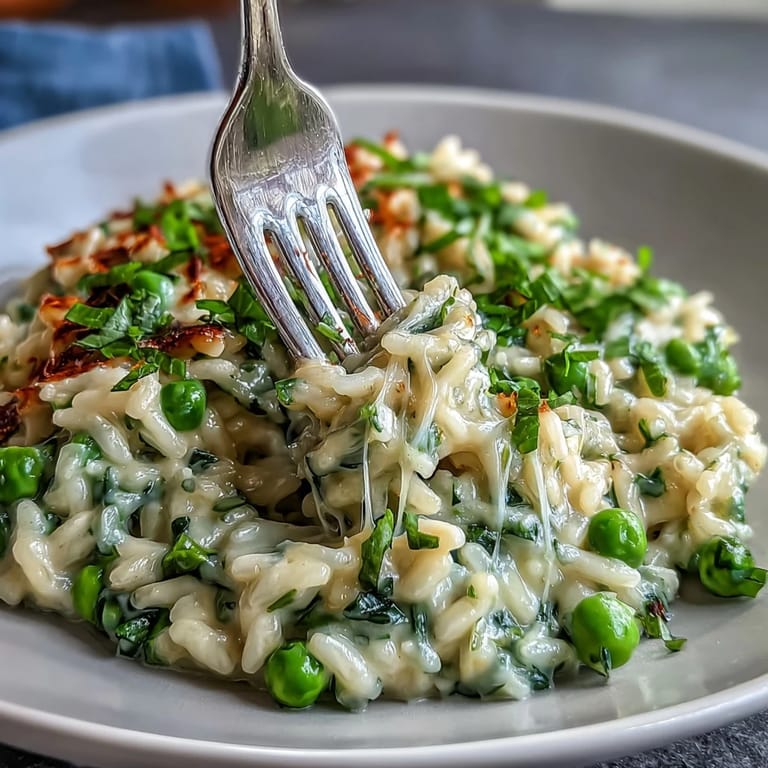
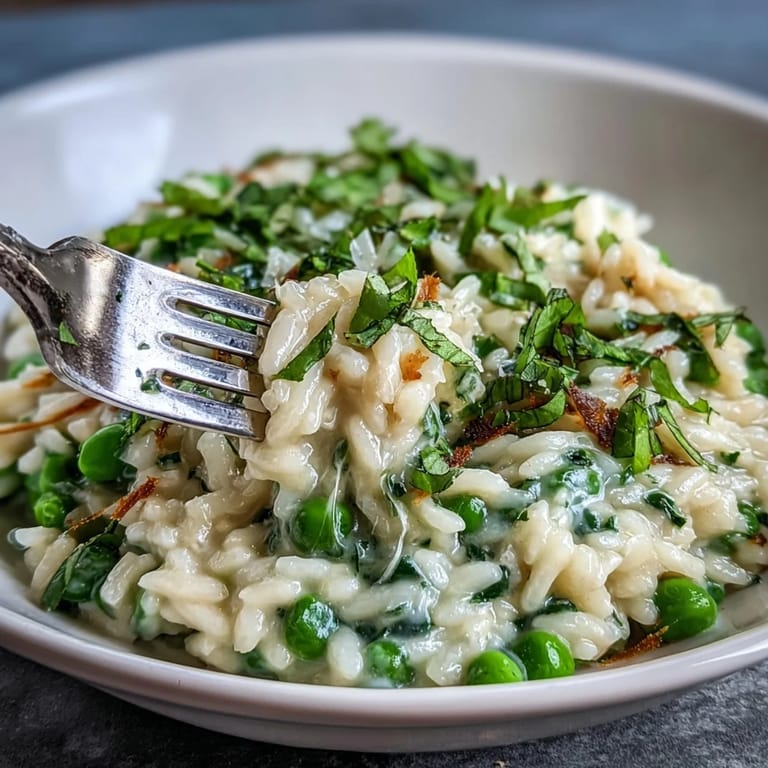
 The first time I caught the sweet, grassy scent of spring peas popping in a buttery skillet, I was more captivated by the aroma than by the idea of risotto itself. With windows wide open and a lingering chill in the air, the perfume of mint and lemon zest felt like an invitation for brighter days. That day, I was testing dinner ideas improvisationally, only realizing mid-cook that I’d been humming—something about stirring rice calms me. The peas looked like tiny emeralds scattered across the creamy canvas of rice, and I couldn’t help but sneak a taste before calling anyone to the table.
I once made this risotto on a drizzly Tuesday, half-expecting everyone to groan about peas for the third night in a row, but the fresh mint had everyone poking their heads into the kitchen asking what was so fragrant. I ended up having to double the recipe after an unexpected guest stayed for dinner—a problem I didn’t mind solving.
Ingredients
- Fresh or frozen spring peas (1 1/2 cups): Their burst of sweetness brings out the best in the risotto; if you use frozen, don’t thaw—just toss them in when called for, and they’ll be perfect by the end.
- Medium shallot, finely chopped: Shallot melts subtle sweetness into the rice; chop it fine so it disappears as it cooks.
- Garlic, minced (2 cloves): The backbone of flavor, just take care not to let it brown or the aroma goes from sweet to sharp fast.
- Fresh mint leaves, chopped (2 tbsp): Mint's cool lift is what gives this spring feeling—strip the leaves, stack, and slice into thin ribbons for best distribution.
- Zest of 1 lemon: Zest right over the pan at the end; the fresh oils will perfume the dish.
- Arborio rice (1 1/2 cups): This short-grain rice is non-negotiable for creaminess; stir often and be patient as it coaxes that signature risotto texture.
- Low-sodium vegetable broth (4 cups): Warm it before using for even cooking—it prevents shocking the rice and stalling out the creamy process.
- Dry white wine (1 cup): Adds brightness—feel free to taste as you pour; if you skip it, sub with more broth and a splash of lemon juice later.
- Olive oil (2 tbsp): Start with this for both flavor and to keep everything from sticking—a good, peppery olive oil works wonders here.
- Unsalted butter (3 tbsp): Stir in at the end for glossy rich finish, and make sure it’s cold so it emulsifies smoothly.
- Aged Parmesan, finely grated (3/4 cup): This adds not just salt but deep savory notes; buy a wedge and grate yourself for best melt.
- Kosher salt (1/2 tsp, plus more): Layer the seasoning—taste as you go and again before serving because cheese kicks up the salt at the end.
- Freshly ground black pepper (1/4 tsp): Just a few gentle grinds keep things bright rather than spicy.
Tired of Takeout? 🥡
Get 10 meals you can make faster than delivery arrives. Seriously.
One email. No spam. Unsubscribe anytime.
Instructions
- Warm the broth:
- Pour the vegetable broth into a saucepan, bring it to a gentle simmer, and keep it just barely steaming nearby.
- Sauté aromatics:
- Add olive oil to your largest skillet over medium heat; when it sizzles softly, tumble in shallot and garlic, stirring until they smell sweet and look translucent, about 2-3 minutes.
- Toast the rice:
- Add the Arborio rice, stirring so every grain gets slicked with oil—listen for a faint crackle and wait until the edges look slightly translucent, about 2 minutes.
- Deglaze with wine:
- Pour in white wine and inhale the burst of fragrance; stir constantly as it reduces and mostly disappears into the rice.
- Add broth gradually:
- With a ladle, add the hot broth one scoop at a time, stirring calmly, letting each addition soak in before adding the next—this slow process helps the rice break down perfectly creamy.
- Toss in peas:
- About halfway through, scatter in the peas; they’ll brighten the color and bring a pop of sweetness without turning mushy.
- Finish and enrich:
- Once the rice is tender but still has a slight bite and the mixture flows like lava, turn off the heat; swiftly swirl in the cold butter, grated Parmesan, fresh mint, and lemon zest.
- Adjust and serve:
- Taste for salt and pepper, adjust as needed, and spoon the risotto into warm bowls—sprinkle with extra cheese and mint leaves if desired.
 Save to Pinterest
  Save to Pinterest
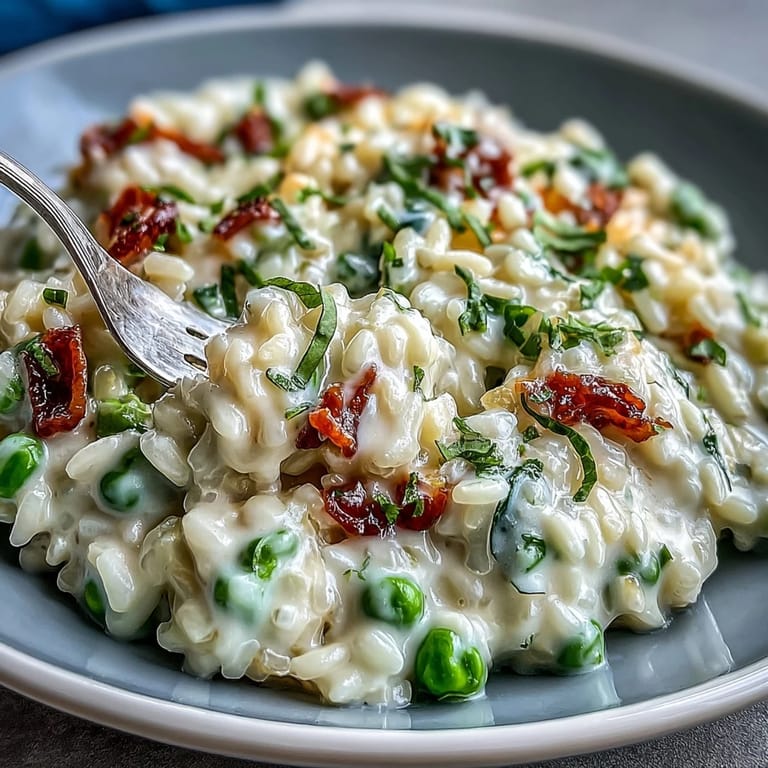
 One afternoon, all conversation paused in the kitchen as someone caught the herbal hints of mint and Parmesan wafting from the stovetop. I realized then that this risotto had become my unspoken invitation for friends to linger longer at the table, telling stories long after the plates were scraped clean.
Getting Risotto Just Right
Learning to trust your senses is half the battle with risotto. You want the mixture to yield gently when moved with a wooden spoon—not runny, not stiff, but somewhere in between, with each grain separate yet lovingly embraced by creamy sauce. If you overshoot, a splash of hot broth can rescue the texture right before serving.
Small Tweaks, Big Wins
I like to shave a bit of extra Parmesan just before plating—the heat melts it into lacy strands on top. Adding peas later in the process rather than at the beginning preserves their color and bite. And if you’re out of mint, basil works in a pinch for a more mellow, summery note.
Quick Fixes for the Unexpected
Sometimes, the risotto starts to tighten up if it sits while you round everyone up to the table—just loosen it with a splash of hot broth and a stir. If the rice is still underdone at the end of your broth, don’t panic: add more liquid, keep stirring, and taste after each minute until it’s just right.
- Save a little lemon zest to refresh the flavor before serving.
- If you want richer flavor, stir in a spoonful of heavy cream at the end.
- Risotto is always better with company—even if it means sharing the last scoop.
 Save to Pinterest
  Save to Pinterest
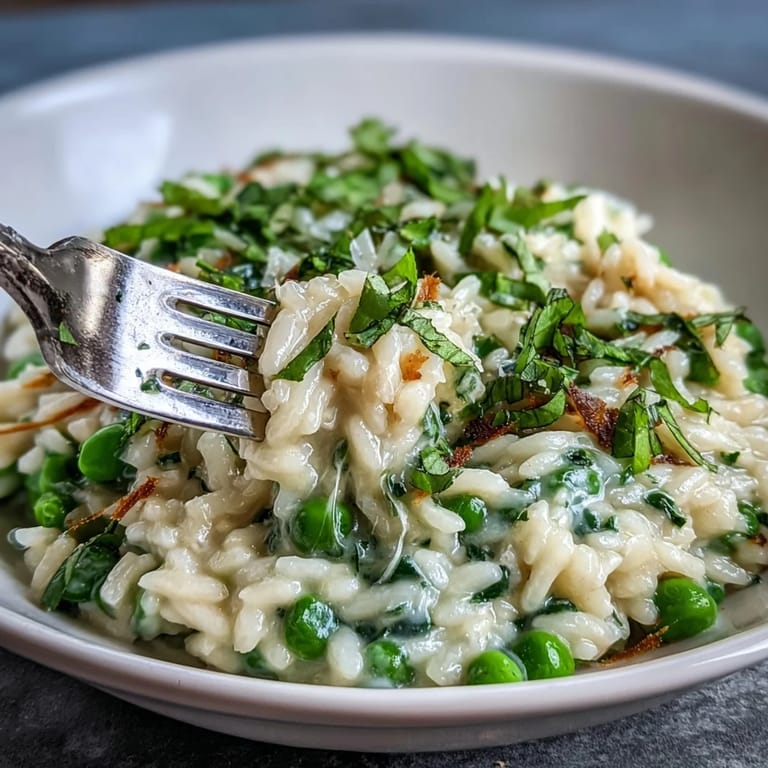
 This risotto always turns any regular night into a little celebration. Here’s to more spring evenings filled with laughter and second helpings.
Recipe Questions & Answers
- → Can I use frozen peas instead of fresh?
Yes. Frozen peas work well and can be added straight from the bag; stir them in about 15 minutes into the cook so they warm through and retain their bright color and texture.
- → How do I know when the rice is done?
A bite of Arborio should be tender with a slight core of firmness (al dente). The overall dish should be creamy and neither soupy nor dry; adjust broth quantity as you cook.
- → Is white wine necessary?
Wine adds acidity and depth but can be omitted. Replace with an equal amount of warm broth or a splash of lemon juice for brightness if avoiding alcohol.
- → How do I keep the risotto creamy?
Constant, gentle stirring while adding warm broth helps release the rice's starches. Finish with butter and grated aged Parmesan; a small splash of cream will increase silkiness if desired.
- → Can I make this ahead of time?
Risotto is best served immediately for peak creaminess. To make ahead, undercook slightly, cool, and gently reheat with a little warm broth and a knob of butter while stirring to revive the texture.
- → What are good pairings for this dish?
Bright white wines like Sauvignon Blanc or Pinot Grigio complement the dish. Serve alongside a light salad or simply finish with extra grated cheese and fresh mint for contrast.