 Save to Pinterest
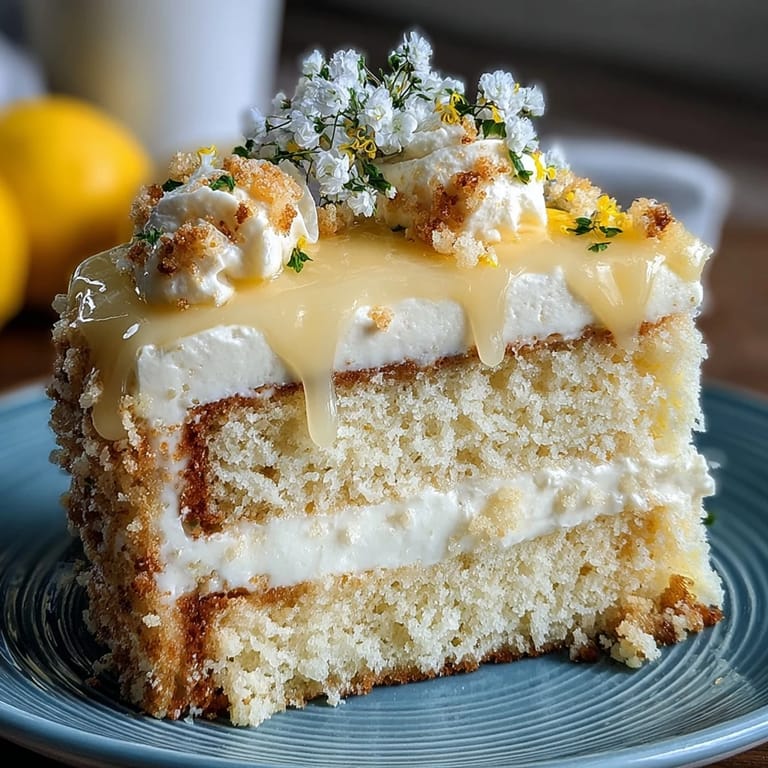
 There's something about assembling a naked cake that makes you feel like you're creating edible art. I discovered this particular version on a blustery April afternoon when my neighbor brought over a box of homegrown edible flowers from her garden, and I realized I had all the ingredients for lemon curd lingering in my pantry. The combination of pillowy cake, bright citrus, and those delicate blooms felt too good not to attempt immediately, even though I'd never attempted three layers before. That first cake wasn't perfect—one layer tilted slightly—but something about its honest, unfussy beauty made it feel more special than any pristine bakery version ever could.
I made this for my sister's engagement tea last spring, and watching people's faces light up when they saw those purple pansies and golden marigolds scattered across the cream was genuinely moving. She later told me it was the detail that made her feel seen—not the fanciest ingredient, but the thoughtfulness of choosing flowers she loved. That's when I realized this cake works because it invites people to slow down and actually look at their dessert, which somehow makes it taste better.
Ingredients
- All-purpose flour (2 1/2 cups): Use fresh flour if you can tell—older flour absorbs liquid differently and your cake might be dense.
- Baking powder and baking soda (2 tsp and 1/2 tsp): These work together to give you that tender crumb, but don't skip whisking them with the flour or you'll get bitter pockets.
- Unsalted butter (1 cup softened): Room temperature is non-negotiable here; cold butter won't cream properly and you'll lose that fluffy texture.
- Granulated sugar (1 3/4 cups): This feeds the butter and creates structure, but creaming them takes patience—three full minutes of beating.
- Eggs (4 large, room temperature): Temperature matters because cold eggs won't emulsify properly with the butter and will break your batter.
- Vanilla extract (2 tsp): Real vanilla makes a difference here since citrus is already the star; extract adds warmth without competing.
- Buttermilk (1 cup): Its acidity reacts with the soda to create lift, plus it tenderizes the cake—don't substitute milk.
- Lemon zest (from 1 lemon for cake, 2 for curd): Zest before juicing and use a fine microplane so you get flavor without bitter white pith.
- Freshly squeezed lemon juice (3/4 cup from about 4 lemons): Bottled juice tastes flat; the fresh stuff makes your curd sing.
- Egg yolks (4 for curd): These create that custard-like thickness—use them within a day of separating or they'll oxidize.
- Unsalted butter for curd (1/2 cup cubed): Cube it so it melts evenly into the hot lemon mixture without scrambling the eggs.
- Heavy cream (2 cups cold): Chill your bowl and whisk too; this small step changes everything about the texture.
- Powdered sugar (1/3 cup): Dissolves faster than granulated and keeps the cream silky without grittiness.
- Edible flowers (1–2 cups): Buy from specialty grocers or grow your own; farmer's market pansies and nasturtiums are reliable and gorgeous.
Tired of Takeout? 🥡
Get 10 meals you can make faster than delivery arrives. Seriously.
One email. No spam. Unsubscribe anytime.
Instructions
- Set your stage:
- Preheat your oven to 350°F and grease three 8-inch pans with parchment, letting it overlap the sides so you can lift the cooled cakes out easily. This step takes two minutes but saves you from a crumbling extraction disaster.
- Build your dry base:
- Whisk flour, baking powder, baking soda, and salt in a bowl—this distributes the leavening evenly so you don't bite into pockets of chemical flavor. Set it aside and don't overthink it.
- Cream the foundation:
- Beat softened butter and sugar together for a full three minutes until it looks pale and fluffy; this is where you're aerating the batter, so don't rush. You'll know it's ready when it looks almost mousse-like.
- Introduce the eggs slowly:
- Add eggs one at a time, beating well after each so they fully incorporate before the next one arrives. If your mixture looks split or greasy, that means the eggs were too cold—but keep going, the buttermilk will bring it back together.
- Season and fold:
- Mix in vanilla and lemon zest, then add dry ingredients and buttermilk in three alternating additions, starting and ending with dry. Stir just until combined because overmixing activates gluten and makes the cake tough.
- Fill and bake:
- Divide batter evenly among pans and smooth the tops, then bake 25–30 minutes until a toothpick comes out clean or with just a few moist crumbs. The smell during baking is pure joy.
- Cool with patience:
- Let cakes rest in their pans for ten minutes so they set enough to handle, then turn them out onto racks to cool completely. Don't rush this or you'll have cake crumbs in your lemon curd.
- Make the lemon curd magic:
- Set a heatproof bowl over simmering water (the bottom shouldn't touch the water) and whisk lemon juice, zest, sugar, and yolks constantly for 8–10 minutes until thick and pale. It'll go from loose to coating the back of a spoon—that's your signal to stop.
- Finish with butter:
- Remove from heat and whisk in cubed butter until it's completely smooth and glossy, then let it cool to room temperature before using. The butter enriches the curd and gives it body.
- Whip the cream:
- Beat cold heavy cream, powdered sugar, and vanilla in a chilled bowl until stiff peaks form—you want it thick enough to hold its shape. Refrigerate until you're ready to build.
- Assemble with intention:
- Place one cake layer on your serving platter, spread half the lemon curd across it, then a layer of whipped cream, then repeat with the second layer. Top with the third cake and finish with a thick crown of cream.
- Decorate at the last moment:
- Scatter edible flowers and lemon zest curls across the top just before serving so they stay fresh and beautiful. The visual moment when you reveal it is worth the timing.
 Save to Pinterest
 What stays with me most is how my mother ate a small slice of this cake at that engagement tea, then came back thirty minutes later and had another piece, just to look at it again before eating. She said the flowers reminded her of her grandmother's garden, and suddenly a dessert became a moment of remembering. That's the real magic of this cake.
The Naked Cake Advantage
I used to think naked cakes were trendy shorthand for 'too lazy to frost,' but I've learned they're actually forgiving in ways frosted cakes aren't. A slightly uneven layer or a crumb here or there becomes part of the charm rather than a flaw you desperately hide under buttercream. The exposed cake shows off the tender crumb and lets people see what went into making it, which somehow tastes better psychologically.
Lemon Curd as Your Secret Weapon
Homemade lemon curd takes twenty minutes and transforms this cake from pleasant to memorable, so please don't skip it for store-bought. I made that mistake once, thinking it wouldn't matter, and the difference was shocking—homemade curd has bright, living citrus flavor while jarred versions taste muted and one-dimensional. Once you taste fresh curd, you'll understand why it's worth those ten minutes of whisking.
Bringing It All Together
The assembly is where this cake reveals itself as either effortless or complicated, depending on whether you chill everything first. I learned this after my first tilting incident—cold cake layers are firmer and hold the filling better, and chilled curd is easier to spread without sliding around. Plan to assemble this within a few hours of serving so the layers stay moist but the flavors have time to settle together.
- Chill all three cake layers and your lemon curd for at least thirty minutes before assembly to prevent everything from shifting.
- Use an offset spatula to spread curd and cream evenly, working gently so you don't compress the delicate cake.
- Decorate with flowers literally minutes before serving so they look fresh and don't wilt into the cream.
 Save to Pinterest
 This cake feels like spring in dessert form, and it tastes even better when shared with people who take a moment to actually look at what's in front of them. Make it for someone you want to impress, or make it just to remind yourself that beautiful things don't need to be complicated.
Recipe Questions & Answers
- → What type of flowers can be used for decoration?
Choose pesticide-free, edible flowers like pansies, violets, marigolds, or nasturtiums to safely garnish the cake.
- → How can I make the lemon curd thicker?
Cook the lemon curd longer over simmering water while whisking constantly until it reaches a thicker consistency before cooling.
- → Can I prepare the cake layers in advance?
Yes, baking the layers ahead and chilling them helps with easier assembly and cleaner slicing.
- → What substitutes work for whipped cream?
For a richer texture, mascarpone can replace half of the whipped cream without compromising the flavor balance.
- → How should the cake be stored?
Keep the assembled cake refrigerated to maintain the freshness of the lemon curd and whipped cream layers.
- → Is this cake suitable for vegetarians?
Yes, it contains no meat products and is compatible with vegetarian diets.