 Save to Pinterest
 My sister called me in a panic three days before her birthday party—she'd decided last minute that she wanted something bright and cheerful, nothing heavy or dark. I hung up the phone and stood in my kitchen thinking about the one cake that always makes people pause mid-conversation: something with real lemon curd, the kind that tastes like spring decided to show up on a plate. That afternoon, I tested this recipe and watched my kitchen fill with the most incredible citrus smell, and by the time the frosting went on, I knew I'd found exactly what she needed.
I'll never forget watching my sister's face when she saw it on the table, surrounded by fresh berries and a dusting of lemon zest. Three people asked for the recipe immediately, and one guest came back to the kitchen saying it was the first cake she'd had in years that didn't make her feel like she needed a nap afterwards. That's when I realized this cake had become something I'd make again and again, not just for birthdays but for potlucks, spring dinners, or any moment when people needed something that tasted like hope.
Ingredients
- All-purpose flour (2 ½ cups): Room-temperature ingredients matter less here than having your flour properly measured—scoop and level, don't pack it down.
- Baking powder and baking soda (2 ½ tsp and ½ tsp): These work together to give you a tender crumb that isn't dense, so don't skip the baking soda even though it seems like a tiny amount.
- Unsalted butter (1 cup), softened: Softened is the key word—it should feel like butter at room temperature, not cold from the fridge and definitely not melted.
- Granulated sugar (2 cups): The sugar dissolves into the butter and creates that pale, fluffy base that makes the cake tender and moist.
- Eggs (4 large), room temperature: Cold eggs won't incorporate properly and you'll end up with a lumpy batter, so pull them out of the fridge about 20 minutes before you start.
- Vanilla extract (1 tbsp): Use real vanilla, not imitation—you taste the difference, especially in a cake this simple.
- Whole milk (1 cup), room temperature: It alternates with your dry ingredients to keep the batter tender and prevents overdevelopment of gluten.
- Lemon zest (1 for cake, 2 for curd): Use a microplane and zest directly into your mixing bowl—the oils from fresh lemon make all the difference.
- Egg yolks (4 for curd): The yolks create that silky, custard-like texture that makes the curd so luxurious.
- Fresh lemon juice (⅓ cup): Bottled works in a pinch, but fresh lemon juice has a brightness that really sings in the curd.
- Heavy cream (2 cups), cold: Start with cream straight from the fridge and use a chilled bowl if you have time—it whips faster and holds better.
- Powdered sugar (½ cup): It dissolves instantly into the cream without leaving grainy spots like granulated sugar would.
Tired of Takeout? 🥡
Get 10 meals you can make faster than delivery arrives. Seriously.
One email. No spam. Unsubscribe anytime.
Instructions
- Get your setup ready:
- Preheat the oven to 350°F and grease that 9x13-inch pan with a little butter, then line it with parchment paper—trust me, it slides out like magic when it's cooled. Pull your eggs and milk out of the fridge now so they're actually room temperature by the time you need them, which makes a real difference in how the batter comes together.
- Mix the dry ingredients:
- In a medium bowl, whisk together the flour, baking powder, baking soda, and salt—this takes maybe two minutes and it ensures everything is evenly distributed. Set it aside and take a breath; the hard part is about to start.
- Cream butter and sugar:
- In a large bowl with your electric mixer, beat the softened butter and sugar together for 3-4 minutes until it's genuinely pale and fluffy—this isn't a step to rush because you're incorporating air that makes the cake tender. If it still looks yellow and dense after 3 minutes, keep going; you'll see the color change when you're there.
- Add eggs one at a time:
- This matters: add one egg, beat it in completely before adding the next one, or you'll end up with lumpy batter that doesn't incorporate properly. After all four eggs are in, mix in the vanilla and lemon zest—the batter might look slightly curdled at this point, but that's normal.
- Alternate dry and wet ingredients:
- Add one-third of your dry mixture, mix gently until just combined, then add half the milk, mix again, then another third of dry, the rest of the milk, and finish with the final third of dry. Always begin and end with the dry ingredients—this technique keeps you from overmixing the batter, which would make the cake tough.
- Bake the cake:
- Pour the batter into the prepared pan and smooth the top with a spatula, then pop it in the oven for 28-32 minutes—it's done when a toothpick inserted in the center comes out clean or with just a few moist crumbs. Let it cool completely in the pan on a wire rack; don't rush this or the layers will stick together when you slice them.
- Make the lemon curd:
- While the cake cools, whisk together the egg yolks, sugar, lemon juice, and zest in a small saucepan and cook over medium-low heat, stirring constantly for 5-7 minutes until it thickens enough to coat the back of a spoon. Remove from heat, whisk in the cold butter cubes one at a time, then transfer to a bowl, press plastic wrap directly onto the surface, and chill until it's completely cold—about 30 minutes in the fridge.
- Whip the cream frosting:
- Pour cold heavy cream into a chilled bowl, add powdered sugar and vanilla, and whip with an electric mixer until stiff peaks form—this takes about 2-3 minutes and you'll see the difference from soft to stiff peaks pretty quickly. Don't overwhip it or you'll end up with butter; stop the moment the peaks stand straight up.
- Layer and fill:
- Once the cake is completely cool, run a serrated knife around the edges to loosen it, then carefully slice horizontally to create two layers—use a cake leveler if you have one, or just take your time and use a steady hand. Spread the chilled lemon curd evenly over the bottom layer, replace the top layer gently, and you're almost there.
- Frost and decorate:
- Spread the whipped cream frosting over the top and sides of the cake with an offset spatula, then arrange fresh berries, edible flowers, or lemon zest curls on top. Chill the assembled cake for at least an hour before serving so the slices are clean and the flavors have time to meld together.
 Save to Pinterest
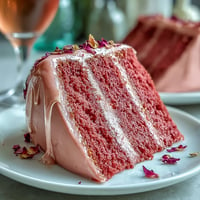
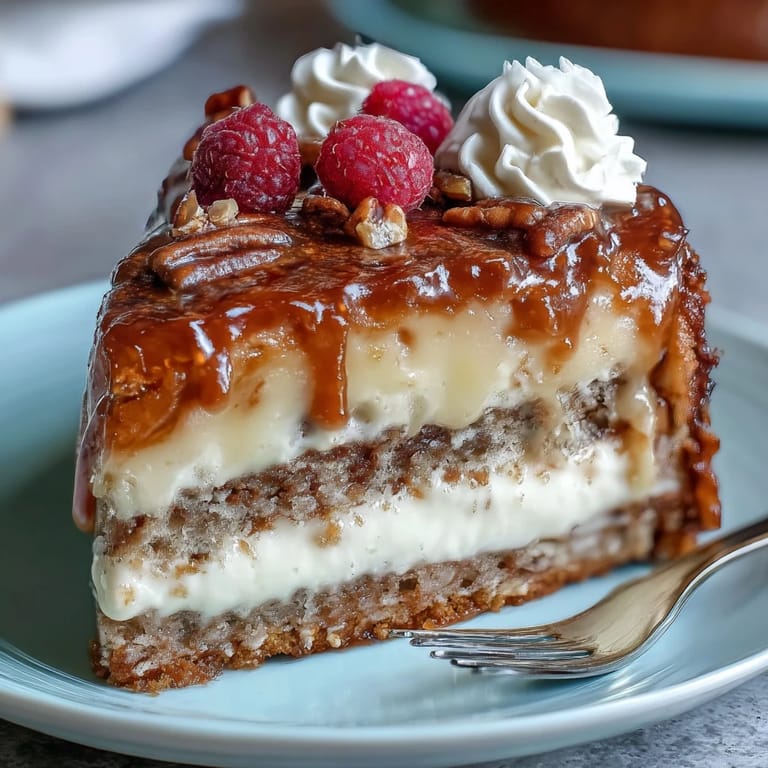
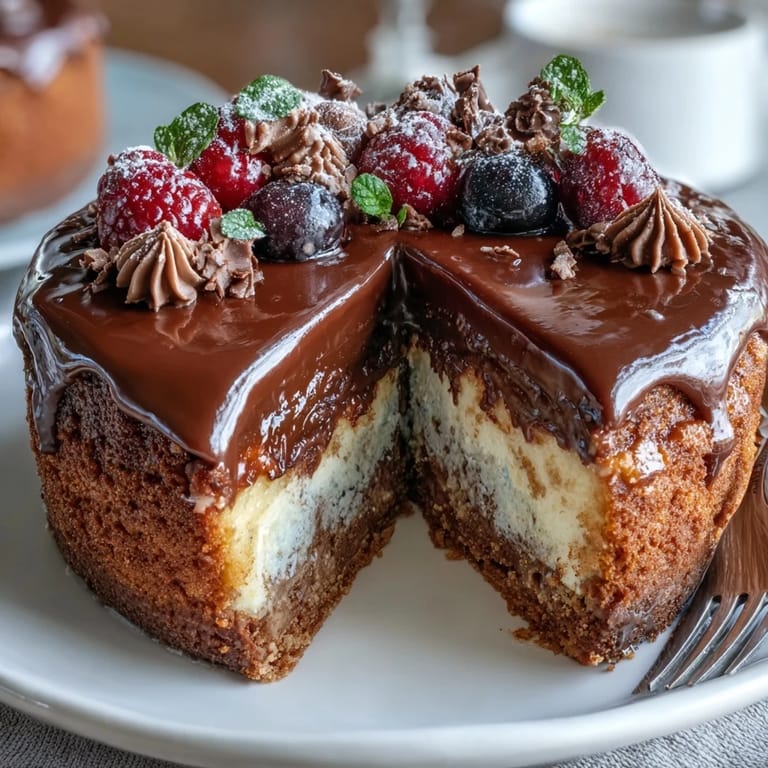
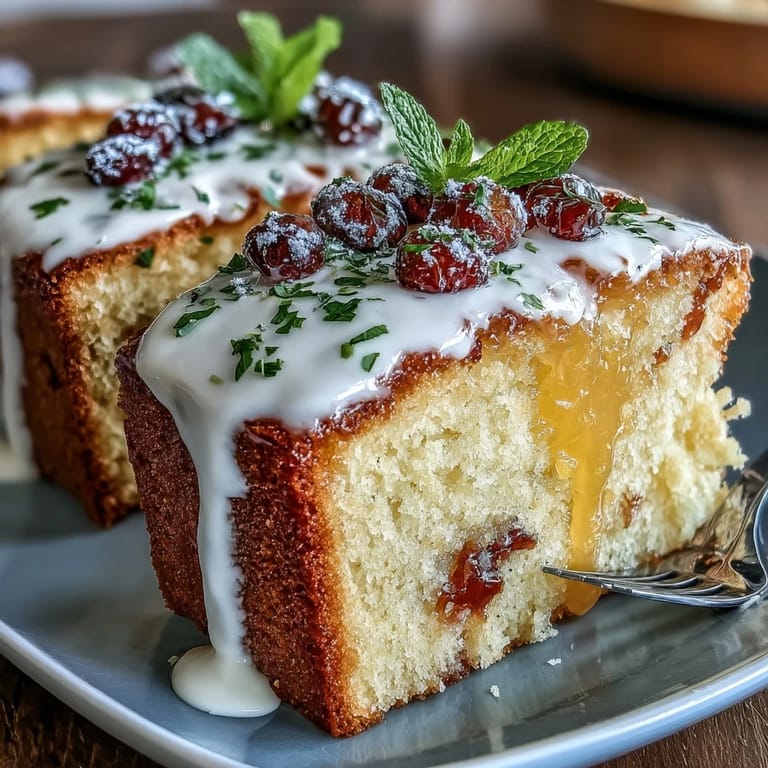
 There's a moment when you slice into this cake for the first time and see those three distinct layers—the tender vanilla crumb, the glossy lemon curd, and the cloud of whipped cream—and you understand why people light up when they taste it. It's not fancy, it's not complicated, but it tastes like someone cared enough to make something from scratch, and that's the whole point.
Why Lemon Curd Changes Everything
I used to think lemon cakes were a dime a dozen until I learned the difference between lemon flavoring and actual lemon curd. Store-bought curd works in a pinch, but making it yourself takes maybe 10 minutes and tastes like an entirely different dessert—it's silky, bright, and has this complex tartness that makes people say things like that's what lemon is supposed to taste like. The moment the butter hits the hot egg mixture, you get this magic where everything comes together into something that tastes fancy but isn't difficult at all.
The Secret to Perfect Sheet Cake Layers
Sheet cakes have a reputation for being casual, but they're actually easier to work with than round layers because they're already flat. The trick I learned is to let the cake cool completely in the pan, then run a thin knife around the edges before you try to slice it horizontally—this prevents crumbs from getting everywhere and keeps the layers intact. A serrated bread knife works better than a chef's knife because it grips the cake instead of squishing it, and if you chill the whole cake for 30 minutes before slicing, the layers separate cleanly without falling apart.
Making It Your Own
The base of this cake is neutral enough that it takes beautifully to variations—I've made it with lime curd instead of lemon on hot summer days, and once I brushed the layers with simple lemon syrup before filling it, which added an extra layer of citrus brightness that people couldn't stop talking about. The whipped cream frosting also gives you freedom to adjust the sweetness by adding more or less powdered sugar, or to infuse it with different flavors if you want to experiment.
- If you want extra lemon flavor without making it too tart, brush each cake layer with a simple syrup made from equal parts sugar and fresh lemon juice before assembling.
- Fresh berries on top aren't just decoration—they provide a pop of tartness that balances the sweetness of the cake and frosting beautifully.
- This cake actually tastes better the day after it's made because the flavors have time to develop and the texture becomes even more tender.
 Save to Pinterest
 This is the cake I reach for when I want to celebrate something and actually want people to remember what they ate. Make it once and you'll understand why.
Recipe Questions & Answers
- → How do I ensure the cake layers are even?
After baking and cooling, carefully slice the cake horizontally with a serrated knife for clean, uniform layers.
- → What’s the best way to make the lemon curd filling smooth?
Constantly stir the egg yolk mixture over medium-low heat until thickened, then whisk in butter off the heat for a smooth texture.
- → How can I achieve stiff peaks in the whipped cream frosting?
Ensure the heavy cream is cold and beat it with powdered sugar and vanilla until firm peaks hold shape without graininess.
- → Can I prepare this dessert in advance?
Yes, assemble and chill it for at least an hour to allow flavors to meld and to make slicing easier.
- → What decorations complement the cake best?
Fresh berries, edible flowers, and lemon zest curls add visual appeal and enhance the bright flavors.