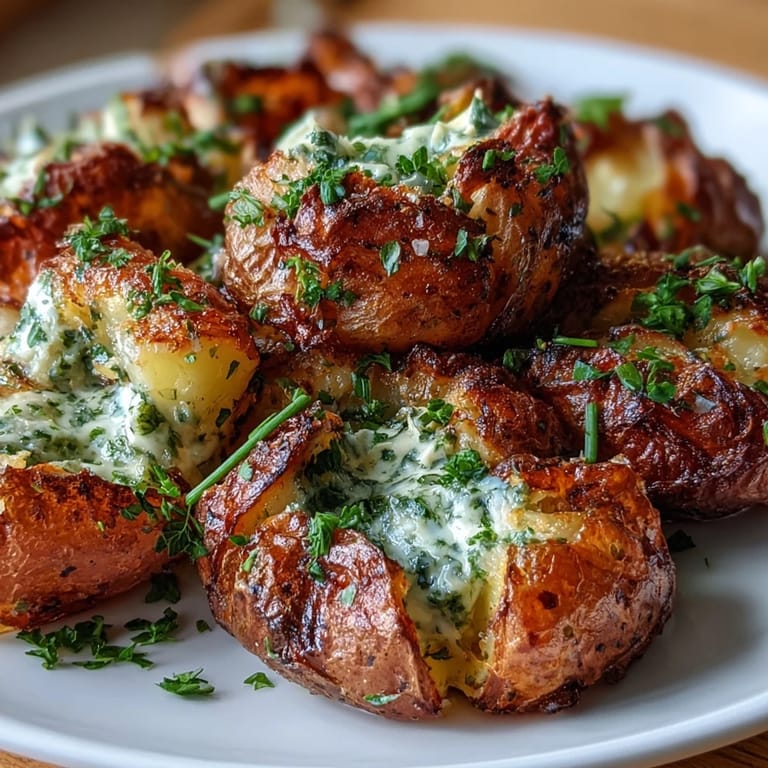
 Save to Pinterest
 There's something about the smell of roasted garlic that stops me mid-conversation every single time. A few years back, I was helping my neighbor prep for a dinner party, and she pulled a head of garlic from the oven that had been baking alongside these smashed potatoes. The kitchen filled with this warm, almost sweet aroma that made everyone pause what they were doing. That's when I realized these weren't just a side dish—they were the kind of thing that makes people remember a meal.
I made these for my partner's family the first time we were hosting Thanksgiving together, and I was honestly nervous about the potatoes being the thing they remembered. But his mom took one bite, closed her eyes, and asked if I'd use fresh thyme—which I had, but somehow she just knew. That small moment of her recognizing the care in the herbs made me understand why people love food that tastes like someone actually thought about it.
Ingredients
- Baby Yukon Gold or red potatoes, 1.5 lbs (700 g): These waxy potatoes hold their shape beautifully when smashed and have a naturally buttery flavor that needs minimal help from you.
- Head of garlic, 1: Roasting softens the garlic so completely that it becomes sweet and spreadable, nothing like raw garlic's sharp bite.
- Fresh parsley, 3 tbsp chopped: Adds brightness and color at the very end, so it stays vibrant instead of wilting into the warm potatoes.
- Fresh chives, 1 tbsp chopped: These give a gentle onion whisper without overpowering the delicate roasted garlic.
- Fresh thyme leaves, 1 tsp: A small amount of thyme carries earthy notes that make the whole dish feel intentional.
- Unsalted butter, 3 tbsp melted: Melting the butter before mixing means it distributes evenly and won't have cold spots when you brush it on.
- Olive oil, 2 tbsp plus extra for drizzling: Use a good quality oil you actually like tasting, because you're going to taste it here.
- Heavy cream, 2 tbsp (optional): This is your secret weapon if the potatoes feel too dry—it creates that restaurant-style creaminess without making them gluey.
- Kosher salt and freshly ground black pepper to taste: Always taste before serving and adjust, because the potatoes will absorb seasoning as they cook.
Tired of Takeout? 🥡
Get 10 meals you can make faster than delivery arrives. Seriously.
One email. No spam. Unsubscribe anytime.
Instructions
- Get your oven ready:
- Preheat to 425°F (220°C) so the potatoes will bake with real heat and get those golden, crispy edges that make this dish special.
- Roast the garlic slowly:
- Slice the top off your garlic head, drizzle with olive oil, wrap loosely in foil, and roast for 30 minutes. You'll know it's ready when the cloves feel soft when you press them and smell absolutely incredible.
- Cook potatoes until they break apart:
- Place potatoes in cold salted water, bring to a boil, then simmer for 15–20 minutes until a fork slides through without resistance. Drain and let them sit for a few minutes so they're cool enough to handle but still warm.
- Smash gently to keep texture:
- Arrange potatoes on a parchment-lined sheet and use a masher or glass to flatten each one to about half an inch thick. Don't overwork them or you'll end up with gluey potatoes instead of ones with character.
- Make the garlic butter mixture:
- Squeeze the roasted garlic cloves into a bowl—they should practically fall out on their own. Whisk in melted butter, olive oil, cream if using, salt, and pepper until smooth and glossy.
- Coat each potato generously:
- Brush or spoon the garlic mixture over every smashed potato, getting into the crevices where the flavors will concentrate.
- Bake until golden and crispy:
- Slide into the oven for 20–25 minutes, watching for those edges to turn deep golden brown. You'll smell when they're ready.
- Finish with fresh herbs:
- Pull from the oven and immediately scatter parsley, chives, and thyme over top while everything's still warm so the herbs stay bright. Add one final drizzle of olive oil if you're feeling generous.
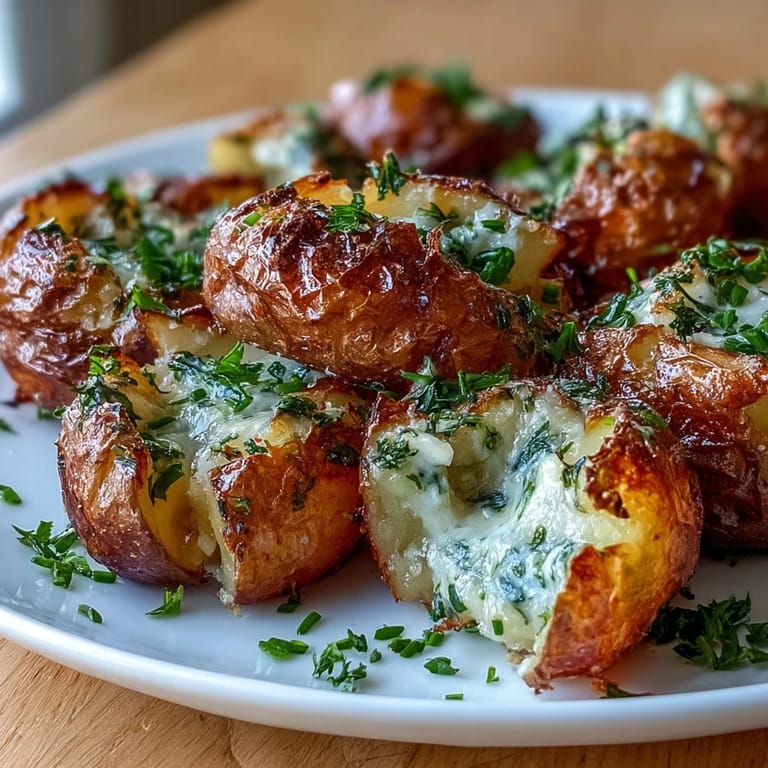 Save to Pinterest
 The real magic happened when my friend's teenager actually asked for the recipe, which in my experience means a dish has transcended the normal side-dish territory. That's when I started understanding that food becomes memorable not just from technique, but from the tiny choices—using fresh herbs instead of dried, actually tasting for salt, letting potatoes rest. It's the difference between something good and something people think about days later.
The Secret Life of Roasted Garlic
Roasted garlic is one of those kitchen transformations that feels almost alchemical. When you roast a whole head wrapped in foil, the cloves steam inside their papery skins and turn from sharp and pungent into something almost sweet—creamy like butter when you squeeze them out. The timing matters too; 30 minutes gives you soft, spreadable cloves, but 5 minutes less and they'll still be slightly firm. I learned this by roasting garlic ahead for these potatoes and then using it in a pasta dish the next day, where the inconsistency in softness bothered me way more than it should have, but it taught me to watch for that exact moment when the cloves yield completely.
Why Fresh Herbs Make the Difference
Dried herbs have their place, but on these potatoes, fresh herbs are what separate a good side dish from one people remember. The volatile oils in fresh thyme, parsley, and chives stay bright and slightly peppery instead of becoming muted and dusty. I once made a batch with dried thyme to save time during a weeknight dinner, and it was perfectly fine—but side by side with the fresh herb version, you could taste how much more alive the dish felt. The oils in fresh herbs oxidize and release their aromatics when you tear or chop them, which is why you want to add them at the very end, right before serving.
Make It Your Own
These potatoes are incredibly forgiving, which is part of why they've become my go-to side for almost any meal. You can customize them based on what's in your kitchen and what your guests actually enjoy eating. The recipe structure stays the same, but the herbs and finishing touches can shift depending on the season or your mood.
- Sprinkle grated Parmesan before the final bake for a sharp, salty crust that adds another layer of flavor.
- Top with a dollop of sour cream or crème fraîche right before serving for brightness and tang that cuts through the richness.
- If you can't find fresh thyme, fresh rosemary works beautifully, but use less since it's stronger and more piney.
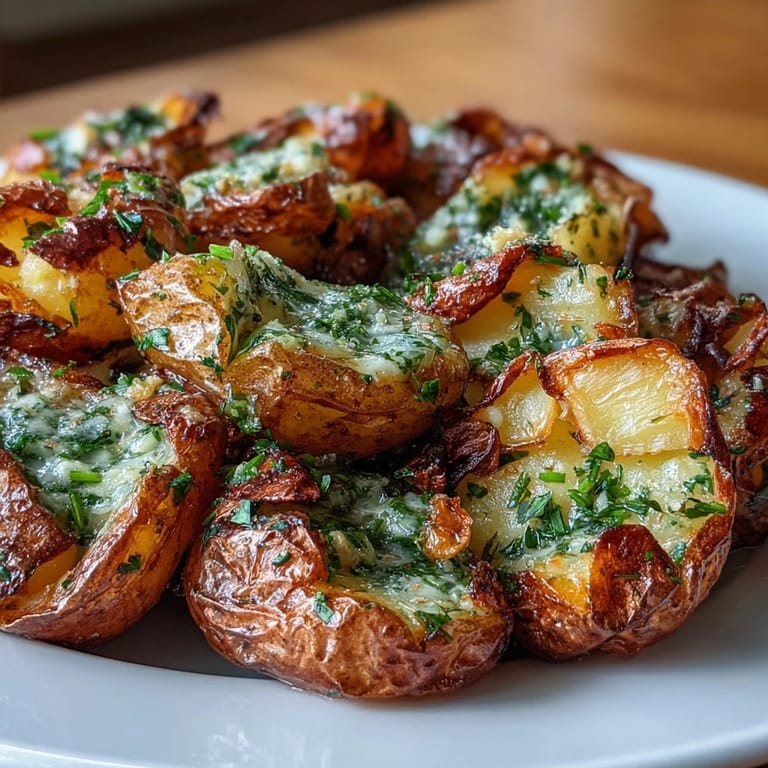 Save to Pinterest
 These potatoes have become the dish I make when I want to feel like I actually care about what I'm cooking, which it turns out, people can taste. They're proof that simplicity, good ingredients, and small moments of attention create something worth remembering.
Recipe Questions & Answers
- → What type of potatoes work best for this dish?
Baby Yukon Gold or red potatoes are ideal due to their creamy texture and ability to hold shape after boiling and smashing.
- → Can I prepare the garlic ahead of time?
Yes, roasting the garlic ahead enhances its sweetness and allows for easy mashing into the butter mixture when ready.
- → How do I achieve a crispy potato finish?
After smashing, bake the potatoes at a high temperature (425°F) to develop a golden, crispy crust while keeping the interior soft.
- → Are there herb alternatives if fresh ones are unavailable?
Dried parsley, chives, and thyme can be used in smaller quantities, but fresh herbs provide the best flavor and aroma.
- → Is it possible to make this dish vegan?
Substitute butter and cream with plant-based alternatives like olive oil or vegan margarine to keep the creamy texture while avoiding dairy.