 Save to Pinterest
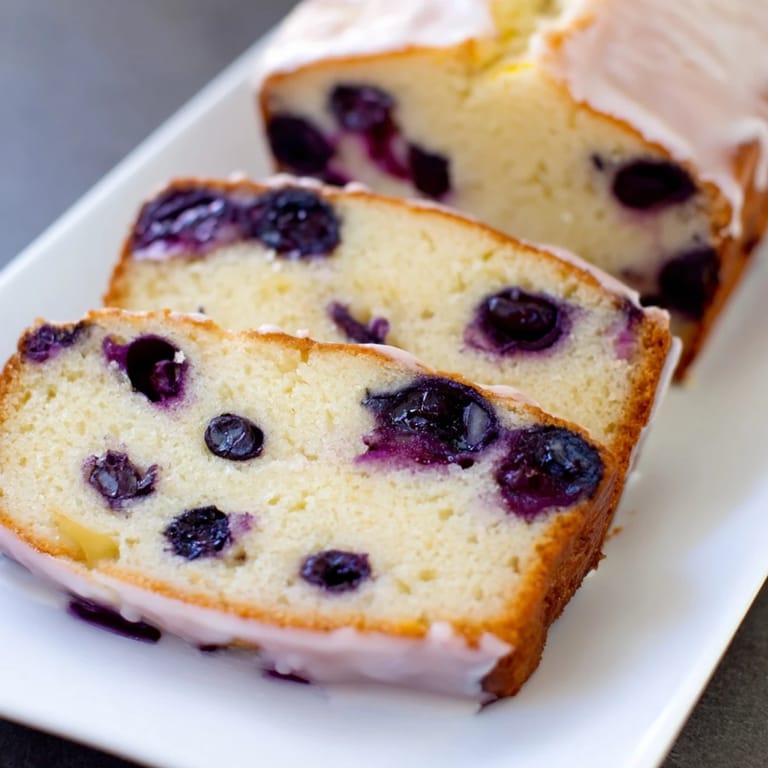
 I discovered this loaf cake on a lazy Saturday morning when my kitchen was flooded with sunlight and I had exactly one hour before friends stopped by. No fancy mixer, no complicated folding techniques—just a blender and the kind of straightforward magic that reminds you why you fell in love with baking in the first place. The first slice came out impossibly moist, studded with tart blueberries and bright with lemon, and I realized I'd stumbled onto something I'd be making again and again. Now it's my go-to when I want to feel like I've done something special without actually breaking a sweat.
I'll never forget watching my neighbor take her first bite at the edge of my kitchen counter, how her eyes widened like she expected something complicated and instead found pure comfort. She asked for the recipe right there, mouth half-full, and that's when I knew this wasn't just easy—it was the kind of thing people actually want to come back for. That moment lives in my kitchen now, tucked between the flour canister and the vanilla bottle.
Ingredients
- Large eggs (2): Room temperature eggs blend smoother and help the crumb stay tender rather than dense, so take them out of the fridge while you preheat.
- Plain Greek yogurt (1 cup): The tanginess is non-negotiable here—it brightens the whole cake and keeps things moist longer than regular yogurt ever could.
- Vegetable oil (1/2 cup): Use a neutral oil so the lemon and blueberry stay front and center, not fighting for attention.
- Lemon zest (1 tbsp): Finely grate it fresh; the oils matter more than the weight, and jarred zest tastes like disappointment.
- Fresh lemon juice (1/4 cup): Squeeze it yourself—bottled juice whispers where fresh juice sings.
- Vanilla extract (1 tsp): Just enough to round out the flavors without announcing itself.
- All-purpose flour (1 1/2 cups): Measure by spooning and leveling, never scooping straight from the bag, which always gives you too much.
- Granulated sugar (3/4 cup): This amount lets the tartness shine through without the cake becoming a vehicle for sweetness.
- Baking powder (2 tsp): Check the date on your tin; stale leavening is a quiet saboteur.
- Baking soda (1/2 tsp): This reacts with the yogurt's acid to help the rise happen gently and evenly.
- Fine sea salt (1/4 tsp): A small pinch that makes you taste lemon and blueberry more clearly.
- Fresh blueberries (1 cup): Frozen work perfectly if you don't thaw them—the ice crystals actually help them stay whole rather than sinking into dark puddles.
- Powdered sugar for glaze (1/2 cup): Optional but transforms the whole presentation into something that looks like you were thinking of your guests.
Tired of Takeout? 🥡
Get 10 meals you can make faster than delivery arrives. Seriously.
One email. No spam. Unsubscribe anytime.
Instructions
- Heat your oven and prep the pan:
- Set the oven to 350°F and grease a 9x5-inch loaf pan with butter or oil, then line it with parchment paper—this feels like an extra step until you're demolding the cooled loaf and understanding why it matters.
- Blend the wet ingredients into submission:
- Crack your eggs into the blender along with yogurt, oil, lemon zest, lemon juice, and vanilla. Blend until the mixture is completely smooth and pale, about a minute, which is longer than you think but exactly right.
- Add the dry ingredients without overthinking:
- Pour in the flour, sugar, baking powder, baking soda, and salt, then pulse just until you can't see streaks of flour anymore—this is not the time to get aggressive or your crumb will turn tough and sad.
- Coat and fold in your blueberries:
- Toss the blueberries with 1 tablespoon of flour in a separate bowl, which sounds silly but actually prevents them from sinking to the bottom like they're trying to escape. Gently fold them in with a spatula, being tender with them.
- Pour and smooth:
- Transfer the batter to your prepared pan and smooth the top with a spatula so it bakes evenly, creating the best chance at an even golden surface.
- Bake with patience and attention:
- Slide the pan into the oven for 50–55 minutes, until a toothpick poked into the center comes out clean or with just a few moist crumbs clinging to it. If the top starts browning too fast, tent loosely with foil for the last 15 minutes to protect it.
- Cool before you touch it:
- Let the loaf rest in the pan for 10 minutes while the steam settles, then turn it out onto a wire rack to cool completely—rushing this step means a warm, collapsing loaf instead of the neat slices you're imagining.
- Glaze if you're feeling generous:
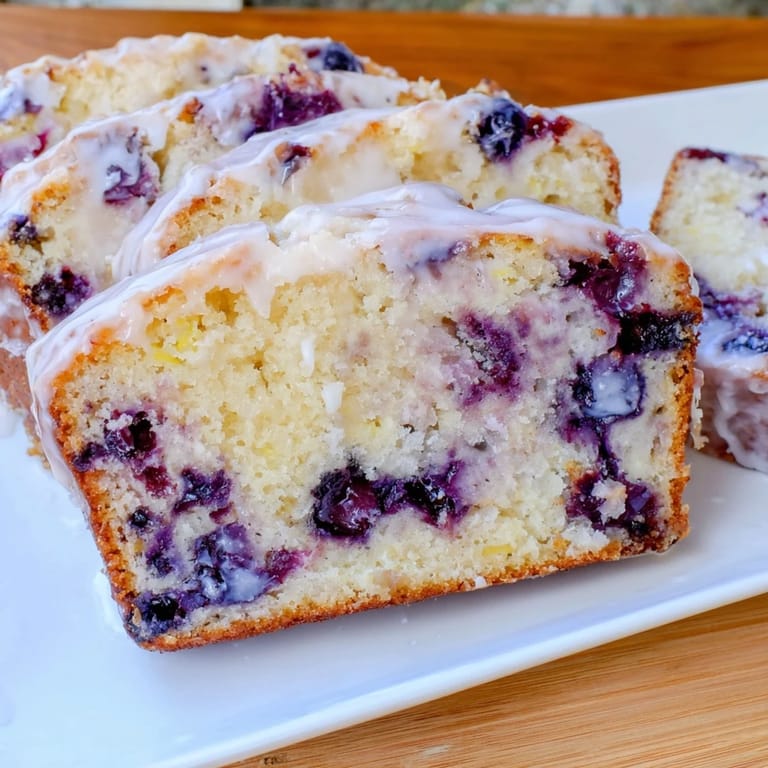
- Whisk powdered sugar with fresh lemon juice until you have a smooth, pourable consistency, then drizzle it across the cooled loaf in whatever pattern feels right, which adds just enough sweetness and shine.
 Save to Pinterest
 There's something about standing in the kitchen while this loaf cools, the smell of lemon and vanilla and baked fruit filling every corner, that makes you feel like you've accomplished something real even though you barely tried. It's the kind of cake that makes people ask questions about your life, not just your recipe.
Why This Works as a Breakfast Cake
The yogurt and lemon combination hits a balance between indulgent and bright that doesn't feel heavy first thing in the morning, especially with coffee or tea. Blueberries add something wholesome-feeling without actually being wholesome, and the slice-and-eat format means you're not standing over a plate with a fork at dawn. Toast a slice if you're feeling it, or eat it straight from the cooling rack if nobody's looking.
The Blender Method Actually Changes Everything
Using a blender instead of creaming butter and sugar means no mixer to wash, no separate bowls scattered across your counter, and a texture that's somehow even more tender than traditional methods. The blended wet ingredients incorporate air differently, creating a crumb that's almost cloud-like, and the whole process happens in the time it takes someone to boil water. You're not fighting with kitchen equipment or waiting for ingredients to cooperate—everything just comes together.
Make It Your Own
This loaf is a foundation, not a rigid rule, and small changes only make it better without breaking anything. A half-teaspoon of almond extract whispers an entirely different cake into being, while a dairy-free swap using coconut yogurt works seamlessly for anyone who needs it. The magic isn't in following orders perfectly; it's in recognizing a formula flexible enough to bend toward what you actually have and what you actually want.
- Try Earl Grey tea leaves steeped and cooled into the wet ingredients for an unexpected tea-cake moment.
- Swap half the blueberries for raspberries if you want something more delicate and slightly tart.
- Sliced lemon on top before baking creates a decorative touch that looks intentional and barely requires effort.
 Save to Pinterest
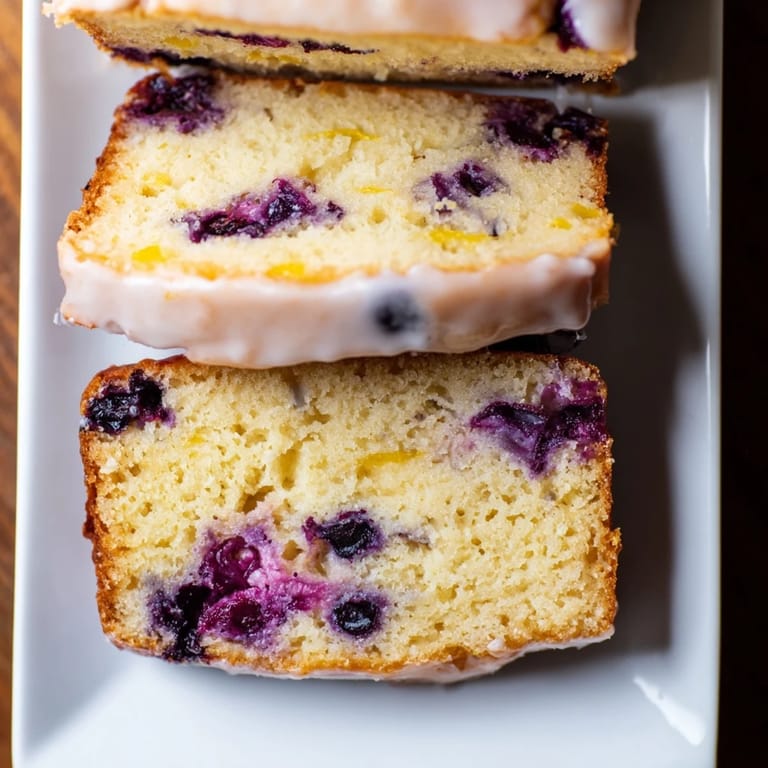
 This loaf has become the cake I reach for when I want to prove that simple actually means something, that a blender and an hour can create the kind of thing people remember. It's not fancy, but it's genuine.
Recipe Questions & Answers
- → How do I prevent blueberries from sinking?
Toss blueberries lightly in flour before folding them into the batter to help them stay suspended evenly.
- → Can I use frozen blueberries for this loaf?
Yes, use frozen blueberries without thawing to maintain their shape and prevent the batter from turning blue.
- → What is the best way to achieve a moist texture?
Using creamy yogurt and oil together adds moisture and tenderness to the loaf’s crumb.
- → Is there a substitute for Greek yogurt?
Coconut yogurt can be used as a dairy-free alternative while keeping the loaf moist.
- → How to add extra citrus flavor?
Include freshly grated lemon zest and a simple lemon juice glaze for intensified lemon notes.
- → What baking pan size should I use?
A 9x5-inch loaf pan works perfectly to ensure even baking and the right shape.