 Save to Pinterest
 I discovered this little trick at a gallery opening in a converted barn, where the appetizer table was honestly more interesting than the art on the walls. Someone had arranged blue cheeses in a jagged line that actually looked like mountains, and I stood there with a cracker in one hand, genuinely delighted by how playful and elegant it felt at the same time. It's one of those ideas that seems obvious once you see it, but it completely changed how I think about cheese platters—suddenly they could tell a story instead of just sitting there looking formal.
I made this for my friend's birthday dinner last spring, and she actually gasped when she saw it—the kind of reaction that made me realize how much fun it is to play with food presentation. We spent the whole evening talking about how the sweetness of the honey hit differently when paired with the sharp, funky intensity of the Roquefort, and how something so simple could feel like a small celebration all on its own.
Ingredients
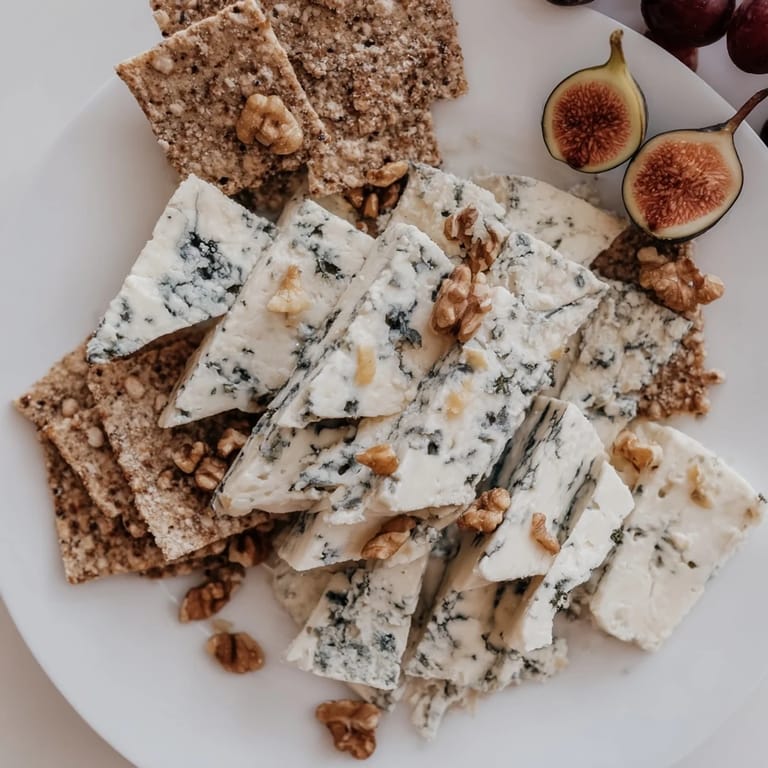
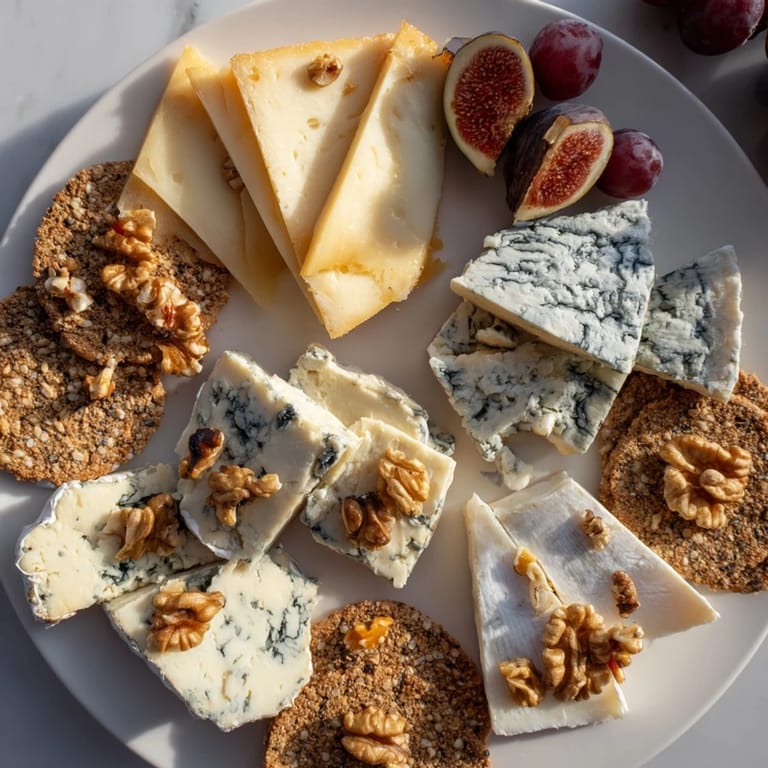
- Roquefort cheese: The French original, assertive and almost peppery—it forms the dramatic peak of your mountain range.
- Gorgonzola cheese: Creamier and slightly sweeter than Roquefort, it adds softness and Italian soul to your lineup.
- Stilton cheese: The British contribution, with that distinctive crumbly texture and earthier flavor that anchors the composition.
- Bleu d'Auvergne cheese: Often overlooked but beautifully balanced, it bridges the gap between the others with grace.
- Artisanal whole-grain crackers: Quality matters here—look for ones with actual texture and flavor, not the thin commercial kind that disappear the moment you bite them.
- Honey: Use something interesting if you can find it, like wildflower or chestnut; it becomes the golden light catching the peaks.
- Toasted walnuts: The crunch is essential, and toasting them yourself makes a real difference in flavor depth.
- Fresh grapes or figs: These add color and sweetness that feels necessary against all that blue intensity.
- Fresh rosemary sprigs: Optional, but a sprig or two tucked in makes the whole thing feel like a landscape painting.
Tired of Takeout? 🥡
Get 10 meals you can make faster than delivery arrives. Seriously.
One email. No spam. Unsubscribe anytime.
Instructions
- Gather your cheeses and let them breathe:
- Pull each cheese out about 30 minutes before serving—they'll be easier to slice and taste infinitely better at room temperature. You'll feel the difference the moment it touches your tongue.
- Create your mountain peaks:
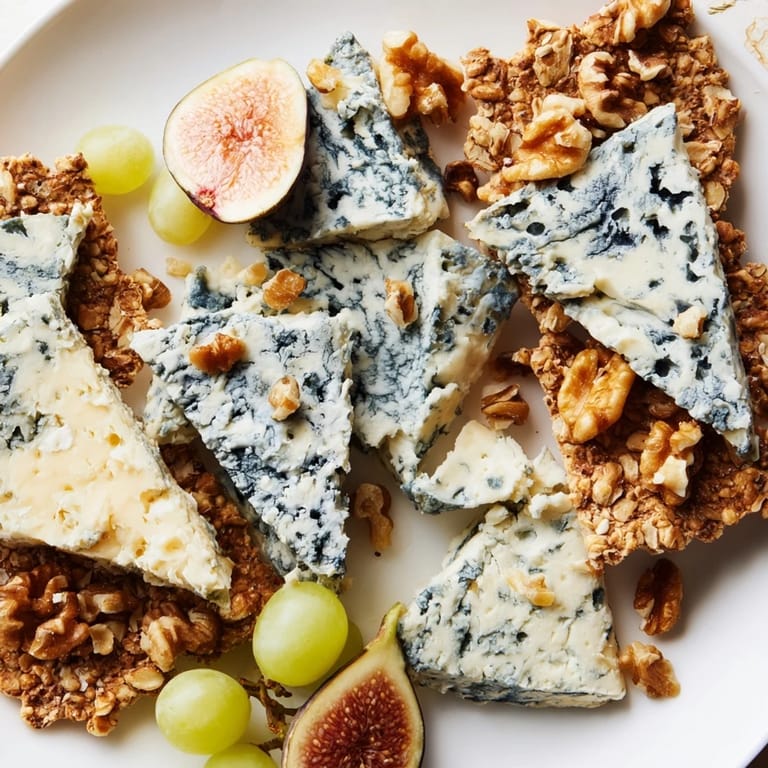
- Slice each blue cheese into rough, uneven wedges that look jagged and natural, not neat. Think geological, not geometrical.
- Build your crackers foundation:
- Arrange the crackers in a single layer on your platter—this is your sky, your base, your stage. Leave some space in the middle for the scene you're about to create.
- Position the cheese range:
- Stagger your blue cheese wedges along the edge of the crackers, varying heights and angles so it feels like an actual horizon line. Step back and look—does it feel right?
- Add the golden hour light:
- Drizzle honey over the cheeses with a light hand, letting it catch and pool in the crevices. Watch how it changes the whole mood.
- Scatter your elements:
- Sprinkle walnuts across the cheeses and scatter grapes or fig slices around the platter like they've naturally found their place. Tuck in a rosemary sprig or two if you're feeling it.
- Serve immediately:
- This is a moment to share right away, while everything is at its best.
 Save to Pinterest
 What I love most is that this isn't a dish you eat standing up at a crowded party—it's one that makes people sit down together and actually talk. There's something about the playfulness of it, the idea that food can be beautiful and a little bit whimsical, that just brings people into the moment.
Why Blue Cheese Matters
Blue cheeses are special because they're alive in a way that other cheeses aren't—the veining is actual mold that's been carefully cultivated and controlled, and it's what gives them that distinctive peppery, complex flavor. Each one has its own personality: Roquefort is bold and doesn't back down, Gorgonzola is creamy and almost sweet, Stilton is earthy and crumbly, and Bleu d'Auvergne sits somewhere in the middle, diplomatic and kind. Using all four together means you're not just serving cheese, you're offering a conversation between four different traditions and styles, and that's honestly what makes this platter feel so alive.
Playing with Your Platter
This concept is flexible enough to become whatever you want it to be—you could use only two cheeses if that's easier, or add other elements like prosciutto, fig jam, or roasted grapes if you're feeling generous. I've made nut-free versions by substituting toasted pumpkin seeds for walnuts, and they're just as good, just different. The beauty is that once you see how an arranged board can tell a story, you start thinking about every platter you make differently.
Wine Pairing and Serving Wisdom
The sweetness of a chilled Sauternes is absolutely magical with these cheeses—the wine cuts through the funk and brings out the nuts and honey in a way that feels almost orchestrated. If you prefer red wine, something robust and slightly tannic works too, especially if there's a hint of berry to it. I always make sure the platter goes out before the main course, when everyone still has appetite and attention to give it.
- Serve with a light touch of napkins nearby—these cheeses are rich, and people appreciate being able to pace themselves.
- If you're making this ahead, keep it covered loosely and out of direct sun until the last moment.
- Trust your instincts about arrangement—there's no wrong way to build a mountain, just the way that feels right to you.
 Save to Pinterest
 This platter is proof that the best appetizers are the ones that make people want to linger. It's simple enough to throw together in fifteen minutes, but thoughtful enough to feel like you actually cared.
Recipe Questions & Answers
- → What cheeses are best for this platter?
Roquefort, Gorgonzola, Stilton, and Bleu d'Auvergne are ideal blue-veined cheeses for their robust flavors and creamy textures.
- → How should the cheeses be cut?
Slice the blue cheeses into rough, irregular wedges or blocks to mimic the jagged peaks of mountains for a natural look.
- → What crackers work well as a base?
Artisanal whole-grain crackers provide a sturdy, flavorful foundation that complements the bold cheeses.
- → Can the nuts be substituted?
For nut-free options, omit walnuts or replace them with pumpkin seeds to maintain crunch and visual appeal.
- → What fruits enhance this arrangement?
Fresh grapes or sliced figs add sweetness and color contrast, balancing the sharpness of the cheeses.
- → Are there garnish options?
Fresh herbs like rosemary can be added for aroma and elegance but are optional based on preference.