 Save to Pinterest
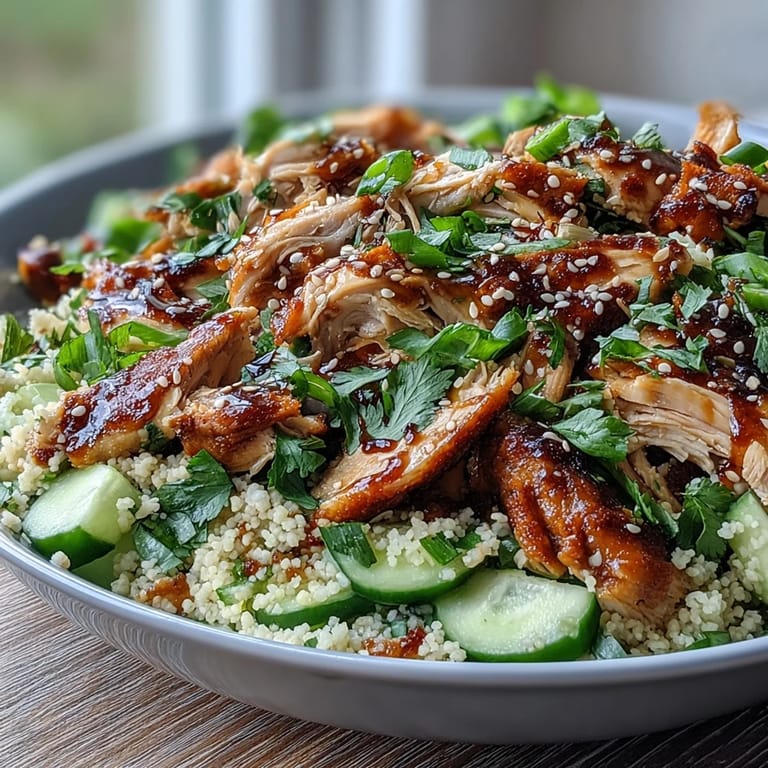
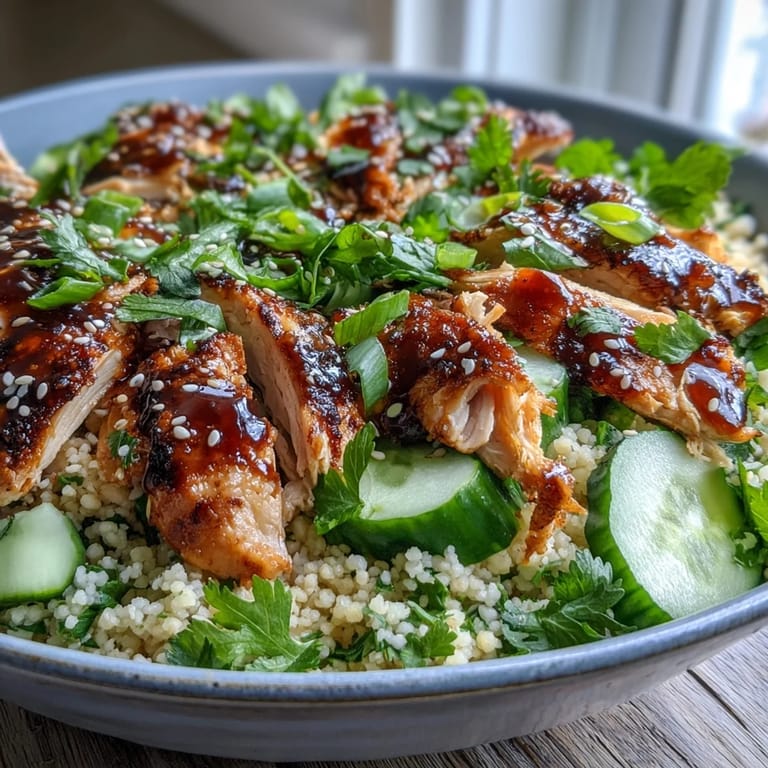
 One afternoon, I found myself staring at a rotisserie chicken from the grocery store, wondering what to do with it beyond the obvious sandwich route. My friend had just mentioned she was craving something Asian-inspired but light, and that's when it hit me—a salad that actually felt substantial enough for dinner. The sesame-soy dressing came together in about the time it took to cook the couscous, and somehow this dish became the thing I make whenever I need something that tastes restaurant-quality but doesn't demand hours in the kitchen.
I made this for a small potluck last summer, and what stuck with me wasn't just the compliments—it was watching people who claimed to be salad skeptics go back for seconds. One person asked if it was from a restaurant, and I realized then that homemade food tastes different when you've actually thought about every element.
Ingredients
- Pearl couscous (Israeli couscous): These little orbs stay wonderfully chewy and absorb the dressing beautifully without turning mushy like regular couscous would.
- Water or low-sodium chicken broth: Broth adds subtle flavor, but water works just fine if that's what you have on hand.
- Rotisserie chicken: Buy a good quality one—the difference between a dry bird and a juicy one is noticeable, and you're already doing yourself a favor by not roasting it yourself.
- Cucumber: Halve and seed it so you don't end up with a watery salad by the time you serve it.
- Scallions: The raw sharpness cuts through the richness of the sesame oil perfectly.
- Fresh cilantro: Don't skip this—it brightens everything and makes the dish feel alive.
- Toasted sesame seeds: Buying them already toasted saves a step, but toasting raw ones yourself takes just a few minutes in a dry pan.
- Soy sauce: Low-sodium prevents the salad from tasting like the ocean, and you can always adjust seasoning at the end.
- Toasted sesame oil: The dark kind, not the light variety—a little goes a long way and it's what makes this dressing special.
- Rice vinegar: Milder than other vinegars, so it won't overpower the delicate sesame flavors.
- Honey or maple syrup: A touch of sweetness rounds out the dressing without making it taste like dessert.
- Fresh ginger: Grate it right before using so you get maximum zing and brightness.
- Garlic clove: One is enough—this isn't a garlic-forward dish, just a whisper of it.
- Sriracha or chili sauce: Optional, but it adds complexity if you like a gentle heat that lingers.
- Neutral oil: This helps carry the flavors and keeps the dressing from being too intense.
Tired of Takeout? 🥡
Get 10 meals you can make faster than delivery arrives. Seriously.
One email. No spam. Unsubscribe anytime.
Instructions
- Bring the water to a rolling boil:
- Use a medium saucepan with enough room for the couscous to expand. The sound of that boil is your signal everything's about to come together quickly.
- Cook the couscous until tender:
- Stir it once, cover, and let the heat do its work for about 8 to 10 minutes. You'll know it's ready when each little pearl has softened but still has a slight chew to it.
- Cool it down on a baking sheet:
- This stops the cooking and lets you handle it without it turning into a clumpy mess. Spreading it out also helps the individual pearls stay separate.
- Whisk the dressing while couscous cools:
- Combine soy sauce, sesame oil, rice vinegar, honey, ginger, garlic, and chili sauce if you're using it. Whisk until the honey dissolves and everything looks emulsified and glossy.
- Toss everything together gently:
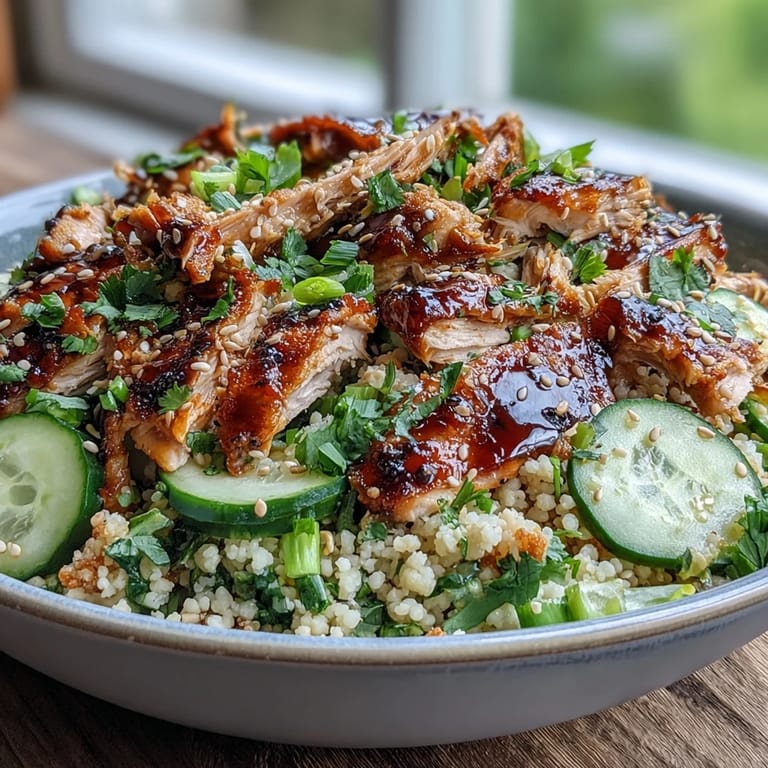
- In a large bowl, combine the cooled couscous, shredded chicken, cucumber slices, scallions, and cilantro. Pour the dressing over and toss just until everything is coated evenly—you want to handle it like you're being kind to each ingredient.
- Finish with sesame seeds:
- Sprinkle them over the top and toss once more for a final flourish.
- Decide on temperature:
- Serve it right away at room temperature, or chill it for 30 minutes if you prefer it cold and more refreshing.
 Save to Pinterest
 There was a moment a few months back when I made this for someone recovering from an illness, and they told me later that it was the first meal that felt like nourishment instead of just something to eat. That's when I understood this salad isn't just about being convenient—it's about hitting that sweet spot where health and indulgence actually coexist on the same plate.
Why Pearl Couscous Changes Everything
Regular couscous is delicate and fluffy, which is lovely if you're serving it as a side dish. But pearl couscous has substance—those larger pearls hold up to dressing, stand up to tossing, and create a texture that feels substantial enough to anchor a salad. I learned this distinction the hard way when I once substituted regular couscous thinking it wouldn't matter, and the whole thing turned into a pasty disaster by lunchtime the next day. Now I'm a convert, and pearl couscous is what I reach for whenever I want a grain salad that won't disappoint.
The Sesame-Soy Dressing as Your Foundation
What makes this dressing work is the balance—soy sauce for umami depth, sesame oil for toasty richness, rice vinegar for brightness, and a touch of honey to round everything out. The ginger and garlic are there to add dimension without shouting over the other flavors. I sometimes make extra dressing to keep in a jar in the fridge because it's genuinely good drizzled over roasted vegetables, noodles, or even grilled fish.
Variations and Swaps That Actually Work
The beauty of this salad is how forgiving it is to customization. I've made it vegetarian by swapping the chicken for crispy baked tofu or edamame, and honestly, those versions stand on their own merit. Sometimes I add shredded carrots or bell peppers for extra color, or I'll throw in some shredded red cabbage for a pop of crunch. The dressing carries it all, so you really can't go wrong experimenting here.
- Try adding shredded carrots or thinly sliced bell peppers for more color and a textural variety.
- For vegetarian versions, use baked tofu or edamame instead of chicken and no one will miss the protein.
- A handful of crispy chow mein noodles stirred in at the last second adds an unexpected textural element that guests always notice.
 Save to Pinterest
 This salad taught me that weeknight cooking doesn't have to be boring, and that something this good doesn't require a long ingredient list or complicated technique. Make it once and you'll find yourself reaching for it again and again.
Recipe Questions & Answers
- → Can I make this dish vegetarian?
Yes, simply omit the rotisserie chicken and replace it with edamame or baked tofu. The sesame-soy dressing provides plenty of umami flavor on its own, and the protein alternatives work beautifully with the couscous and vegetables.
- → How long does this salad keep in the refrigerator?
This dish stores well for up to 3 days in an airtight container. The couscous may absorb some dressing overnight, so you might want to refresh it with a splash of rice vinegar or a drizzle of sesame oil before serving leftovers.
- → What's the difference between pearl couscous and regular couscous?
Pearl couscous, also known as Israeli couscous, consists of larger, round granules that are toasted during processing. This gives them a chewy, pasta-like texture and nutty flavor, unlike the tiny, fluffy grains of traditional Moroccan couscous.
- → Can I substitute the cucumber?
Absolutely. Shredded carrots, bell peppers, snap peas, or thinly sliced radishes work wonderfully as alternatives or additions. The key is maintaining crisp texture and fresh flavor to balance the savory dressing and tender chicken.
- → Is this dish served hot or cold?
It's versatile—serve immediately at room temperature or chill for 30 minutes for a colder salad. The flavors meld beautifully when served slightly chilled, making it perfect for meal prep, picnics, or summer gatherings.
- → Can I make this gluten-free?
Yes, use certified gluten-free pearl couscous and ensure your soy sauce is gluten-free or substitute with tamari. All other ingredients naturally contain no gluten, making this an easy dish to adapt for dietary restrictions.